Korva is a scroll of the internet’s best ideas.
A larva becomes a giant
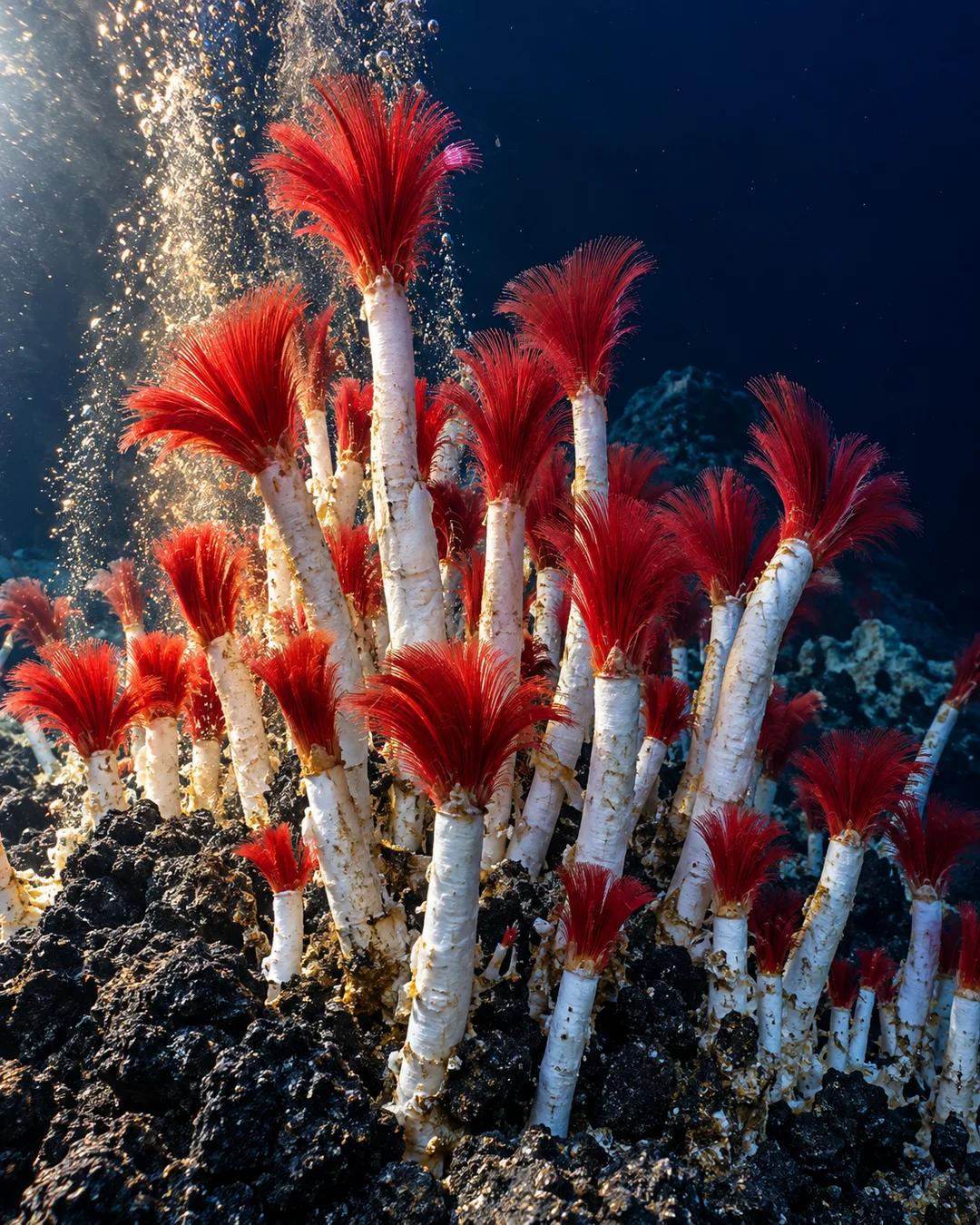
The worm, Riftia, starts out like any other worm. As a larva it swims through the water and eats whatever it finds. Somewhere along that journey it meets one particular microbe, either by eating it or when the microbe lands on its skin, and the two become partners. Then the worm seals itself up and transforms into a giant, about four feet long, with no mouth, no gut, no stomach, no digestive tract, and no anus.
Microbes grown inside
Inside its body it grows 10 billion to 100 billion of that one kind of microbe, like an enormous yogurt culture. It keeps them alive by sucking hydrogen sulfide out of the hot spring water at the vent, which is full of it. Hydrogen sulfide smells like rotten eggs and is more toxic than cyanide.
The worm carries the sulfide to its microbes, and they use it as fuel along with oxygen from the cold water around the vent. With that energy they do exactly what plants do: they turn carbon dioxide into sugars. Those sugars feed the microbes, and they feed the worm.
How does the worm carry toxic sulfide safely?
The worm's blood contains a special hemoglobin that binds oxygen and sulfide at two separate sites. That keeps free sulfide low in the blood, where it would otherwise poison the enzymes cells use to burn oxygen. The same hemoglobin gives the worm's plume its bright red color. It delivers both chemicals to the microbes packed into the worm's trunk.
Why did vent animals shock scientists in 1977?
Alvin crews found the first hot springs on the Galapagos Rift in 1977 and saw dense communities of animals living where no sunlight reaches. Before that, the deep sea was assumed to be a sparse desert fed only by scraps from above. A few years later, Colleen Cavanaugh of Harvard proposed that the tube worms hosted bacteria that make food from sulfur chemistry. Her proposal explained how such large animals could thrive around the vents.
How does an organ replace the gut?
Once a larva has taken in its microbes, much of its gut tissue develops into an organ called the trophosome. The trophosome fills most of the adult's body and is packed with the symbiotic bacteria. Blood vessels run through it, so the worm can supply the microbes and collect the sugars they make. The mouth and gut of the larva are lost as this organ forms.
More from Ologies with Alie Ward