Korva is a scroll of the internet’s best ideas.
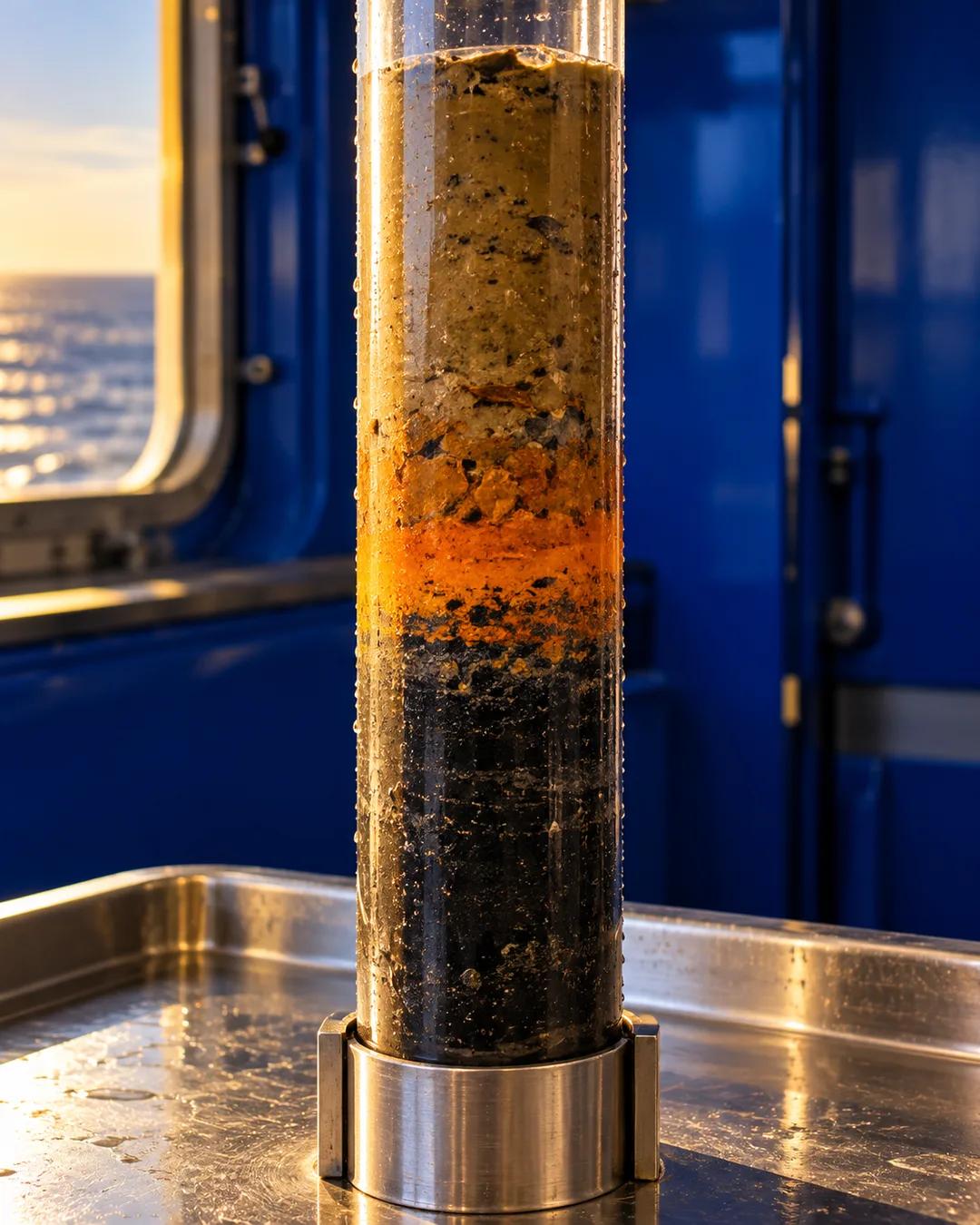
Microbes that breathe rust

Where the oxygen runs out
People digest food by moving its electrons through a series of biochemical steps to do work, and oxygen waits at the end of the chain to grab them. In ocean sediment, the oxygen goes to zero a little way down, because the microbes above have eaten all the organic matter they can and used all the oxygen they can.
Dumping electrons on rust
Some of those layers hold rust, literally iron oxides. Microbes there eat organic matter just as people do, including fish poo and the leftover remains of other animals, but they have no oxygen to catch the electrons. So they hunker up to a piece of rust and dump the electrons onto it. The process is called extracellular electron transfer.
An ancient ability
Picture eating a veggie burger with no oxygen around, then pressing yourself against a rusty wall and being fine. Work with a lab at the University of Minnesota found that a surprisingly large number of different kinds of microbes can do it. The ability probably goes back to long before anything that looked like us, because early Earth had microbes and no oxygen, and today's Earth still has places with metal and mineral oxides but none.
Why does oxygen vanish a little way down?
Oxygen enters the sediment by slowly diffusing down from the water above, and diffusion through packed mud is slow. Microbes near the surface use the oxygen faster than it arrives. In many coastal sediments it is gone within a few millimeters. In the South Pacific Gyre, where very little food sinks, a study led by Steven D'Hondt found oxygen all the way down to the rock beneath the mud.
Why must microbes dump their electrons somewhere?
Respiration works as a flow of electrons, and the energy the cell captures comes from that flow. If the last step has nowhere to send the electrons, the chain backs up and the cell stops making energy. Oxygen is the best acceptor, and nitrate, iron oxides, and sulfate follow in roughly decreasing order of energy gained. Iron oxide is a solid, so the microbe has to reach it rather than wait for it to dissolve.
How does a microbe reach a solid mineral?
Different microbes use different tricks. Geobacter makes protein filaments that conduct electrons, often called nanowires, out to the mineral surface. Shewanella passes electrons through proteins on its outer membrane and also releases small molecules that carry them across. Both groups have been studied closely in laboratories for these abilities.
More from Ologies with Alie Ward