Korva is a scroll of the internet’s best ideas.

After superintelligence, not much happens
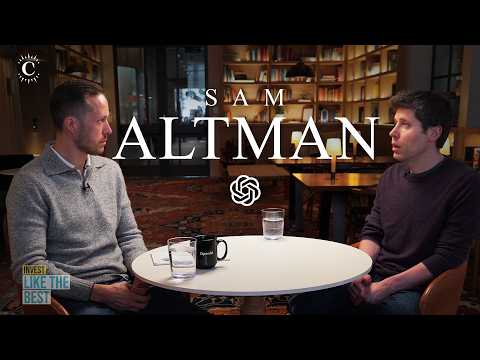
Why nothing jumps
The belief that more will happen quicker belongs to a cult worship of the machine god. Eventually a lot will happen, but eventually a lot was going to happen anyway.
The long curve
How different each decade is, and how much more different than the decade before, has been rising for a long time, with ups and downs but a clear direction. The step 50 years ago was hard to imagine, and the step 50 years from now is hard to imagine today.
Everyone wants to be the hero of the story and to have been there for the moment of the machine god in some crazy role. Zoomed way out, this is another step on a pretty smooth exponential.
Why do forecasters misjudge technology's timing?
Roy Amara, a researcher at the Institute for the Future, is credited with Amara's law: people tend to overestimate a technology's effect in the short run and underestimate it in the long run. Hype arrives quickly, while the slow work of redesigning products, laws, and habits takes years. The internet fits the pattern, with a boom and crash around 2000 followed by decades of reshaping commerce.
How did Moore's law keep growth so smooth?
Gordon Moore, later a co-founder of Intel, observed in 1965 that the number of components on a chip was doubling about every year, and in 1975 he revised the pace to about every two years. The industry then used the prediction as a planning target, with chipmakers coordinating their research to hit it. The doubling held for roughly five decades. Over that period, transistor counts on a processor rose from thousands to billions.
Why is it called the singularity?
Mathematician Stanislaw Ulam recalled in 1958 that John von Neumann spoke of accelerating technological progress approaching an essential singularity in human history. The word comes from mathematics and physics, where a singularity is a point at which a model breaks down. Science fiction writer Vernor Vinge popularized the idea in a 1993 essay predicting that humans would create superhuman intelligence within thirty years. Ray Kurzweil's 2005 book The Singularity Is Near brought it to a wider audience.
More from Invest Like the Best with Patrick O'Shaughnessy