Korva is a scroll of the internet’s best ideas.
AI is the end of a wave
How waves begin
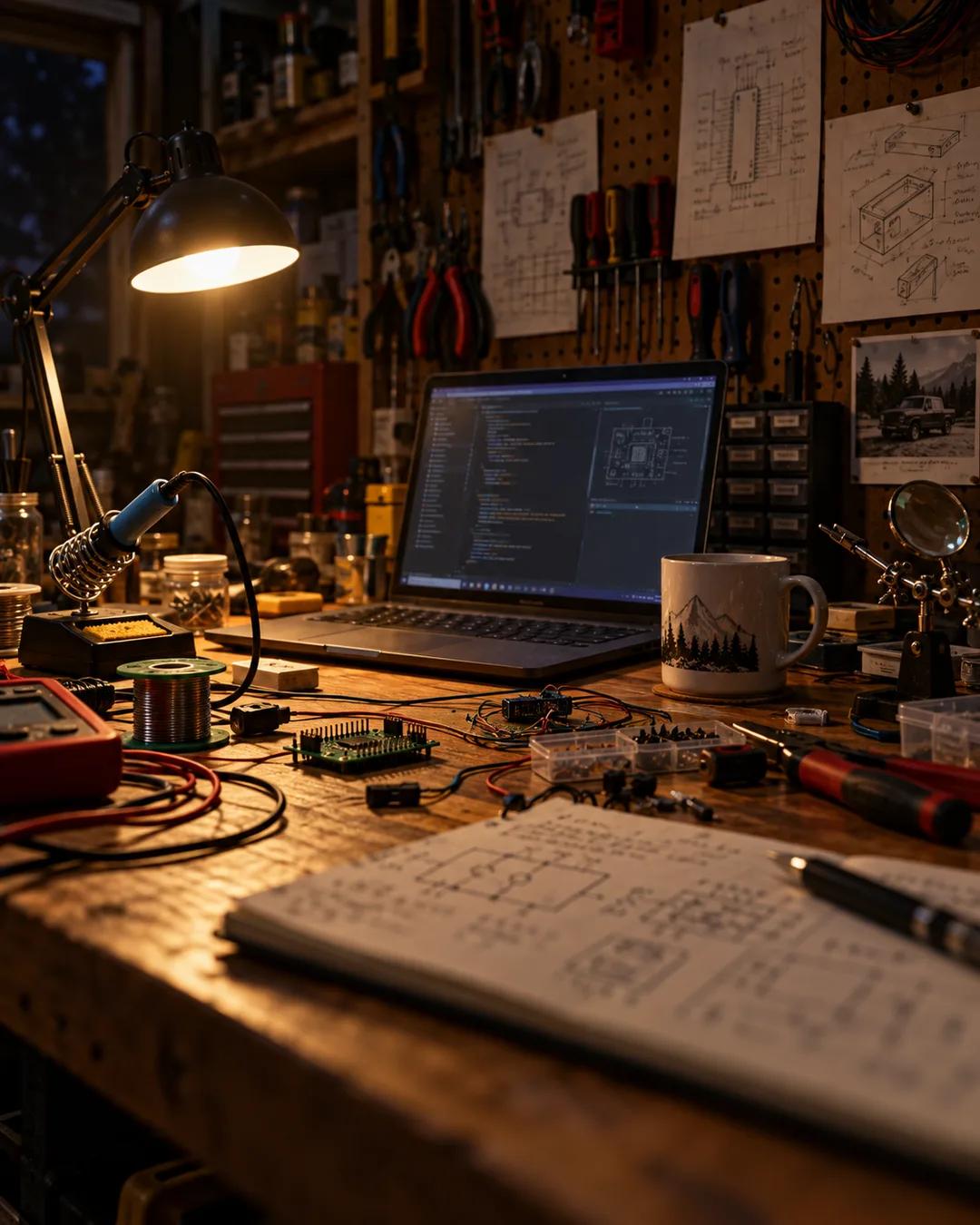
New waves begin when thousands or millions of tinkerers use a technology to solve problems in entirely new ways. Intel never dreamed of what people built with the microprocessor. Wozniak cobbled computers together in his garage, Ford built his first internal combustion engine in his kitchen, and Trevithick built his high-pressure steam engine as soon as James Watt's patents expired.
What AI lacks
AI lacks that. People experimenting with it use models owned by the big AI companies, so their experiments reach only as far as the incumbents allow, and the incumbents have no desire to permit an extended challenge to the status quo. Nobody is surprised by what AI can do, either. In the 1970s hardly anyone noticed personal computers, while in 2025 AI is all anyone talks about.
Where a seed might sprout
The computing visionaries of the 1960s set out to build a machine that could think, and their successors did it by extending gains in algorithms, chips, data, and data center infrastructure. Picture anyone building and training an LLM on a laptop and putting it to any use they can imagine: that could be the seed of the next revolution.
How did Ford build his first engine in a kitchen?
According to Ford family accounts, Henry Ford ran his first gasoline engine in 1893 on the kitchen sink of his Detroit home. His wife, Clara, reportedly dripped gasoline into it while he turned the flywheel. In 1896 he finished the Quadricycle, a four-wheeled vehicle built in a shed behind the house.
Why did Watt's patents hold back high-pressure steam?
James Watt's patent on the separate condenser was granted in 1769 and extended by Parliament until 1800. Watt thought high-pressure steam was dangerous and argued against its use. Richard Trevithick's high-pressure engine drove a road carriage in Cornwall in 1801. High-pressure engines were smaller for the power they gave, which made locomotives practical.
How did the Homebrew Computer Club spread ideas?
The club first met in March 1975 in a garage in Menlo Park, California, and soon moved to a Stanford auditorium. Members brought circuits and programs, and swapped schematics and software for free. Steve Wozniak showed an early version of his computer there before the Apple I was built.
More from Jerry Neumann