Korva is a scroll of the internet’s best ideas.
AI wins where it can grind
Why computer use lags
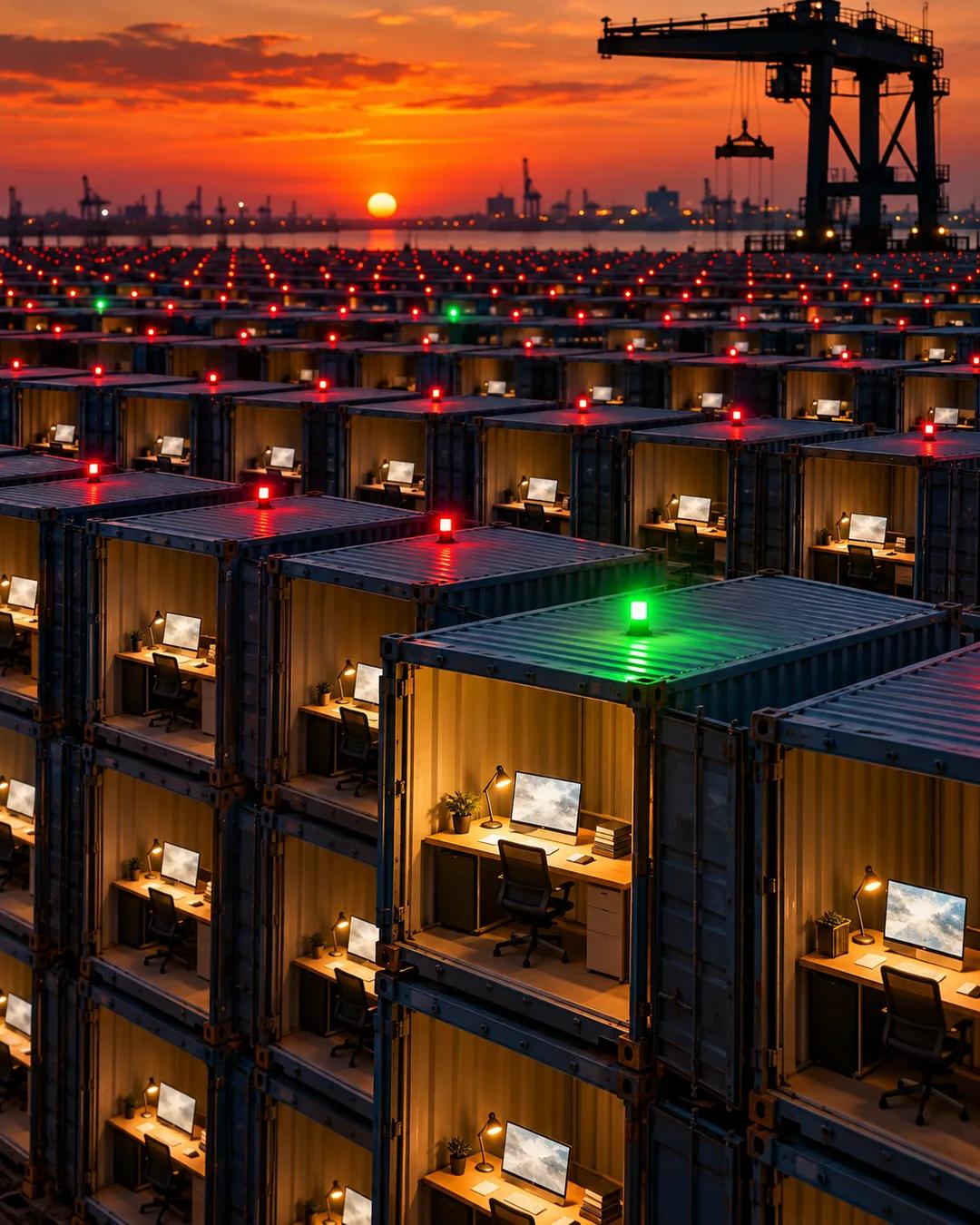
Computer use is easy to verify: did the Etsy package arrive, did the event get booked. What it lacks is grindability. Websites have bot detectors, and running a thousand parallel rollouts of the same checkout flow on Amazon takes tremendous compute and gets shut down. Building clones of every website is labor-intensive.
Why code works
Code is different. A repository at a given level of progress can be containerized, and hundreds of parallel containers can each try to implement the same feature. Everything is deterministic, so the diff between a rollout that succeeded and one that failed is the thing that worked. That solves the credit assignment problem. Start the rollouts from different starting points and it becomes much harder.
The real world's limit
Most of the real world cannot be containerized this way. Building a new business or trading the markets for a day means dealing with a world that changes day after day, so the simulator cannot be replayed and farmed. The many rollouts are needed because sample efficiency in deep learning is not solved. Coding and math are the exceptions to that rule.
Why do containers make rollouts repeatable?
A container packages a program with the exact libraries and files it needs, and shares the host machine's operating system kernel. Because the package is identical every time it starts, hundreds of copies can begin from the same state. Docker made containers widely usable after its release in 2013. Code run inside them behaves deterministically when it has no outside inputs such as the clock or network.
Why can't a model just farm shopping sites?
Sites use bot detection that looks at request rates, browser fingerprints, and mouse behavior, and they often add CAPTCHAs. The term CAPTCHA was coined in 2003 by Luis von Ahn, Manuel Blum, Nicholas Hopper, and John Langford at Carnegie Mellon. A thousand identical checkout attempts from one source would look like an attack to those systems.
How did Go become easy to practice?
Go has fixed rules and no hidden information, so a program can simulate a game perfectly and millions of times faster than a person could play. In 2017, AlphaGo Zero used that to reach a level above every earlier version after about three days of self-play. The result of each game gave a clear win or loss to learn from.
More from Dwarkesh Podcast