Korva is a scroll of the internet’s best ideas.

Apache bought 58 unrelated businesses
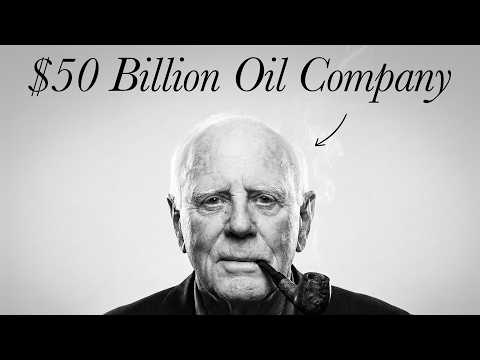
Why Apache bought companies
Apache was already public, so it paid for acquisitions with its own stock. It went after successful businesses run by entrepreneurs that it could grow, and their revenues would bridge the gaps when oil and gas turned down. Over about ten years, it acquired 58 different businesses.
The purchases were not in one area. Apache ended up owning businesses in agriculture, plastics, telephones, steel, auto parts, ranching, utilities, and lumber, each one chosen as an individual opportunity.
Avoiding conglomerate mistakes
Conglomerates were common in the 1960s, and many made the same error. After buying a smaller business, they laid large-company practices and corporate overhead over owners who were used to running their own operations successfully. Apache centralized capital allocation decisions above a certain amount and otherwise left the owners to run their companies.
Back to oil
The long-range target was always to become an independent oil and gas company. In the 1970s, as opportunities in oil improved, Apache sold virtually everything it had acquired and went back to being a focused energy company.
Why did states cut oil production allowables?
The Texas Railroad Commission and the Oklahoma Corporation Commission set monthly production limits for each well to match output to demand and prevent waste, a practice called prorationing. It grew out of the 1930 discovery of the giant East Texas field, whose flood of oil pushed prices down to around ten cents a barrel in 1931. In Texas, the limits were enforced with the help of troops after the governor declared martial law in the field. Texas lifted its limits to 100 percent of capacity in 1972.
Why did 1960s conglomerates later fall out of favor?
Many conglomerates of the 1960s grew by using richly valued stock to buy companies whose shares were priced lower, which lifted earnings per share on paper. When stock markets fell in 1969 and 1970, that advantage disappeared and acquisitions slowed sharply. Investors and analysts afterward came to prefer focused companies, and many conglomerates broke themselves up in later decades. ITT, among the best known of them, split into three separate companies in 1995.
Why pay for acquisitions with stock?
Paying in stock preserves a buyer's cash for operations and drilling. For sellers, an exchange of shares can qualify as a tax-free reorganization under US law, which defers their tax until they sell the shares they receive. A buyer whose stock trades at a higher price-to-earnings multiple than the target's can raise its per-share earnings through the deal alone. Litton Industries used this approach heavily in the 1960s.
More from Founders