Korva is a scroll of the internet’s best ideas.

Ignorance of oil was an advantage
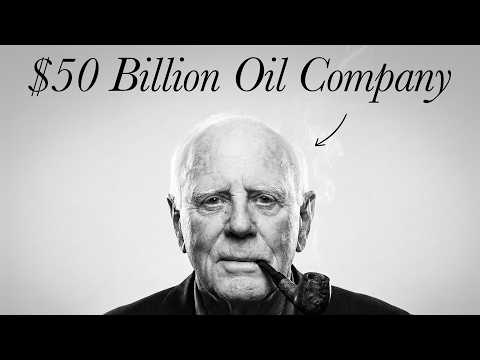
Apache's founders began with almost no technical knowledge of oil and gas, in an industry where their finance and tax knowledge had few competitive peers. They hired people who had the domain knowledge and spent time with them. Those men came along on field visits while geology and engineering filled the conversations, and Raymond Plank learned more by osmosis and interest.
Decades later, in his 90th year, he looked back and concluded that what he had not known was a tremendous advantage. Beaten paths are for beaten men, as he put it. He had not fallen victim to how others learned, knew, and practiced, so Apache was free to develop its own approach, the Apache way.
Why do experts miss simpler solutions?
In a 2008 study, Merim Bilalić and colleagues showed chess players a position with a familiar five-move checkmate and a less obvious three-move one. Expert players found the familiar solution and said they were searching for a better one, yet eye tracking showed their gaze kept returning to the squares from the familiar line. Psychologists call this the Einstellung effect, in which a known solution blocks sight of a better one. Abraham Luchins first described the effect in 1942 using water jar problems.
Why do outsiders solve problems insiders cannot?
Karim Lakhani and colleagues at Harvard studied problems that companies posted on the InnoCentive platform, where outside solvers compete to solve them. They found that solvers whose own field was far from the problem's field were more likely to crack it. Outsiders bring methods and assumptions from other disciplines that insiders have not tried. The findings appeared in a 2007 working paper titled The Value of Openness in Scientific Problem Solving.
More from Founders