Korva is a scroll of the internet’s best ideas.
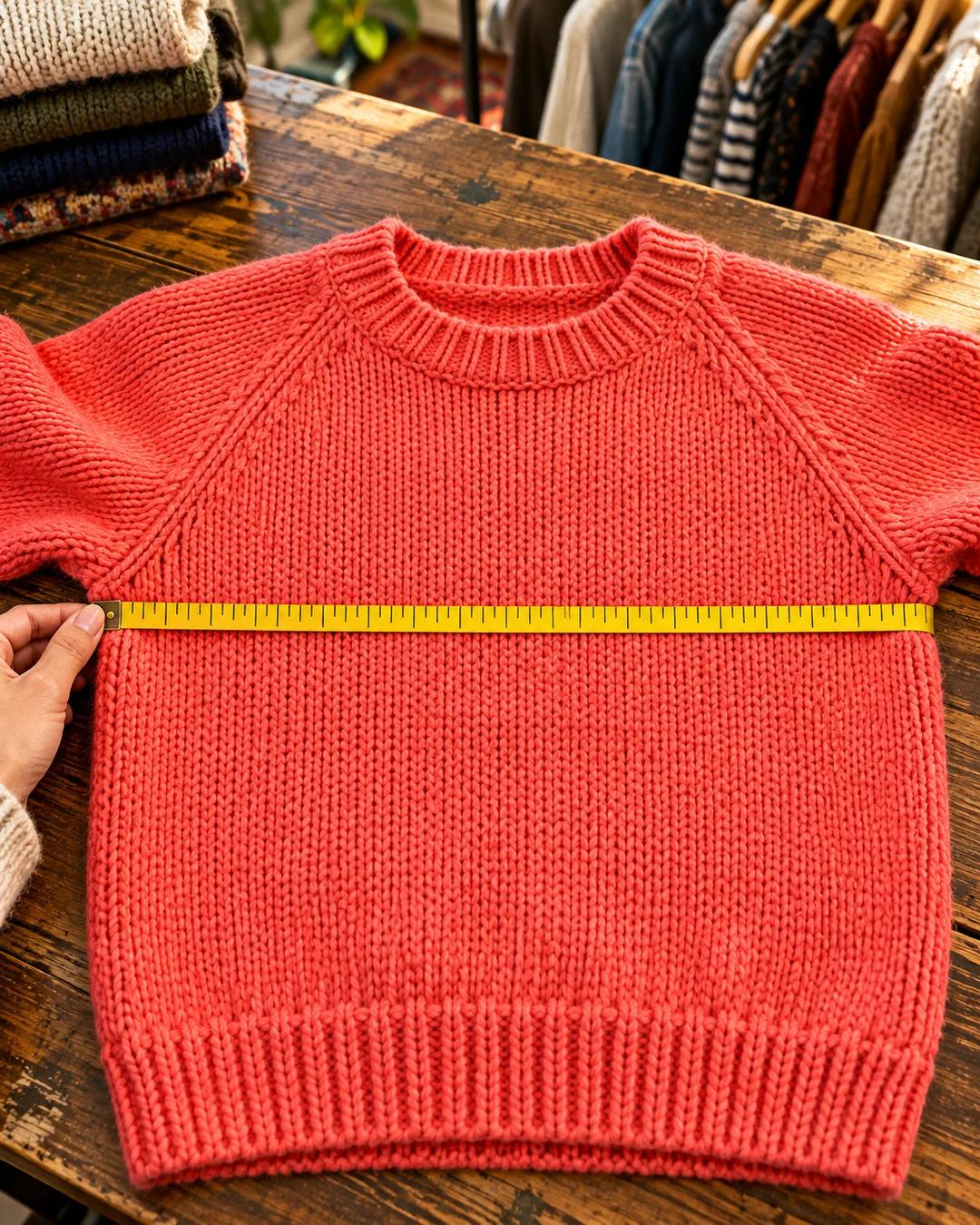
Armpit to armpit, half your chest

The measuring starts at home. Wrap a tape around the largest part of the chest, take that number, and divide it in two. At the store, lay the tape across the top being considered, from armpit to armpit. If that distance is at least half the chest measurement taken at home, the top should fit.
Hips follow the same logic. Wrap the tape around the widest part, divide the number in two, and compare it to the front or back side of a dress or pants.
Thrifting is a good way to try out new styles, and a tape measure in the bag means fewer garments have to go on before one works.
Why do clothing sizes differ so much between brands?
The U.S. government published voluntary sizing standards for women's clothing in 1958 and withdrew them in 1983. Since then each brand has set its own size labels, based on its own fit models. Labels have also drifted larger over the decades, so a vintage garment marked with a given size is usually smaller than a modern garment with the same number.
Why compare a flat top to half the chest?
A top lying flat has a front layer and a back layer, so the width across is half of the full loop around the body. Garment makers also build in ease, which is extra room beyond the body measurement so a person can move and sit comfortably. Close-fitting styles carry little ease, and loose or oversized styles carry a lot. Resale shops commonly list the flat armpit-to-armpit measurement as pit to pit.
More from Life Kit