Korva is a scroll of the internet’s best ideas.
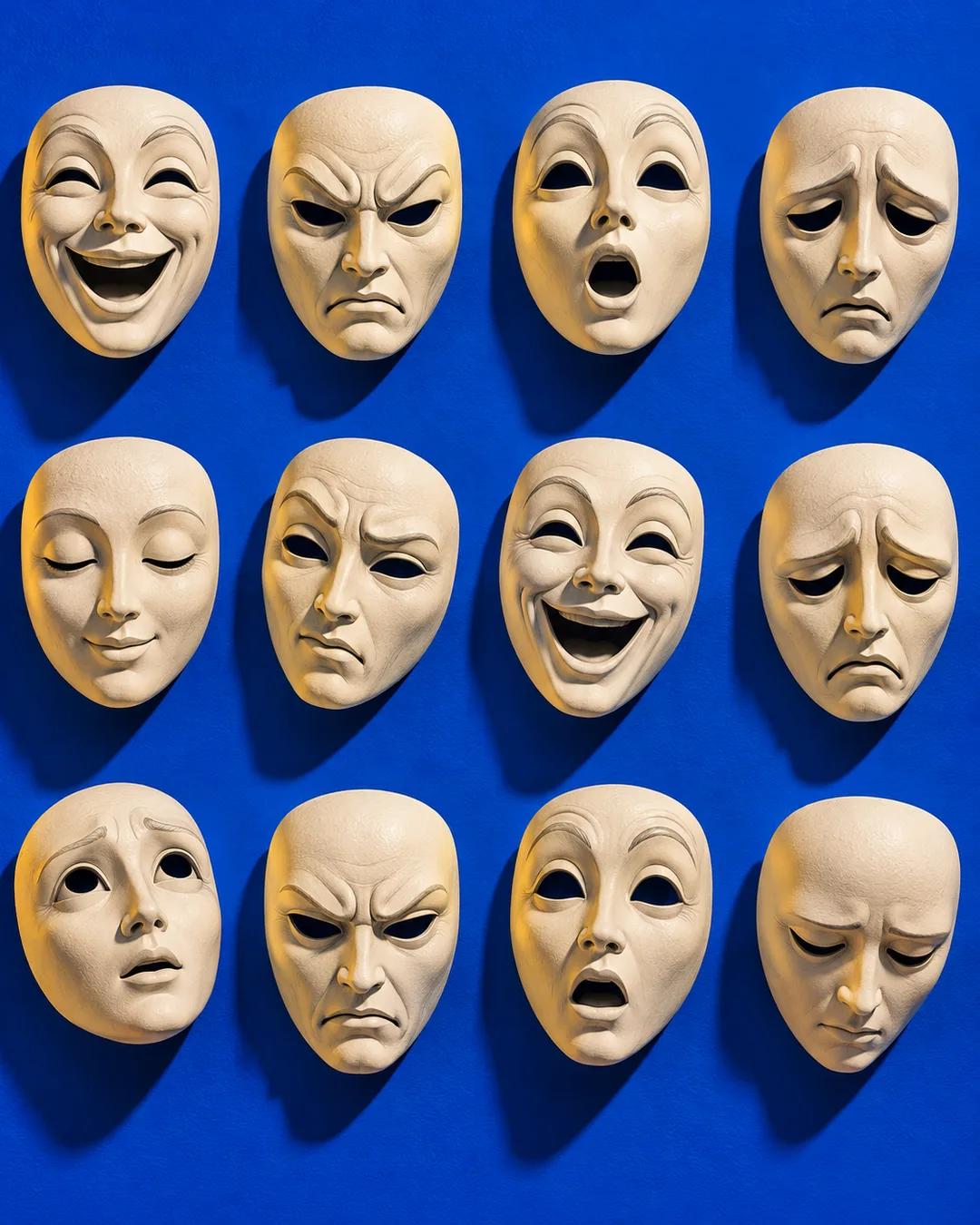
Awe looks 75% the same worldwide

AI codes the face
The work began with a Berkeley graduate student who looked at the old method and saw that AI could code the face. Coding the facial muscle movements of one minute of video used to take an hour, so the old method was slow. He built the system with Google engineers and applied it to videos covering 144 cultures and 16 facial expressions.
The older six emotions
The older story rested on Paul Ekman's work in New Guinea, where people looked at static photographs of six emotions: anger, fear, sadness, disgust, surprise, and a smile. They named the faces the way people elsewhere would. Ekman's strong claim of universality has since been contested.
Around twenty states
Now a lot of data suggests about 20 distinct facial expressions, including laughter, love, compassion, awe, embarrassment, shame, and pain. Where the field once counted six emotions, it now counts probably 20 distinct states of mind. Roughly 50 to 60% of the way faces show these states is hardwired from evolutionary history, and the rest varies in interesting ways.
Why did Ekman test people in New Guinea?
Paul Ekman traveled to Papua New Guinea in the late 1960s to test whether facial expressions were learned from media or inherited. He worked with the Fore people, who had little exposure to Western film and photography. They matched photographs of faces to short stories about emotions at rates well above chance. Ekman's design built on Charles Darwin's 1872 argument that expressions are shared across humans.
How does AI code facial muscle movements?
The standard scheme is the Facial Action Coding System, published by Paul Ekman and Wallace Friesen in 1978. It breaks every expression into action units, each tied to a specific muscle or group of muscles. Action unit 12, for example, is the pull of the lip corners that forms a smile. Machine learning models are trained on videos that human coders labeled unit by unit, then apply those labels to new footage.
Why do expressions differ across cultures?
Ekman and Friesen proposed display rules, learned norms about which emotions to show and when. In a study they ran in the early 1970s, Japanese and American students watched stressful films alone and then with an interviewer. Alone, both groups showed similar expressions. With the interviewer present, the Japanese students more often masked negative expressions with a smile.
More from Andrew Huberman