Korva is a scroll of the internet’s best ideas.
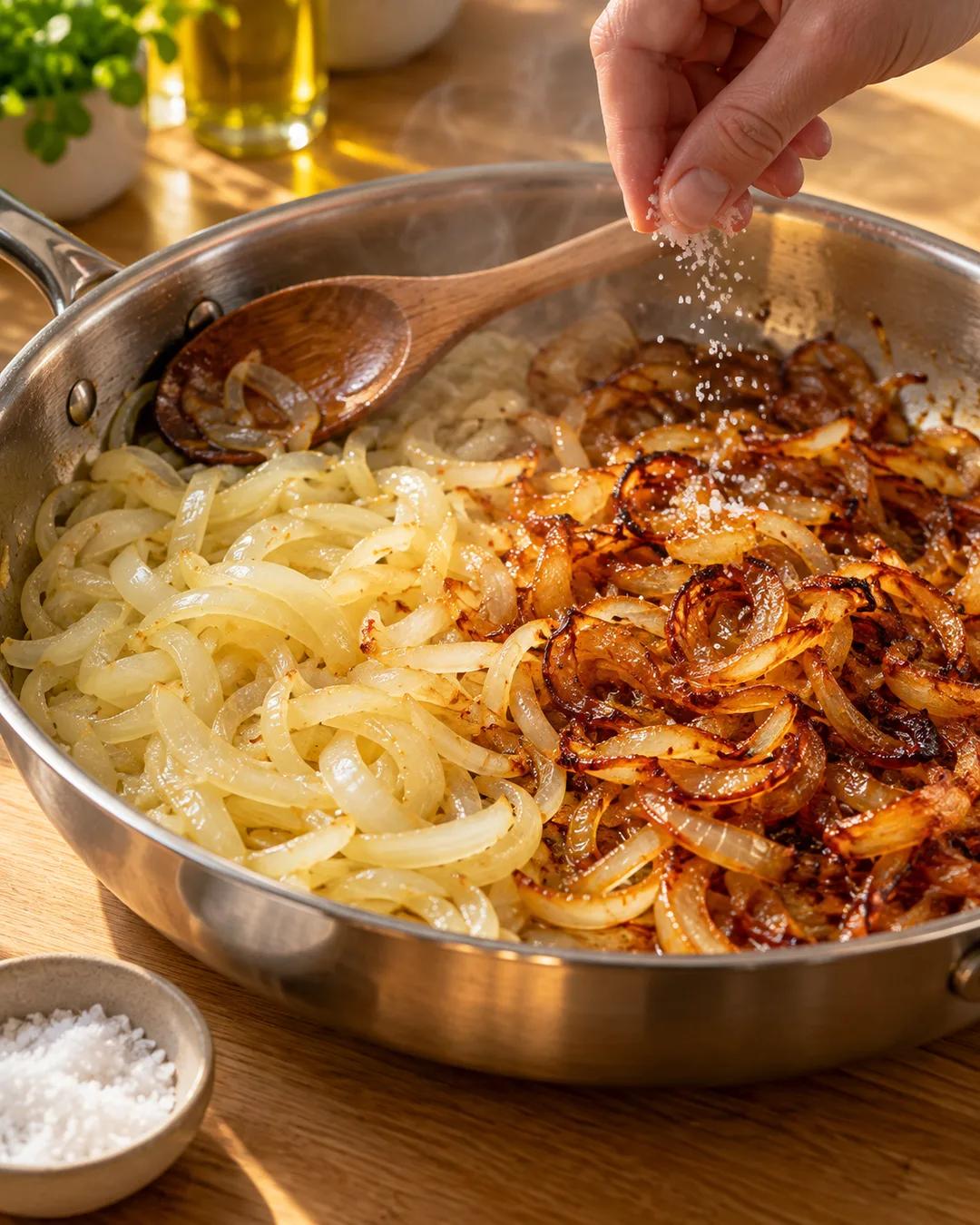
Baking soda browns onions faster
Baking soda's effect
Baking soda is basic, so it raises the pH of the onions. Picture a pan of onions with a tiny pinch of baking soda and a bit of salt for flavor. They brown faster, and they come out sweet with hints of caramel.
Temperature and limits
The reaction works best somewhere between 230 and 340 degrees Fahrenheit. In that range the chemical reactions run faster and the heat evaporates excess water. If the temperature climbs too high, burning creates charred, bitter flavors.
Browned onions are not caramelized onions, because caramelization involves only sugars. Too much baking soda also ruins them, leaving browned, mealy onion goop.
Why does higher pH speed up browning?
The first step of the reaction needs an amino group to attack a sugar. In acidic conditions, many amino groups carry an extra hydrogen ion and cannot react. Raising the pH strips that ion away and frees more of them to take part. Pretzels get their dark crust from a bath in an alkaline lye solution for the same reason.
Why does water slow down browning?
Water at the surface of a food keeps it near 212 degrees Fahrenheit while it evaporates. Browning runs far faster above that temperature, so the surface has to dry first. Onions are roughly nine tenths water, which is why they sit in the pan so long before they color. Once the water cooks off, the temperature climbs quickly.
Why does burnt food taste bitter?
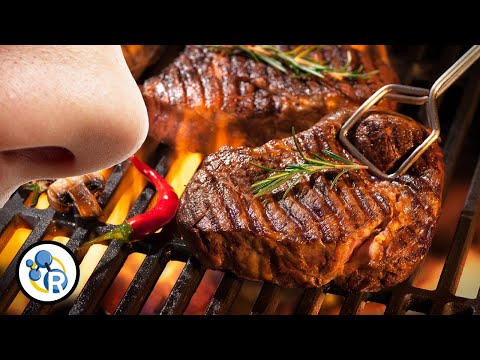
Above the temperature range for browning, sugars and proteins start to break down by pyrolysis. The breakdown leaves carbon-rich char and harsh compounds that taste bitter. The savory and sweet compounds from the Maillard reaction are also destroyed. Charred spots on food therefore taste different from the golden-brown areas next to them.
How does caramelization work differently?
Caramelization is the thermal breakdown of sugars alone, with no amino acids involved. Table sugar begins to break down at around 320 degrees Fahrenheit, while fructose caramelizes at lower temperatures. The products include the buttery diacetyl and nutty furan compounds. Because the two reactions have different ingredients and thresholds, they often happen side by side in the same pan.