Korva is a scroll of the internet’s best ideas.
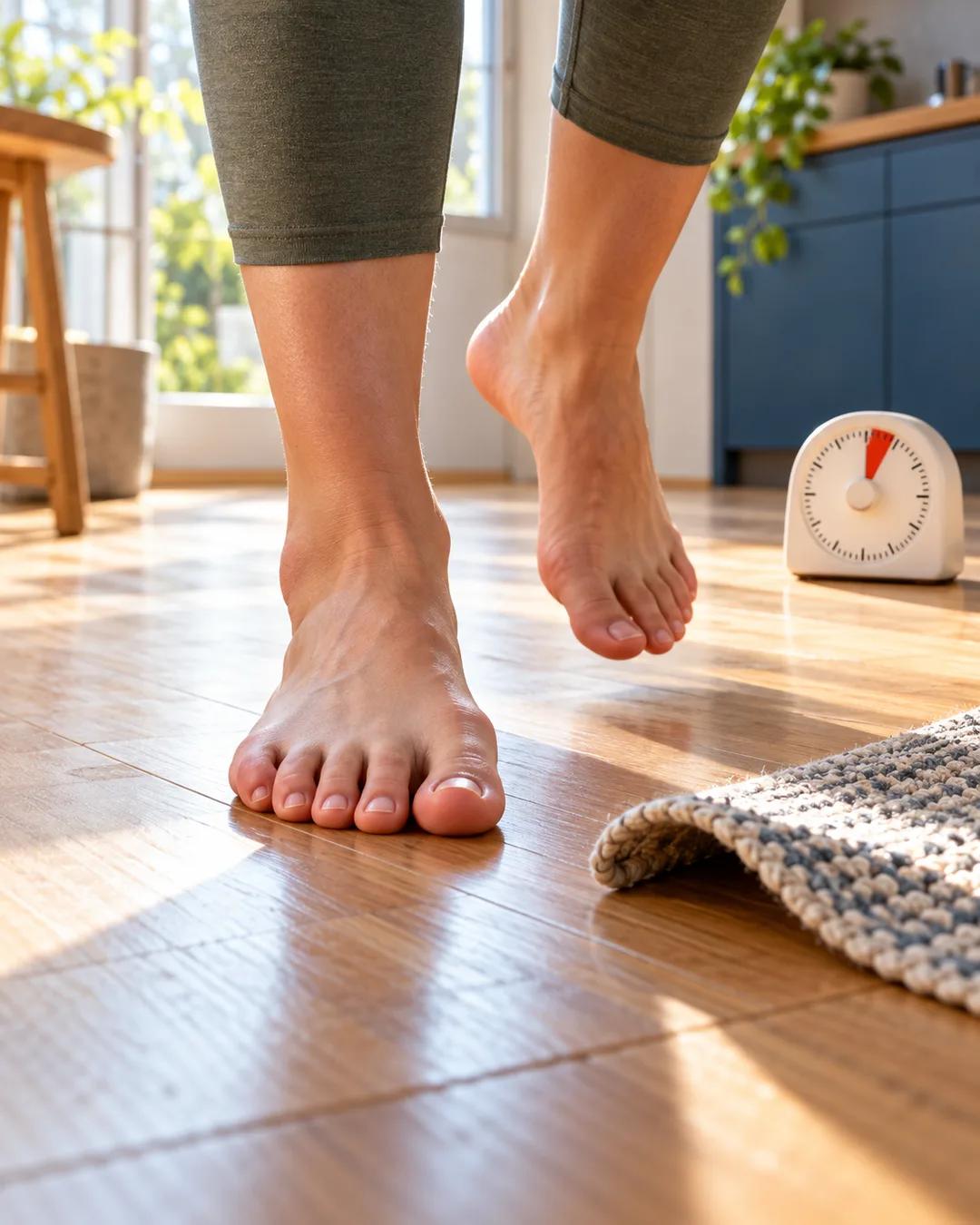

The test
Most people say their balance is fine because they haven't had a fall. One simple test is whether a person can balance on one leg for at least 10 seconds. Balance changes considerably with age, and an audience of older adults shows it.
Closing the eyes makes it harder, because balance draws on cues from the visual environment. Younger people start to tip, too, which is why it is so surprising. It resembles a field sobriety test.
Why falls matter
Falls can break a hip or a collarbone. Getting up at night more often and tripping over a rug add to the risk, and someone recovering in bed isn't walking, while the hippocampus shrinks. Poor sleep also makes balance worse.
The cerebellum, a primitive part of the brain, is involved in balance, along with vision and the inner ear. Standing on one leg, yoga, and tai chi can improve it considerably within a month or two.
How does the cerebellum control balance?
The cerebellum constantly compares the movement your brain intended with the sensory feedback coming back from your body. When the two differ, it sends corrections within fractions of a second. It works with the vestibular organs of the inner ear, which sense head motion and gravity. The cerebellum holds roughly 80 percent of the neurons in the human brain, packed into a region much smaller than the cortex.
Why does closing your eyes make balance harder?
Balance draws on three streams of information: vision, the inner ear, and sensors in muscles and joints. Closing the eyes removes the most detailed stream, so the brain leans harder on the other two. Neurologists have used this principle since the 19th century in the Romberg test, named after German physician Moritz Romberg. Any weakness in the other two systems shows up quickly once vision is gone.
Why does balance decline with age?
The inner ear's sensory hair cells decline in number over the decades, and nerve signals from the feet and ankles slow down. Muscle mass also falls, which weakens the quick corrections that keep a person upright. The brain compensates for some of this, but the margin for error narrows. Studies of the human vestibular system show measurable hair cell loss in the balance organs of older adults.
More from Andrew Huberman