Korva is a scroll of the internet’s best ideas.
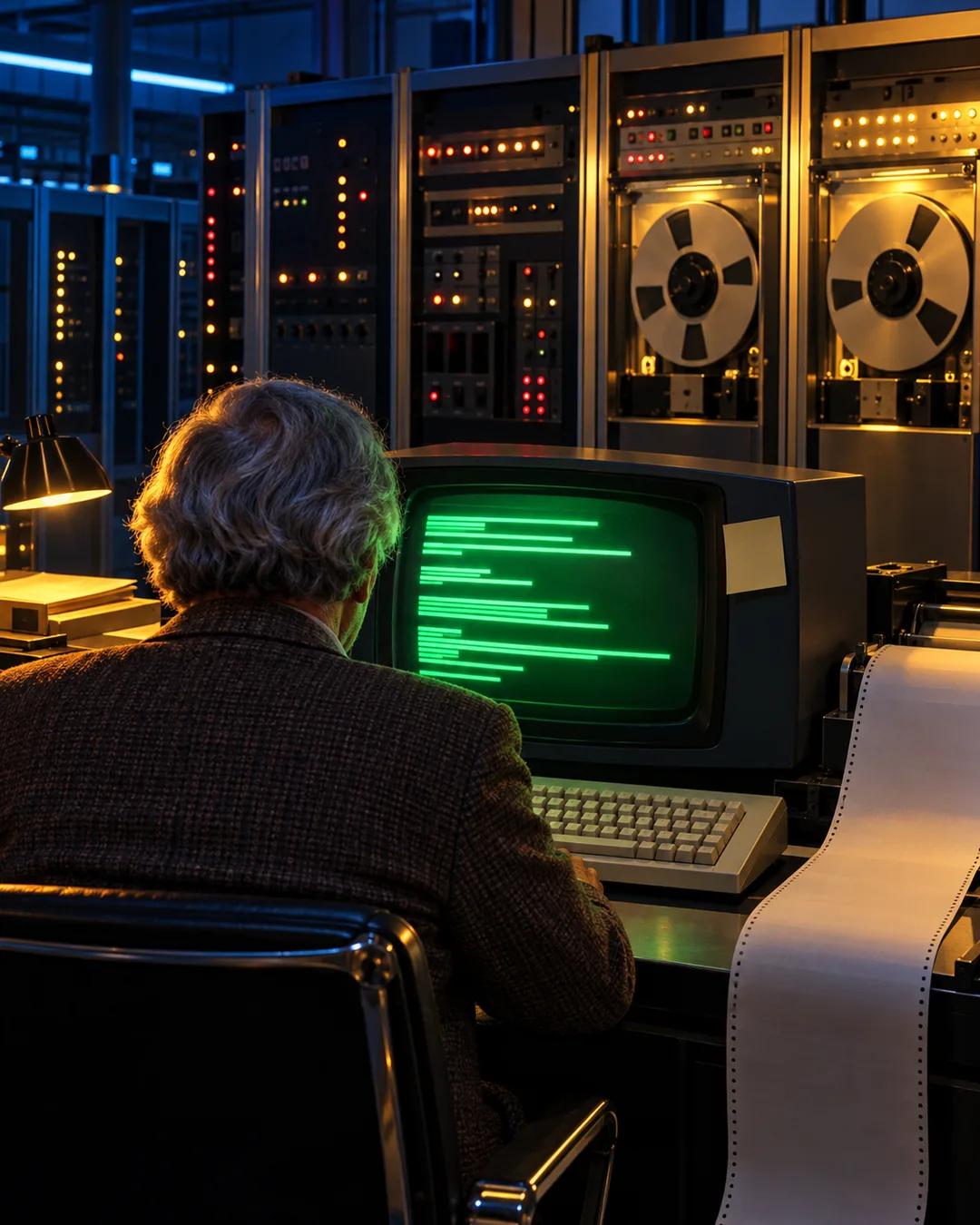
Banks run on 1970s code

Old code at the core
JPMorgan's core deposit system may still run off Fortran. Someone who had just taken over at Bank of America found that the three most critical people at the company are COBOL programmers in the middle of nowhere, around 70 years old, and the bank is training some newer people to use the systems.
Stuck with the vendor
One firm had only recently moved off machine code, the ones and zeros of assembly programming that date to the 1950s. Every financial institution is caught in a vendor trap with ancient technology, which may be part of why IBM is still around. They have been trying to work their way out, and it is unbelievably hard.
Rules from the 80s
On top of the old technology, regulation makes the system run like an intranet from the 80s, before the web. Blockchain allows an internet-based financial system instead.
Why do banks still run COBOL?
COBOL was created in 1959 and was designed for business arithmetic, such as interest and payroll. Core banking systems built on it have processed transactions for decades, and years of exceptions and rules are baked into the code. Replacing them means moving live accounts without a single error, which institutions treat as a bigger risk than keeping the old system. Commonwealth Bank of Australia spent about five years replacing its core banking platform before finishing in 2012.
Why did COBOL programmers get urgent calls in 2020?
In April 2020, as pandemic unemployment claims surged, New Jersey Governor Phil Murphy said the state needed volunteers who knew COBOL. State unemployment systems in several states ran on code written decades earlier. Few working programmers had learned the language, since universities had mostly stopped teaching it. The Open Mainframe Project, part of the Linux Foundation, responded by starting a COBOL training and job-listing effort.
How does a vendor trap lock banks in?
Core banking software is tightly tied to specific hardware and vendor tools, and every other system a bank runs connects to it. Switching means rewriting those connections and retesting them, so the cost of leaving is far higher than the annual cost of staying. IBM's System/360 mainframe, introduced in 1964, set the pattern for compatible machines that customers could upgrade without rewriting their software.
More from Joys of Compounding