Korva is a scroll of the internet’s best ideas.
Bats were loud all along

Griffin meets Pierce
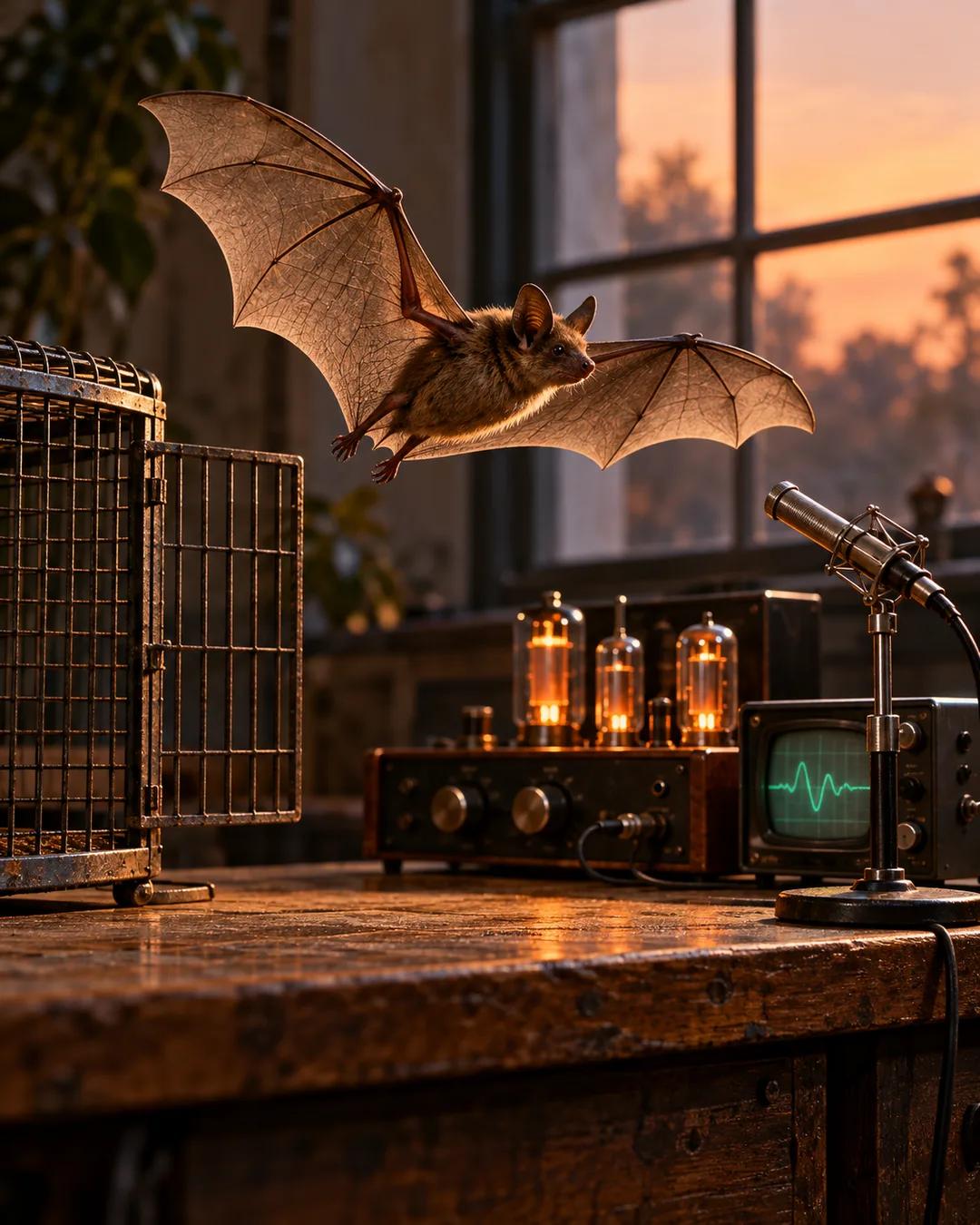
The undergraduate was Donald Griffin, who was convinced that bats used sound to navigate. The physicist was George W Pierce, who in the 1930s had developed a method for detecting ultrasound with piezoelectric crystals and a sonic amplifier. He had built it to study the ultrasonic sounds of birds and crickets.
Why bats stayed hidden
Bats had stayed hidden from people for a reason. Nearly all of them are nocturnal, small, and fast, and they vocalise at frequencies mostly outside the range of human hearing, which tops out around 20,000 Hz. That makes them effectively invisible to people, and it has led some to associate them with evil and fear them.
Naming echolocation
Further research by Griffin and others revealed how fully bats rely on ultrasound. They use the returning echoes of their calls to build a sonic map of their surroundings, which orients them during rapid flight. Griffin named the ability echolocation.
How do bats avoid deafening themselves?
Bat calls can be extremely loud, with some species producing sound above 100 decibels close to the animal. A tiny muscle in the middle ear contracts just before each call to dull the ear, then relaxes within a few thousandths of a second so the faint echo gets through. The same ears serve as both a shield and a receiver. In the final approach on an insect, many bats fire calls at rates that can exceed 100 per second.
How did Griffin prove bats use echoes?
In the late 1930s, Griffin worked with Robert Galambos to test the idea. They flew bats through rooms strung with obstacles, and the bats steered through easily with their eyes covered. When the bats' ears were plugged or their mouths were covered, they hit the obstacles. The experiments built on work from the 1790s, when Lazzaro Spallanzani showed that blinded bats could still fly around obstacles.
How do some moths jam bat sonar?
Certain tiger moths answer bat calls with ultrasonic clicks of their own. A 2009 study by Aaron Corcoran, Jesse Barber, and William Conner in Science found that these clicks disrupt the bats' ability to judge distance, so the bats miss. The moths make the clicks with organs on their bodies called tymbals.
More from Ella Browning