Korva is a scroll of the internet’s best ideas.
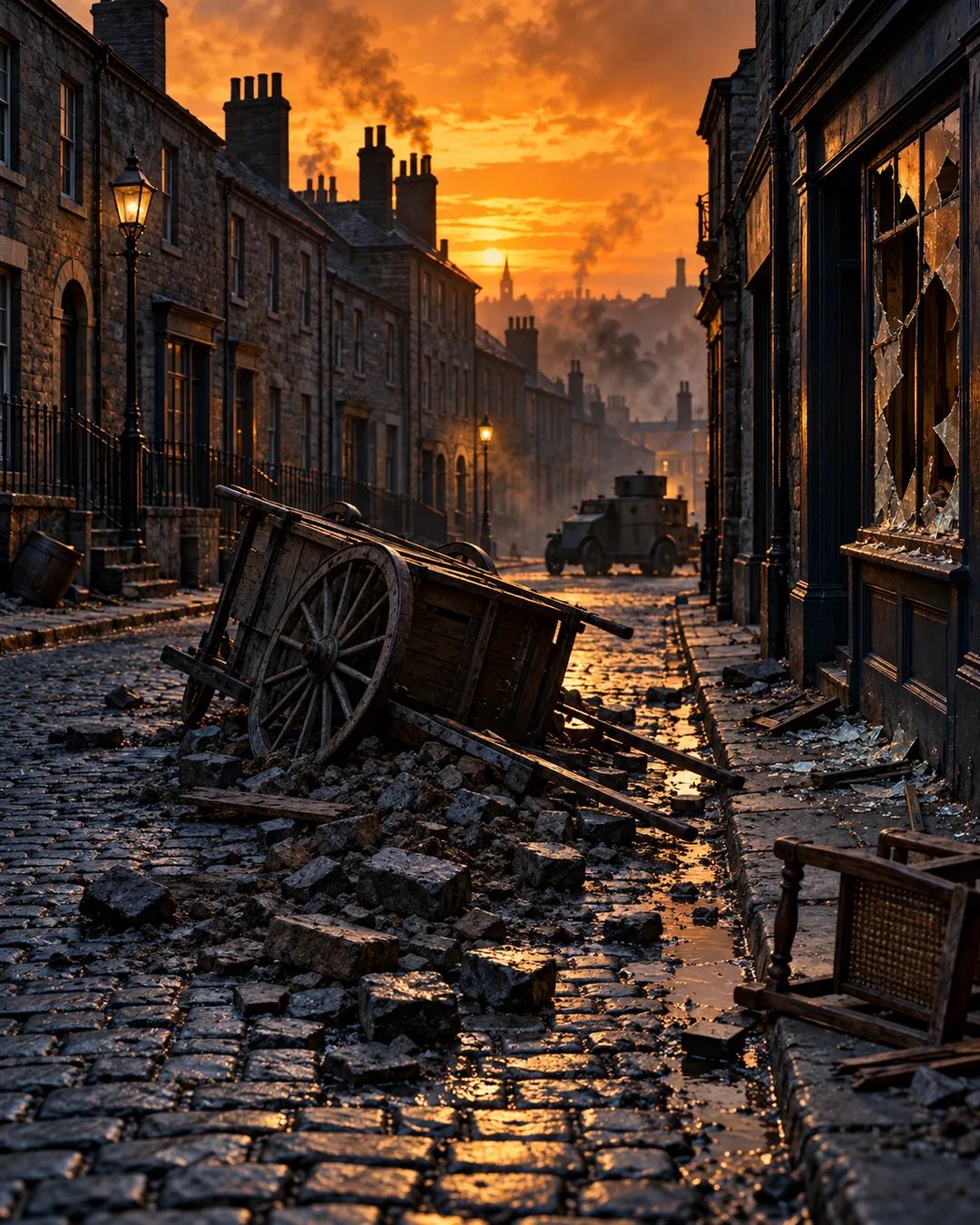
Belfast, 1935: snipers and armoured cars

The violence of the 1920s
The violence of the early 1920s had already been bad by the standards of the British Isles. Between the summer of 1920 and the summer of 1922 there was intense street fighting between the IRA and the security forces, especially in Belfast. More than 500 people were killed, most of them Catholic civilians, and 10,000 Catholics were driven out of their jobs and 25,000 out of their homes by violence and arson.
The 1935 riots
Then, in 1935, the rioting came back. Snipers sat on top of buildings and fired in gun battles, and British troops were sent in to clear the streets with armoured cars. Eleven people were killed, 100 were injured, and 2,000 were driven out of their homes.
Reprisals across the border
The riots set off reprisals across the Irish border. Protestant homes and shops were attacked in Limerick, and Church of Ireland churches and Methodist chapels were burned in rural Ireland. All the while the Irish Republican Army sat in the background, still there after the 1910s and 1920s and the civil war in the South.
Why did Belfast riot in the summer of 1935?
The 1935 riots broke out around the Orange parades of July and continued for weeks. Belfast's marching season routinely brought tension, especially where routes ran close to Catholic streets. Economic hardship from the Depression also left many working men unemployed and angry. Troops and police were needed to restore order.
Why was the IRA banned in Ireland?
The Free State government under Eamon de Valera outlawed the IRA in June 1936 after the killing of a retired vice-admiral in County Cork. The organization had stayed armed after the civil war of 1922 and 1923 and refused to recognize the Dublin state. The Offences Against the State Act of 1939 later gave the government wider powers to intern its members.
How were Catholics driven from the shipyards?
In July 1920 crowds of shipyard workers in Belfast expelled Catholic colleagues and some Protestant socialists from the yards, including Harland and Wolff. The expulsions took place amid a wave of violence linked to the Irish War of Independence. Thousands of workers lost their jobs, and many Catholic families were also driven from their homes.
More from The Rest Is History