Korva is a scroll of the internet’s best ideas.
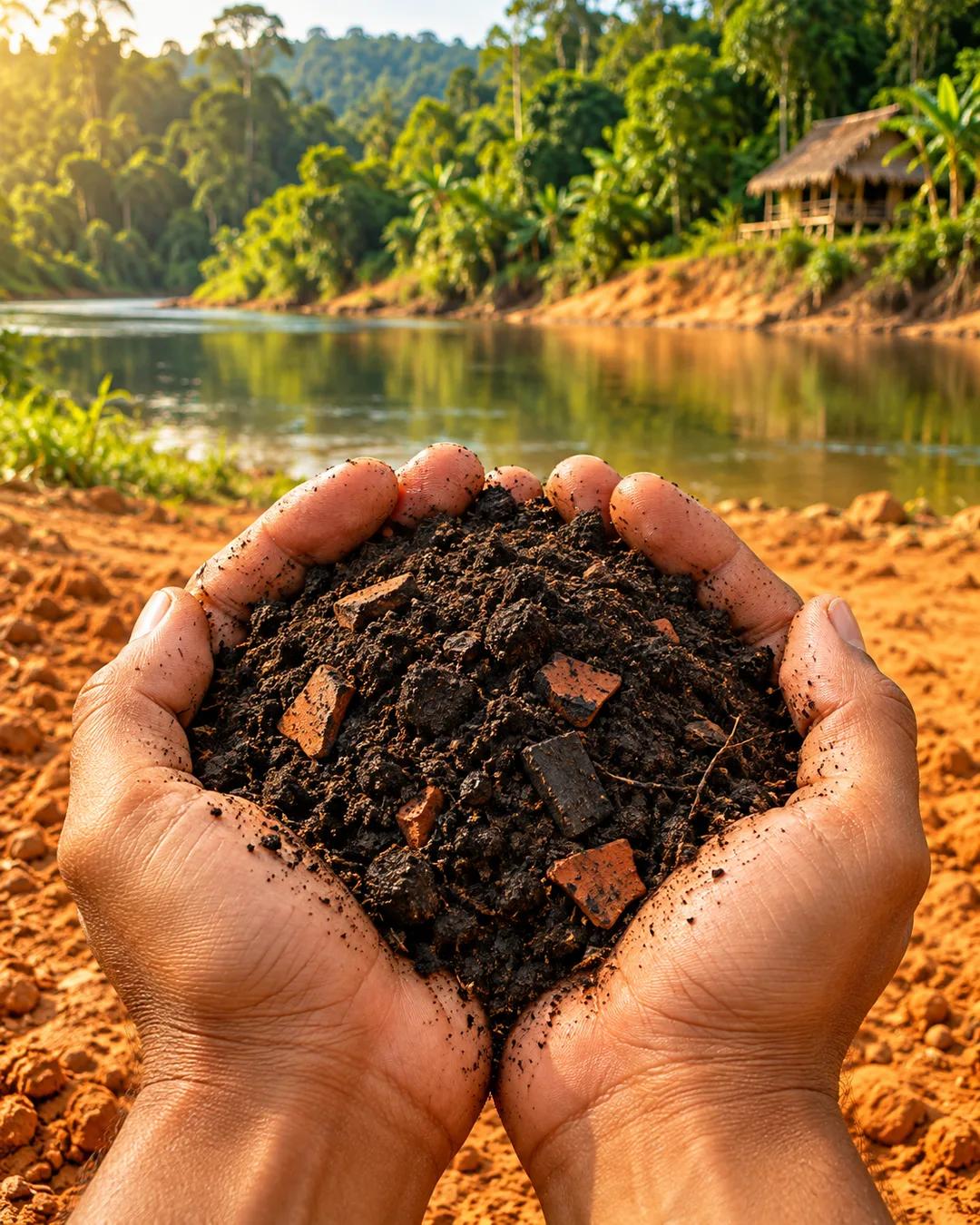
Black soil marks ancient farmers

Villages up the Black River all give the same reason for where they settled: the black soil is very productive. They do not necessarily know their ancestors were not the people who made it. They pick the places full of it, and archaeology has realized that soil is man-made.
Archaeologists call this an anthropogenic landscape. The Amazon destroys everything, and the evidence of earthen mounds gets churned up until human habitation is hard to detect. That is why the idea is relatively new: analysis of the soil now tests whether it formed naturally or humans made it. The black soil covers huge areas.
How is terra preta made?
Terra preta contains charcoal, pottery shards, bone, and organic waste. People added these to the soil over generations, likely from cooking fires and household refuse. The charcoal is the key ingredient because it stays in the soil for centuries. Terra preta patches can be dark and several feet deep.
Why is Amazon soil poor otherwise?
Heavy rain washes nutrients out of the soil. Most of the forest's nutrients sit in living plants, because dead leaves and wood decay quickly in the heat. The soil beneath is often acidic and low in nutrients. Terra preta holds nutrients because its charcoal is porous.
Why do scientists study terra preta today?
Researchers study it as a model for improving poor soils. Adding charcoal, called biochar, to soil has been tested in farm trials around the world. Biochar also locks carbon in the ground. Terra preta shows the effect lasting for centuries.
More from Shawn Ryan Show