Korva is a scroll of the internet’s best ideas.
Burning Nineveh saved its library

The fire
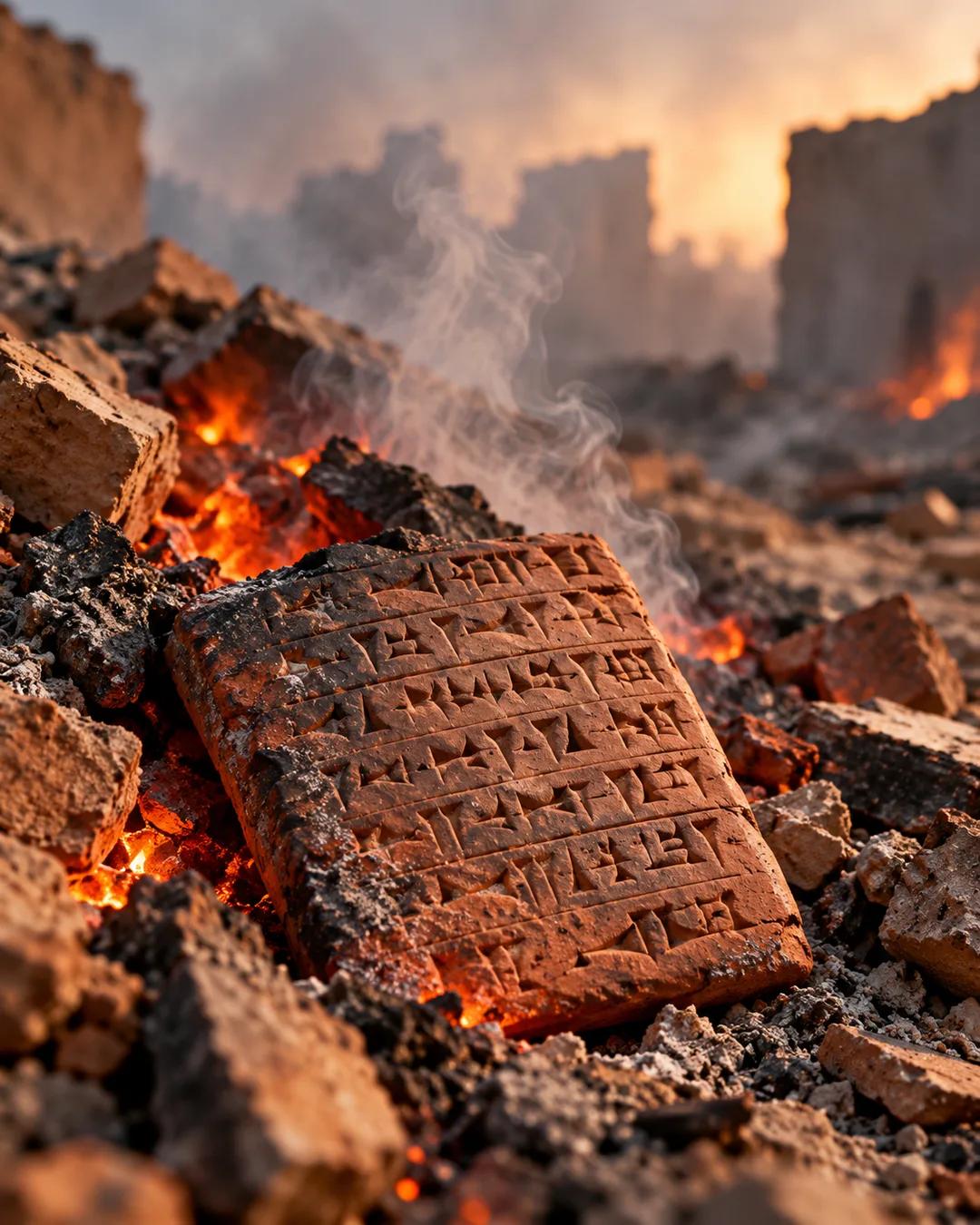
A coalition of kingdoms, including the Babylonians and the Medians, conquered the Assyrian capital that year. As the city burned, the clay tablets hardened in the heat, and the rubble that fell around them covered them over.
What survived
Writing boards made of wood or ivory covered with wax were largely destroyed. The tablets were also broken and scattered, and their pieces have turned up around the remains of several buildings: the southwest palace, the north palace, and the areas around the temples of Ishtar and Nabu.
Where tablets lay
Whether those spots held the library before the city fell, or are simply where tablets wound up during the destruction and the centuries since, is not fully clear. When the library was rediscovered in the 19th century, the excavation scattered the fragments further, and it has not always been clear where in the capital any piece was originally housed.
How does fire harden a clay tablet?
Raw clay holds water in its structure, which is why a sun-dried tablet turns to mud if it gets wet. Heating clay to several hundred degrees Celsius drives out that chemically bound water and permanently changes the material into ceramic. Once fired, the tablet no longer dissolves, so the burning of Nineveh preserved many tablets that would otherwise have softened in the damp soil.
Why did wax writing boards not survive?
Wax melts at a low temperature, around 60 degrees Celsius for beeswax, and wooden frames burn or rot. Assyrian texts mention writing boards, and one famous ivory board with a wax surface was found in a well at Nimrud by Max Mallowan's team in 1953. Its wax was long gone, and only the hinged ivory leaves remained.
How did the coalition take Nineveh?
The Babylonian king Nabopolassar and the Median king Cyaxares led the allied forces. The Babylonian Chronicle that records the fall describes a siege of about three months in 612 BCE. The Chronicle says the city was plundered and turned into ruins, and it names the Assyrian king Sin-shar-ishkun as the last ruler to hold it.
More from Stuff You Missed in History Class