Korva is a scroll of the internet’s best ideas.
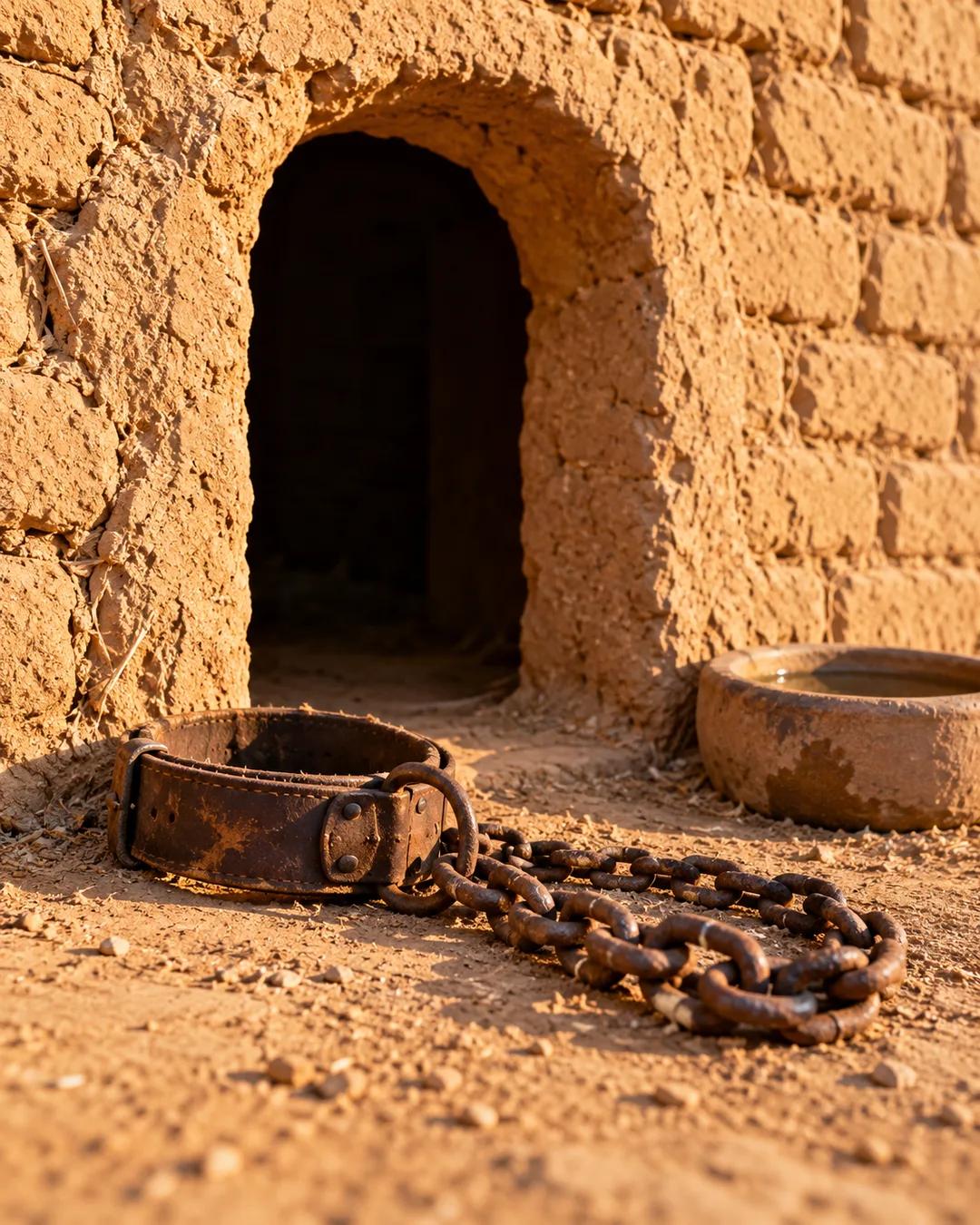
Rival forced into a dog kennel

Popular and ruthless
Ashurbanipal was a popular king and a capable administrator, and Assyria prospered under him. Toward his enemies he was ruthless. Displaying severed heads was typical of leaders in ancient Mesopotamia, but in the depictions he commissioned and in accounts written by other people, he takes it to an extreme.
Humiliating the defeated
He is described salting the earth after putting down an uprising against him and forcing people to grind up the bones of their ancestors to make bricks for his palaces. After a triumph that he threw for himself, defeated Elamite kings were made to pull his chariot in the parade. The dog kennel appears in some of the reliefs, and it is hard to tell from the relief which way it should be read.
Deportation
Conquered peoples were also deported to other parts of the empire. Local princes were often installed as vassal rulers to keep a region loyal, while many of the people who had lived there were sent to serve in the army, work on farms, or labor on the emperor's building projects. Scribes were sent to work for the royal court, and the more educated sons of local leaders were taken hostage to serve as scribes and scholars in the capital.
Why did Assyria deport conquered peoples?
Mass deportation became a standard Assyrian policy under Tiglath-Pileser III in the eighth century BCE. Moving a conquered population far from home broke its ties to local leaders and made revolt harder. It also supplied labor, soldiers, and skilled workers to the Assyrian heartland. Bustenay Oded's 1979 study of the practice collected the evidence for it from royal inscriptions and letters.
Why did Assyrian palaces show violence on their walls?
Palace wall reliefs were seen by officials, envoys, and vassals who came to the king. Scholars generally read the scenes of battles, sieges, and punished enemies as royal messaging about what happened to those who opposed Assyria. One relief from Ashurbanipal's North Palace at Nineveh shows the severed head of the Elamite king Teumman hanging in a tree at a garden banquet. That panel is now in the British Museum.
How did Assyria keep vassal rulers loyal?
Assyrian kings bound vassals with sworn treaties called adê, taken in the names of the gods. In 672 BCE, Esarhaddon had his vassals swear to accept Ashurbanipal as crown prince, and copies of that treaty survive on clay tablets. The oath texts list curses that would fall on anyone who broke them. A vassal who broke the oath could expect an Assyrian army to arrive.
More from Stuff You Missed in History Class