Korva is a scroll of the internet’s best ideas.
Caffeine is a bug poison

How caffeine arises
Every living thing has enzymes that rework adenine, one of the four nitrogenous bases of DNA and RNA, into hormones, waste products, and energy storage. Caffeine is an adenine-derived molecule, so a plant whose adenine chemistry goes slightly off can end up making a little of it as an accidental byproduct.
Why it kills bugs
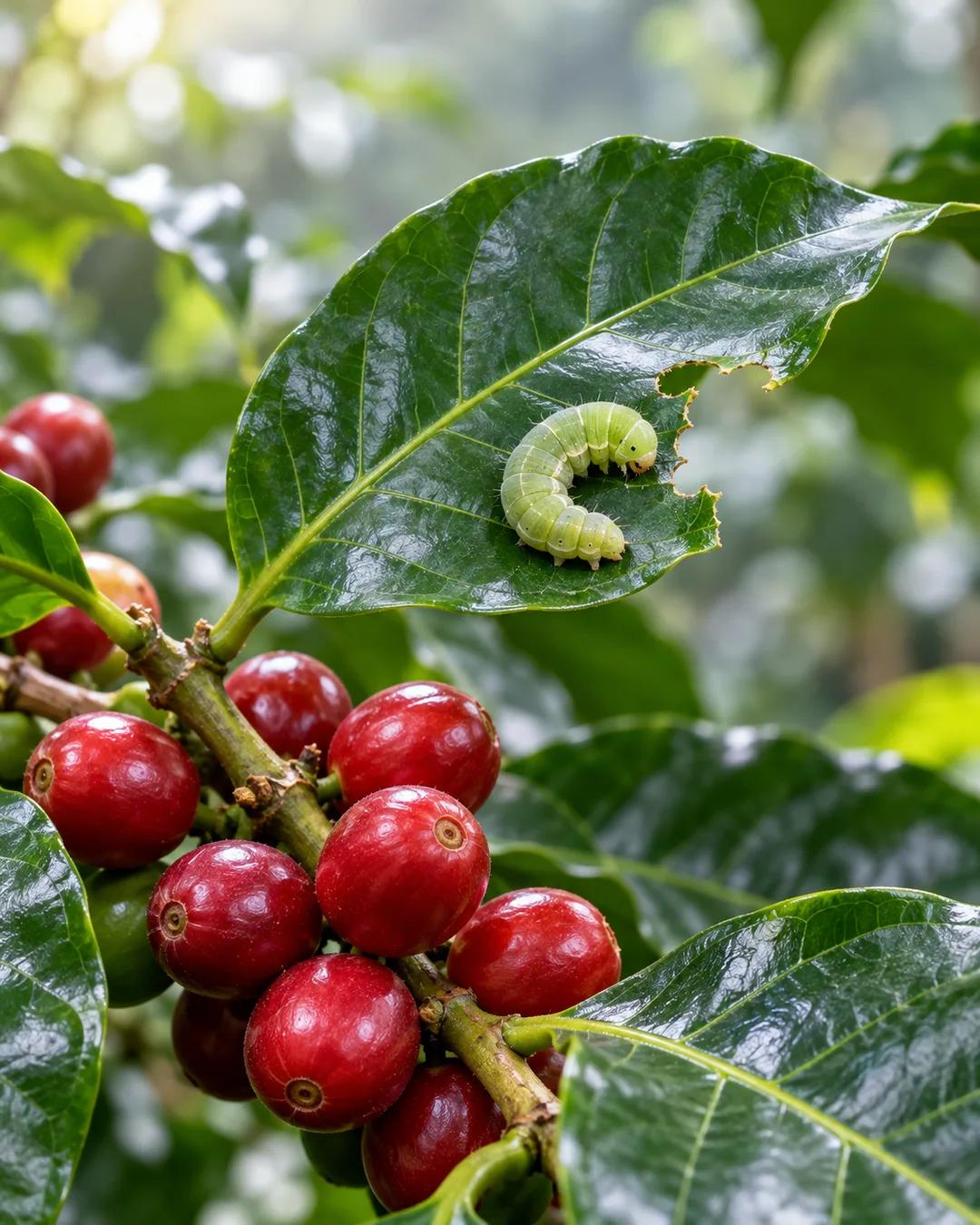
Bugs pay for that accident. An insect has to eat a lot of leaf to get the nutrients it needs, so it takes in a lot of caffeine along the way and gets super dosed. Its nervous system shuts down, and it dies.
A plant that holds a lot of caffeine is poisoned by it too, so the ones that thrive evolve immunity right alongside the caffeine. They also poison the soil around them for any plant that isn't immune, which is a second advantage.
Why it keeps evolving
Because caffeine is easy to evolve and gets a plant eaten less, it has appeared many times, probably far more often than anyone knows. Tea, coffee, cola, cacao, guarana, yaupon, and yerba mate have no common ancestor that made it. Some plants even put a little caffeine in their nectar, so bees that drink it get high instead of dying and are more likely to come back to the flower.
How did tea and coffee each evolve caffeine?
The genome of the coffee plant was sequenced in 2014 by an international team publishing in Science. It showed that coffee's caffeine-making enzymes belong to a gene family that expanded on its own, separate from the one tea uses. Both plants ended up with the same final steps, which add methyl groups to a xanthine molecule, built from different genetic starting points. Cacao arrived at caffeine's close relative theobromine through yet another independent route.
Why does caffeine keep seedlings from sprouting?
Researchers Friedman and Waller reported in 1983 that caffeine in coffee leaf litter and fruit husks slowed the germination of other seeds. Plants that release a chemical to hold back their neighbors are called allelopathic. Caffeine that leaches from fallen coffee leaves and discarded husks collects in the soil beneath the shrub. Seeds that sprout in that soil take up the caffeine, and many species germinate more slowly or less often.
How does caffeine in nectar change bee behavior?
A 2013 study in Science led by Geraldine Wright tested honeybees on sugar solutions with and without caffeine. Bees that fed on caffeinated nectar were about three times more likely to remember a floral scent a day later than bees fed plain sugar. Caffeine appears to strengthen activity in neurons involved in memory, in a region of the bee brain called the mushroom bodies. Natural nectar from citrus and coffee flowers contains caffeine at levels below the point where bees begin to reject it.
Where in a coffee plant is caffeine kept?
Coffee plants make the most caffeine in young leaves and developing fruit, the soft tissue insects find most appealing. Studies of coffee tissue by Hiroshi Ashihara and colleagues found caffeine stored in the vacuole, a fluid-filled compartment inside the cell. Keeping it there separates it from the enzymes and machinery in the rest of the cell. Older, tougher leaves hold much less caffeine than young ones.
More from vlogbrothers