Korva is a scroll of the internet’s best ideas.
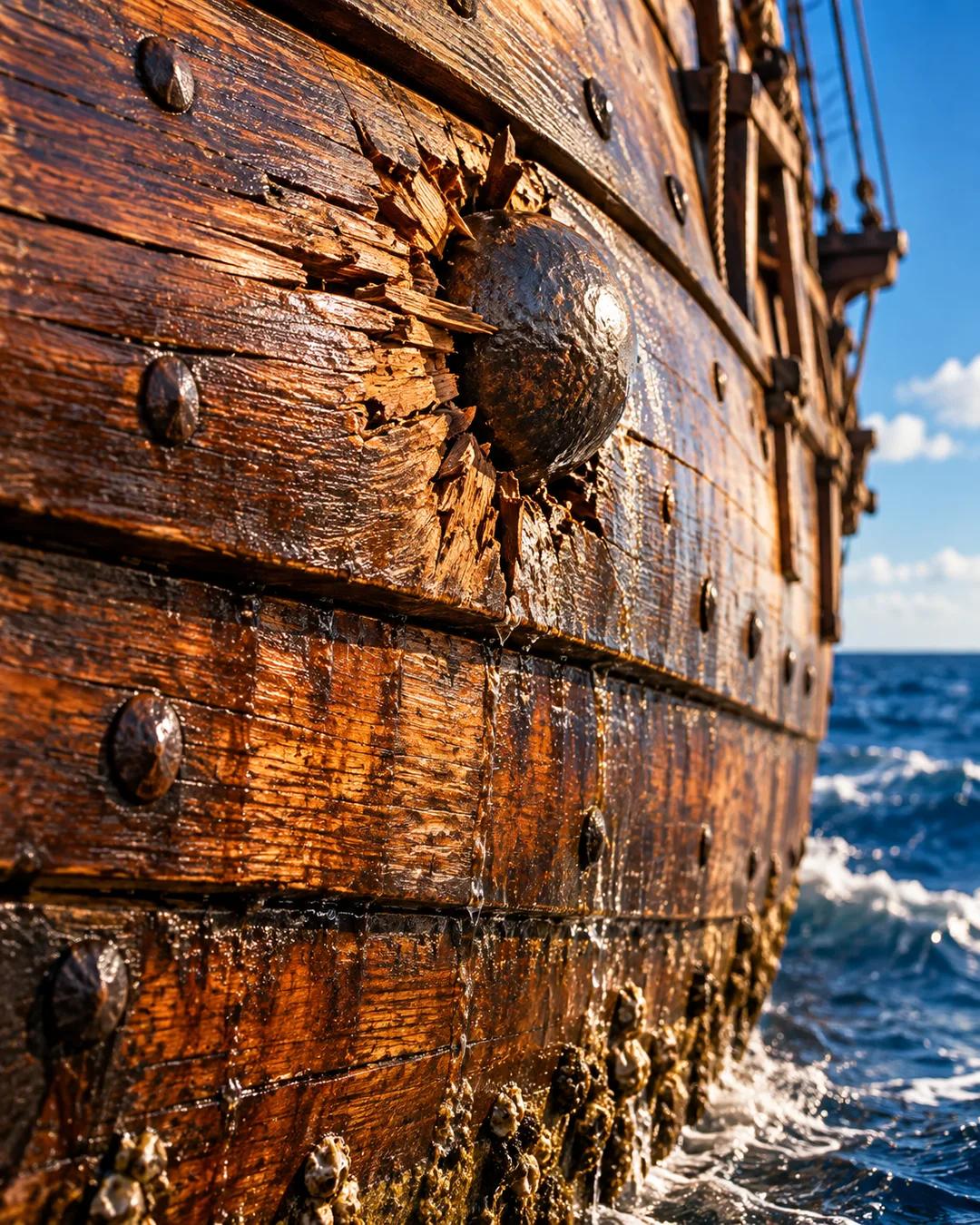
Cannons could not pierce the jong
Built to last
Jongs descended from the ships carved into the walls of Borobudur, and their layered hulls made them exceptionally strong. Some could carry a thousand soldiers. European explorers who reached the archipelago in the 16th century were astonished at their size.
The Portuguese encounter
In 1511 a Portuguese fleet sighted two very large junks. One, from India, surrendered at once. The Javanese ship beat off several attempts to board it, and cannon fire did no good: its three or four layers of wood absorbed the shots and it sailed on. A Portuguese captain wrote that it carried a thousand fighting men, that his own ship, the Anunciada, did not look like a ship beside it, and that even the largest cannon failed to pierce it below the waterline.
The smaller, more maneuverable Portuguese ships finally disabled the jong by breaking its two massive rudders, and the men on board surrendered. The Portuguese sailed it all the way back to Europe, where it served for a time as a warship in the fleet guarding the Strait of Gibraltar.
How did layered hulls make ships stronger?
Southeast Asian shipbuilders joined hull planks edge to edge with wooden dowels and fiber lashings rather than iron nails. Adding extra layers of planking made the hull thicker and let it flex under impact. Wood absorbs a cannonball by splintering around it instead of shattering, and the shot often lodges inside. Iron fasteners also corrode in seawater, so the wooden pegs held up longer.
Why did breaking the rudders disable the jong?
A ship steers by pushing water sideways with its rudder. Without working rudders, a vessel loses control and drifts with wind and current. Southeast Asian ships commonly steered with large paired rudders hung on each quarter of the hull. Taking out both left a ship with no way to hold a course or turn away from its attackers.
Why did Portugal sail to Malacca in 1511?
Malacca was the richest trading port in Southeast Asia, where merchants from India, China, and the archipelago met. Portugal wanted to control the spice trade at its source instead of buying from middlemen in the Indian Ocean. Afonso de Albuquerque led the expedition. His force took the city in August 1511 after weeks of fighting.
More from Fall of Civilizations