Korva is a scroll of the internet’s best ideas.

Capone hid millions in laundromats
The vanished fortune
That works out to about $1.4 billion a year in today's currency, from illegal gambling, bootlegging, brothels, and extortion. It would have served as evidence of his crimes at trial, but the money was nowhere to be found.
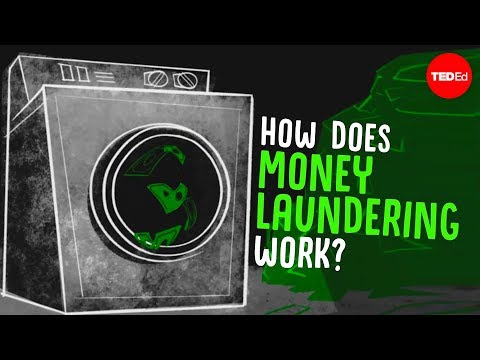
Capone and his associates had hidden it through investments in various businesses whose ultimate ownership couldn't be proven, like cash-only laundromats. Those laundromats are part of the reason the activity is called money laundering, a term that came to cover any process that cleans illegally obtained funds of their dirty criminal origins so they can be used within the legal economy.
An old practice
Capone wasn't the first to launder money. The practice is about as old as money itself: merchants hid their riches from tax collectors, and pirates sought to sell their bounty without drawing attention to how they got it.
Today's schemes are much more complex, with virtual currencies, offshore banking, the darknet, and global markets in the mix.
Why could tax evasion stick when nothing else did?
Federal prosecutors did not have to prove how Capone earned his money, only that he had income and never reported it. Investigators pieced together his spending and the money moving through his associates to show income far above anything he had declared. A Chicago jury convicted him in 1931, and he was sentenced to eleven years in federal prison.
Why do cash-only businesses hide dirty money so well?
A business that takes payment in cash leaves almost no record of who paid or how much. That lets an owner mix illegal cash with real takings and report the total as ordinary sales. Nobody can easily check how many customers actually came through the door. The Financial Action Task Force, the international body that sets anti-money-laundering standards, lists cash-intensive businesses among the sectors at risk.
How did pirates sell plunder without questions?
Pirates and privateers sold stolen cargo in ports where merchants and officials asked few questions. Port Royal in Jamaica was one of the busiest of these trading ports in the 1600s. Goods were sold at a discount and passed through local traders, which gave them a respectable-looking path into ordinary commerce. Coins and bullion could then be spent anywhere without anyone knowing where they came from.
Why do virtual currencies complicate tracing money?
Bitcoin records every transaction on a public ledger that cannot be erased, but the addresses on it carry no names. Someone can spread funds across thousands of addresses or run them through services that pool and reshuffle coins. Investigators and blockchain analysis firms trace these movements by clustering addresses that appear to share an owner. The link to a real identity usually comes where the coins are exchanged for ordinary money.
More from TED-Ed