Korva is a scroll of the internet’s best ideas.
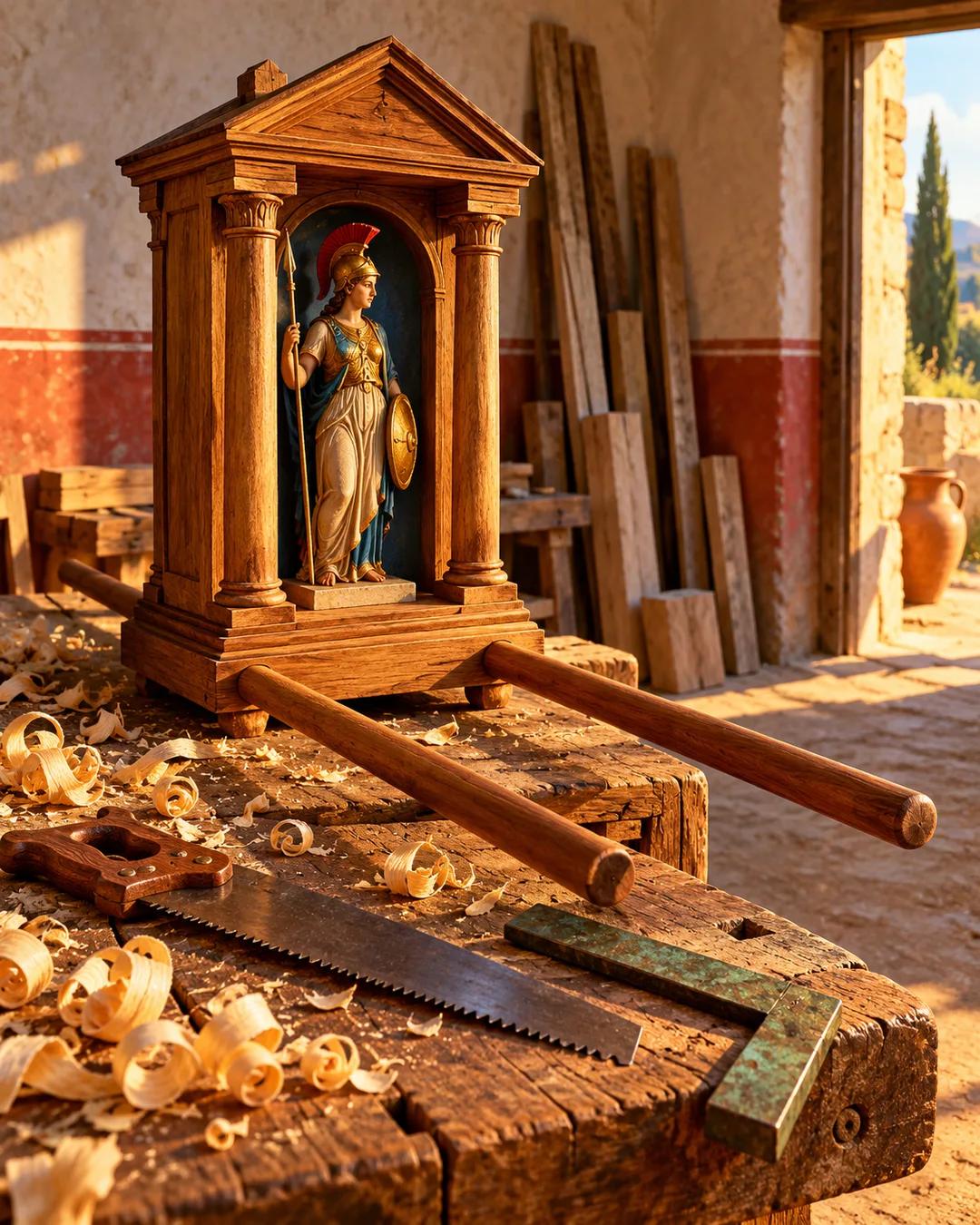
Carpenters' parade for Minerva

The carpenters' shrine
The procession was painted in the carpenters' office in Pompeii. The shrine shows different acts of work, a partially preserved image of Minerva, and a statue of a figure identified as Daedalus, another sponsor of the carpenters, who was himself a famous carpenter in mythology. People are sawing wood in the scene.
Processions in Rome
The great procession in ancient Rome was the triumph, with soldiers carrying trophies and even defeated foes, animals led out to be sacrificed, and the general in his chariot as a god for a day. Many more modest processions, like this one, took place in the streets of Roman cities all the time.
The scene may be from the Festival of the Quinquatria, which honored Minerva.
Carpenters on the Capitoline
A related image comes from the carpenters' association on the Capitoline Hill in Rome, found in 1938. Historically these carpenters took care of the roofing system of the Temple of Jupiter Optimus Maximus. Minerva oversees their work there too, beside depictions of saws and a square.
Why was Minerva the patron of craftsmen?
Minerva was the Roman goddess of wisdom, but she also presided over skilled crafts and the people who practiced them. Her festival, the Quinquatrus, opened on March 19 and ran for several days. Schoolteachers, artisans, and other skilled workers took part in it. Guilds of craftsmen in Roman cities often took a patron deity, and Minerva was a common choice.
Why was Daedalus a patron of carpenters?
In Greek myth, Daedalus was a master craftsman who built the Labyrinth on Crete for King Minos. He also made the wings that carried him and his son Icarus off the island. Pliny the Elder credits Daedalus with inventing carpentry and several of its tools, including the saw and the axe. Craftsmen in later centuries claimed him as their own.
Why did a triumphing general dress as a god?
A general awarded a triumph wore the costume of Jupiter, the chief Roman god, and rode through Rome in a chariot. Ancient writers report that his face was painted red like the statue of Jupiter in his temple. They also report that a slave stood behind him holding the victory crown and whispering reminders that he was mortal. The procession ended at the Temple of Jupiter Optimus Maximus on the Capitoline Hill.
How did Roman trade guilds work?
Roman guilds, called collegia, were associations of people who shared a trade or a religious devotion. Members paid dues and held banquets together. Many collegia also kept a fund to pay for members' funerals. Each usually had a patron deity and a meeting hall that served as a center for its members.
More from Ancient Rome Live