Korva is a scroll of the internet’s best ideas.
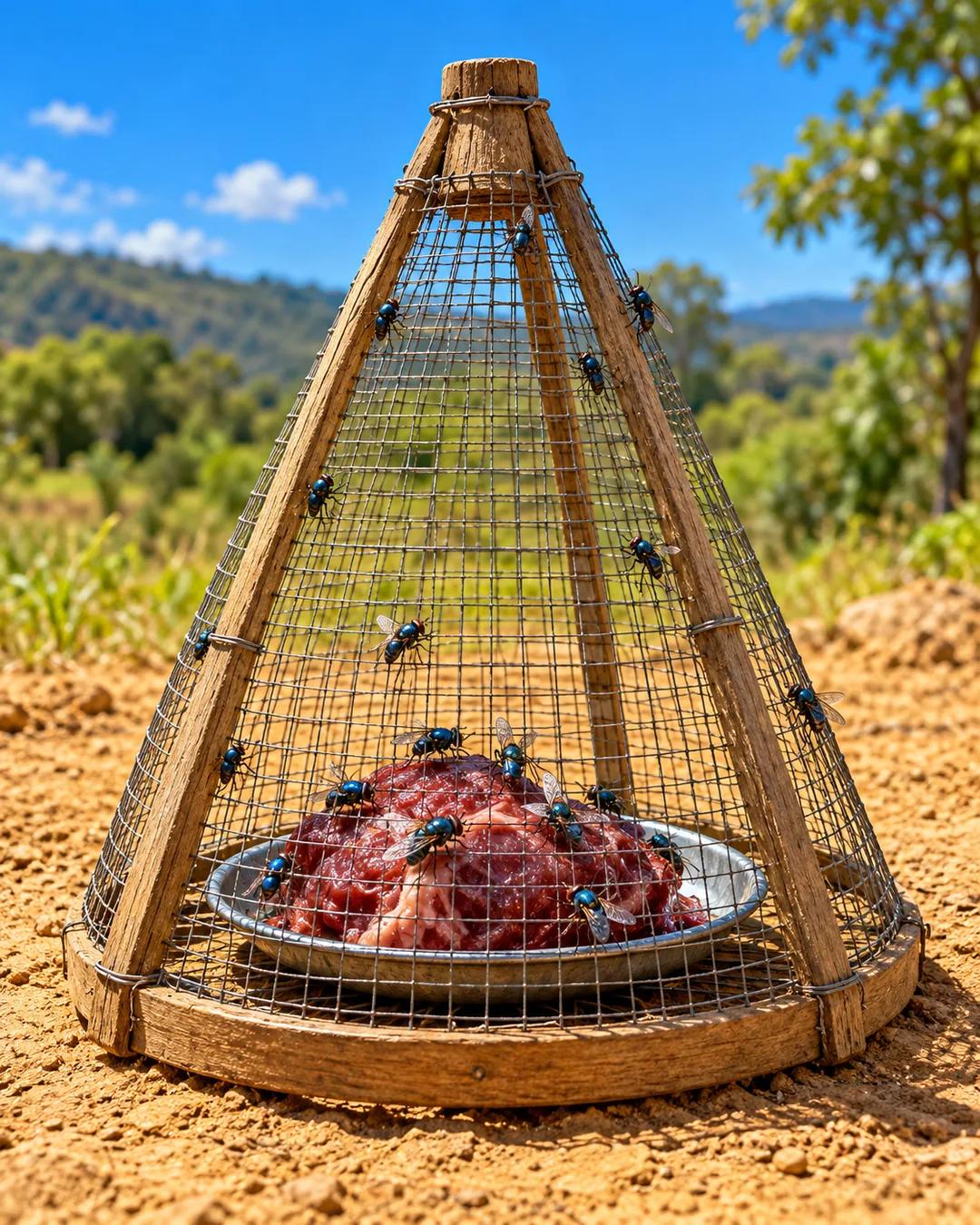
Carrion-baited screwworm traps were useless
The USDA began its screwworm research program in Menard, Texas, in 1929, and its main weapons were insecticides to treat infections and traps to catch the flies. After several years of research there, Cushing became convinced those measures would not be enough. He believed something was missing from the screwworm puzzle, so he applied for a grant to study entomology at the University of Liverpool with Walter Scott Patton, a world expert on flies.
Working under Patton, Cushing closely studied the internal structure of different flies and determined for the first time that the screwworm was a unique species with a unique lifecycle. Until then it had often been confused with similar flies whose larvae fed on decaying flesh. Screwworm larvae eat only living flesh, which meant that traps baited with carrion to attract flies were useless. After his discovery, the research shifted its focus to understanding the screwworm specifically.
Why do carrion traps catch other flies but not screwworms?
Many blowflies are drawn to the smell of rotting meat and lay their eggs on it. A trap baited with carrion catches those flies in large numbers. Female screwworms look for wounds on living animals and ignore dead flesh, so a carrion-baited trap does not attract them.
How do entomologists tell similar fly species apart?
Species of flies are separated by fine details such as the arrangement of bristles, the pattern of wing veins, and the shape of the larval mouth hooks and breathing openings. Many related species look nearly identical to the eye, and only close study of these structures shows the difference. Careful anatomy of this kind is what allowed the screwworm to be recognized as its own species.
Why study flies at a university in England?
In the early twentieth century, Liverpool was home to one of the leading centers of tropical and veterinary entomology. Walter Scott Patton was a professor there and co-wrote a major reference work on insects of medical and veterinary importance. A researcher seeking expertise on the classification of flies could find few better places to study.
More from Brian Potter