Korva is a scroll of the internet’s best ideas.
Chatbots work like slot machines
Hooked by design
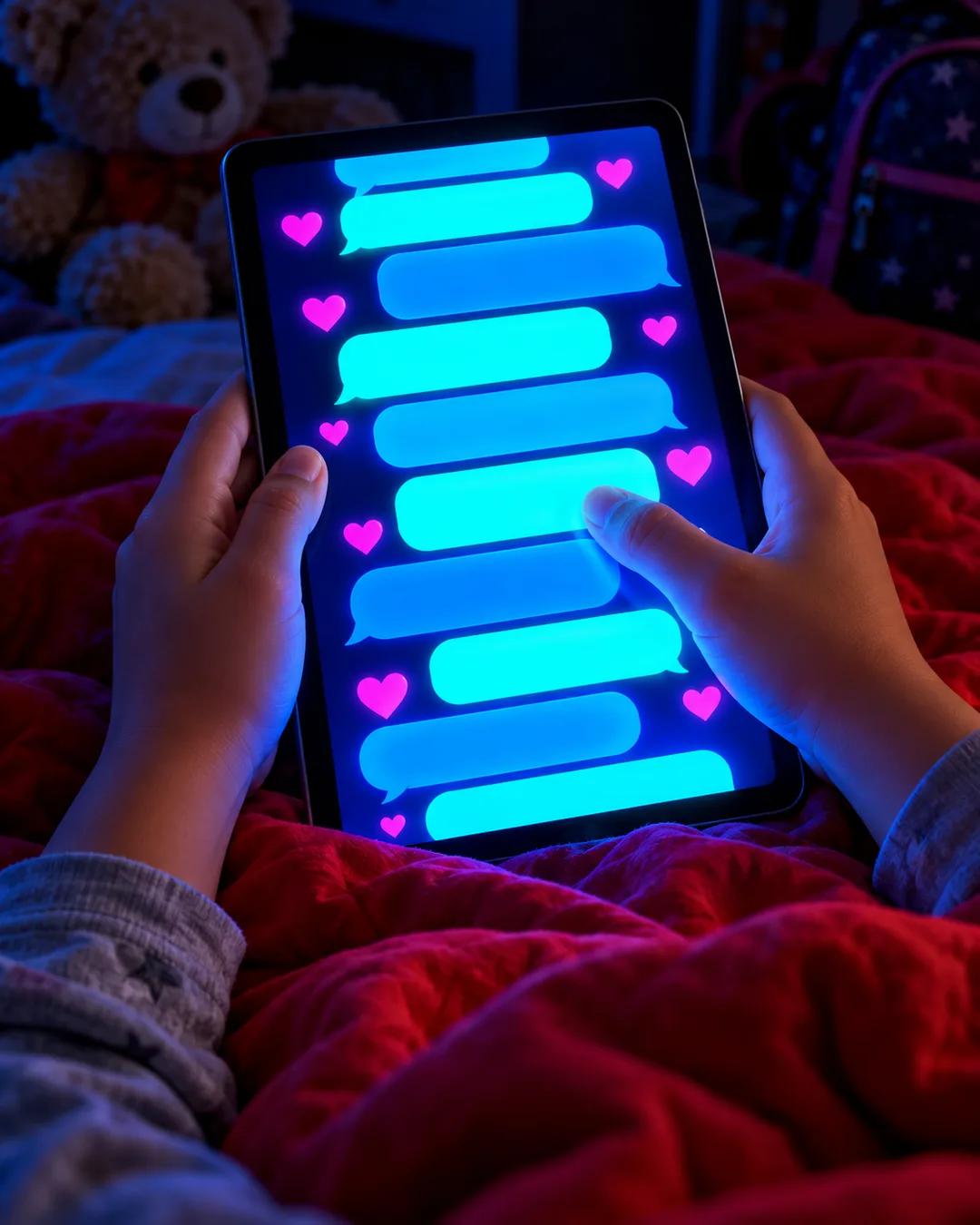
In an endless feed, you pull the lever and get more videos, then more photos, then more posts, with emoji hearts arriving as the payout. Variable rewards keep people coming back.
A child talking to a chatbot gets a similar loop. The question gets an answer that is human-like, interesting, and charming, and then the chatbot offers to help with something else. The conversation has no natural end.
What the lawsuits showed
Internal documents from the lawsuits by attorneys general show how the first system was built. Over the years, Meta employees wrote to Mark Zuckerberg about underage kids on the platform, beauty filters that made girls anxious about their looks, and bullying and unwanted sexual advances. Suggestions to hire more safety engineers or switch features off by default were turned down. Meta settled with the attorneys general of 47 states, and the changes now include turning off notifications at night and during the school day, turning off beauty filters, and stricter age verification to keep kids under 13 off the platform.
How do variable rewards hook the brain?
In experiments in the 1950s, psychologist B. F. Skinner found that animals rewarded on an unpredictable schedule pressed a lever faster and kept going longer after the rewards stopped than animals rewarded on a fixed schedule. Slot machines pay out on that kind of unpredictable schedule. Neuroscientist Wolfram Schultz later showed that dopamine neurons respond most to rewards that are better or worse than expected. An unpredictable payoff therefore produces a bigger signal than a steady one.
Why do feeds never end?
Designer Aza Raskin created infinite scroll in 2006 so that new content would load as a person reached the bottom of a page. Before that, page breaks gave readers a natural moment to stop. Researchers call those moments stopping cues. Raskin has said publicly that he regrets how widely the feature was adopted.
More from Fresh Air