Korva is a scroll of the internet’s best ideas.
Claude is the market's Walter Cronkite
A market with one reader
Mike Mauboussin's theory holds that a breakdown of diversity leads to bubbles and crashes. Almost everyone in public equity investing, retail or institutional, now sends each piece of news to Claude, sometimes through Claude Code or an agent. Claude is probabilistic, so there is probably little variation in how it interprets the news.
Media fragmented long ago, and there was a time when Walter Cronkite was the only voice of truth. Claude is becoming that for the stock market, and a huge chunk of people trade on its view. It is very smart, but its interpretation isn't always correct, and a market is a probabilistic, Bayesian reading of the future.
The six-week cycle
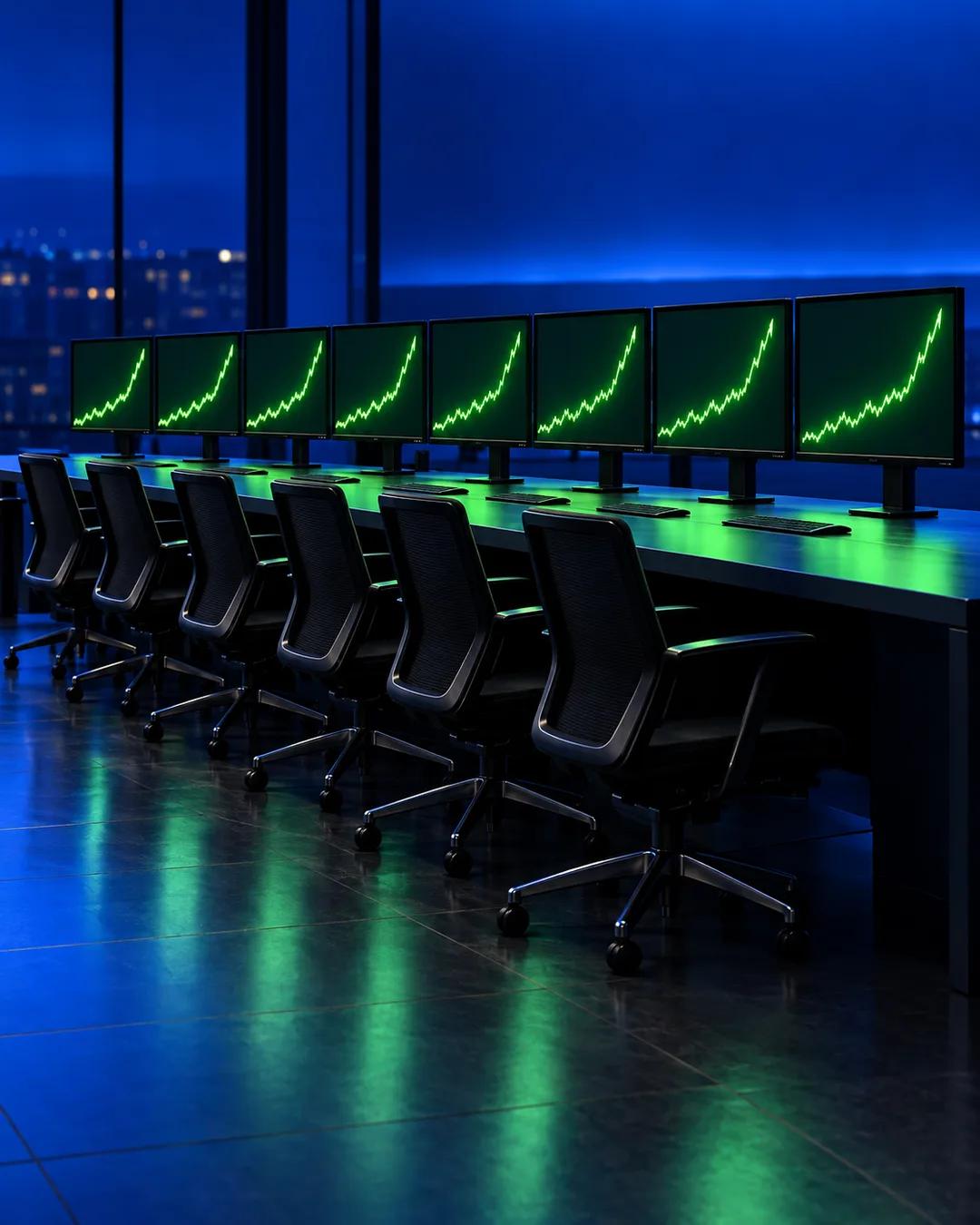
The effects show up in prices. A chart of Japanese capacitor stocks shows an entire capacitor cycle in six weeks: the stocks went vertical and then dropped, before the actual fundamentals had even arrived. A cycle like that would normally take about three years.
Why does diversity of views stabilize markets?
Scott Page's diversity prediction theorem, described in his 2007 book The Difference, shows that a group's error equals the average individual error minus the diversity of their predictions. More varied guesses mean a smaller collective error even when each guess is imperfect. When everyone reasons the same way, their mistakes line up instead of canceling out. A market where views converge also tends to have many people wanting to sell at the same moment.
How do crowded trades unwind so fast?
In August 2007, many quantitative hedge funds suffered large losses over just a few days. A study by Amir Khandani and Andrew Lo of MIT found that funds with similar models held similar positions, so one fund's forced selling hurt the others. Each round of losses pushed more funds to sell. The episode became known as the quant quake.
Why can the same AI answer differently?
Language models choose each next word from a probability distribution rather than looking up a fixed answer. A setting called temperature controls how much randomness goes into that choice. At a temperature of zero the output becomes nearly deterministic. Even then, the model's training shapes the distribution, so different users asking similar questions can get answers with the same slant.
More from Invest Like the Best with Patrick O'Shaughnessy