Korva is a scroll of the internet’s best ideas.
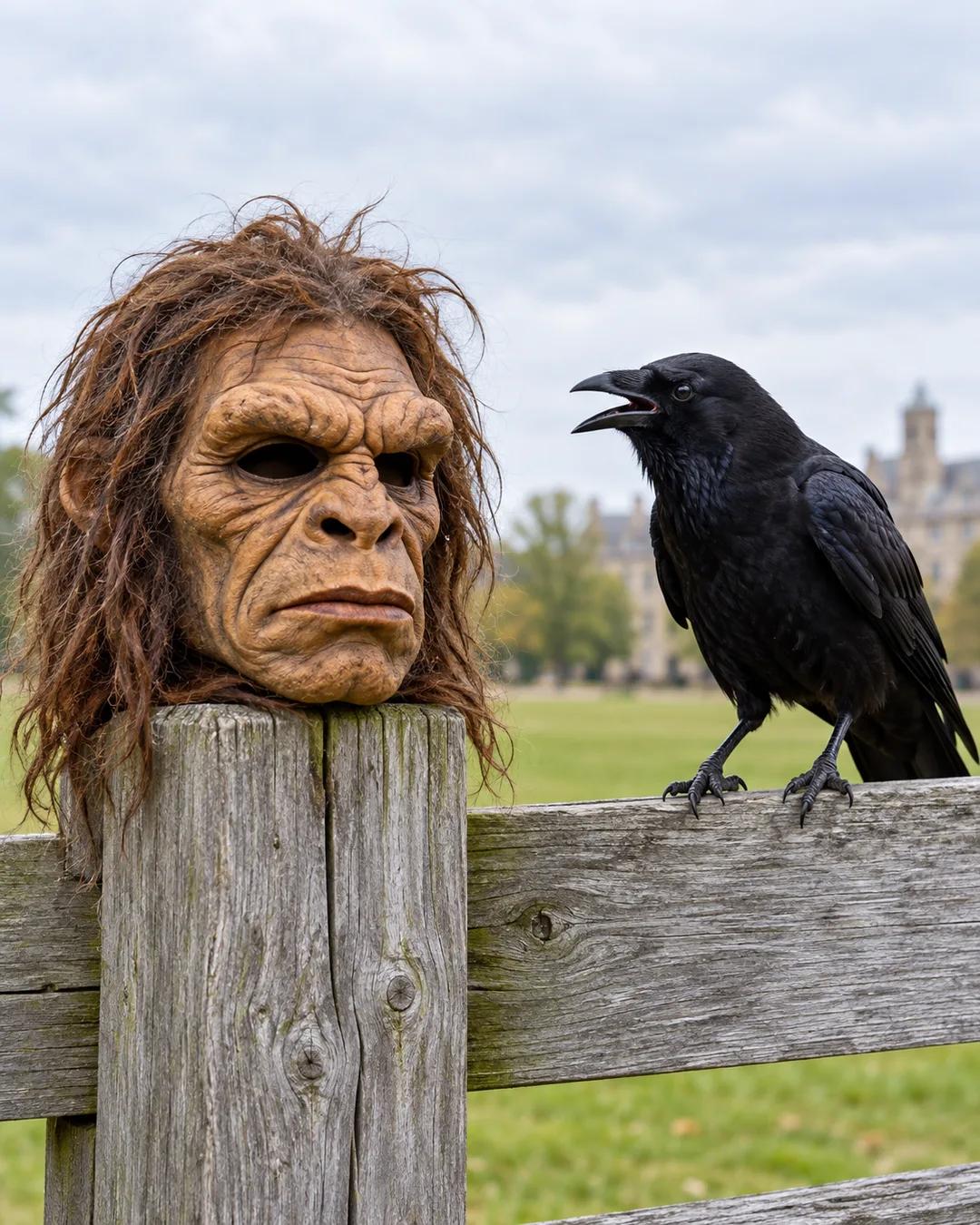
Crows scold a caveman mask

The mask experiment
Researchers wanted to know whether crows could tell people apart, so they wore a caveman mask every time they caught birds on campus. A second mask, Dick Cheney, was the control, and nothing dangerous was ever done to a bird while it was worn. Before any captures, the crows ignored both. After the seven captures, they still ignored the control mask and an unmasked face, but the caveman drew a strong response: scolding, dive-bombing, and chasing whenever he walked on campus, whether the mask was upside down, with a hat, or without one.
Grudges spread
Over eight years, the response to the caveman roughly doubled. Almost every bird joining in was never touched by him. Many were not even born when the caveman first caught birds seven and a half years earlier. They learned the danger by watching other crows scold him.
What the brain showed
Brain scans of the captured birds showed the difference. Looking at the person who caught them, the right side of the amygdala lit up, just as a person's would at a danger learned from the environment. Looking at a person who had fed and cared for them for several weeks activated the reward circuit, as if they expected food, like Pavlov's dog.
How did researchers watch crow brains react?
In a 2012 study in the Proceedings of the National Academy of Sciences, John Marzluff and colleagues injected crows with a radioactive form of glucose. Active brain regions burn more glucose, so a scan afterward showed which areas had been working while the bird looked at a mask. The crows were awake and viewing the masks during the uptake period. That let the team compare the brain's response to the dangerous face, the familiar caretaker face, and a neutral one.
Why do crows scold a threat instead of fleeing?
Crows and many other birds mob predators, a behavior called mobbing. A group that swarms and calls at a hawk or an owl can drive it off the area, and the calls tell other birds where the danger is. Mobbing works best with numbers, which suits birds that roost and forage in large groups. Ornithologists have documented mobbing in hundreds of bird species.
How does a grudge outlast the crows that earned it?
American crows are cooperative breeders, and young birds often stay with their parents for several years before leaving to breed. During that time they watch their family mob a threat and copy the response. Crows also gather in large winter roosts where news of danger can spread among unrelated birds. Social learning of this kind can carry a lesson well past the lifespan of any single bird.
More from TEDx Talks