Korva is a scroll of the internet’s best ideas.
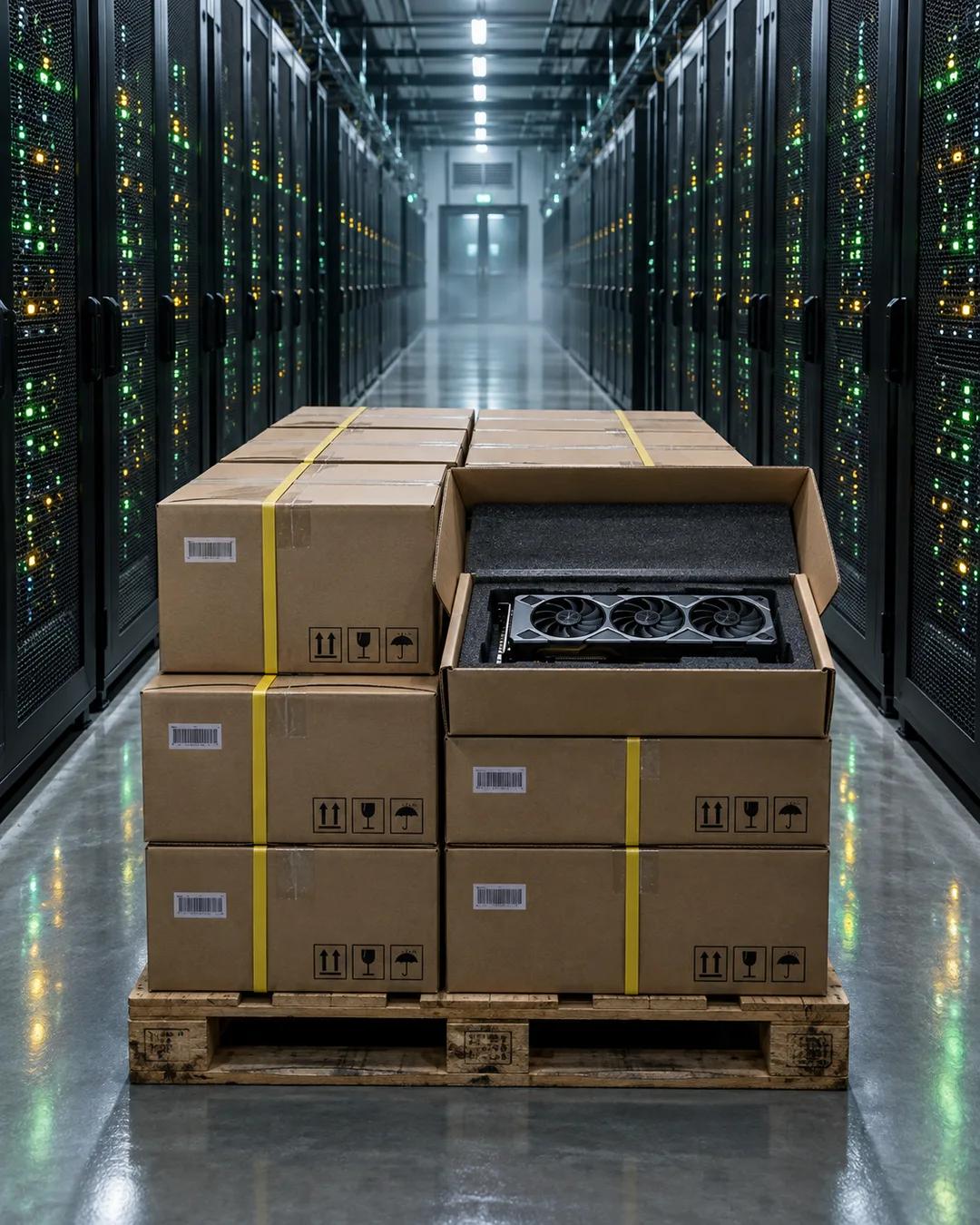
Cyber defense is a GPU arms race

Defense needs AI
Open-weight models run on small local machines, and 197 sovereign countries each have their own energy and internet connections, so data centers will exist all over the world. Regulating the software itself is close to impossible. What rises is the need for defense, and defending against AI-driven attacks means using AI. Fortune 50 CEOs are worried enough about it that cyber defense is set to become a top board-level priority.
GPUs as a utility
New models are published about every 11 days, and they keep pace with one another, so the number of machines pointed at a task becomes the key measure of how well it performs. Picture the government deciding that the financial services system gets one share of America's GPUs, defense gets another, and so on. Data centers become a utility, and blocking one would be like blocking tank production during World War II.
Energy as the input
The free market could sort this out without direction from above. The Iran war's blockages at Hormuz barely moved the price of oil because supply shifted so quickly, which shows that generating electrons is the critical input. If the data center is national security infrastructure, the response may resemble the one after the Persian Gulf War and the Global War on Terror, when the country doubled and tripled down on natural gas and domestic oil.
Why can't open-weight models be regulated?
The weights of a model are files of numbers, and once published, anyone can copy them at almost no cost. In March 2023, the weights of Meta's LLaMA model, which had been shared with a limited group of researchers, spread across the internet within about a week. Many open-weight models are small enough to run on a single consumer machine. That leaves no central server to shut down.
Why does a Hormuz closure matter for oil?
According to the US Energy Information Administration, roughly a fifth of the world's oil consumption has passed through the Strait of Hormuz in recent years. At its narrowest the strait is about 21 miles wide, and shipping lanes in each direction are only two miles wide. Saudi Arabia and the United Arab Emirates have pipelines that carry part of their crude around it. Even so, most of the Gulf's exports still leave by tanker through the strait.
How did war production turn into a utility?
In 1942, the United States stopped civilian car production so that automakers could build military equipment. Ford's Willow Run plant in Michigan was built to produce B-24 bombers, and at its peak it turned out about one an hour. The War Production Board, created in January 1942, allocated scarce materials among military and civilian uses. The same agency decided which factories got steel, aluminum, and rubber first.
Why do GPUs run AI so well?
Training and running a neural network consists mostly of multiplying large grids of numbers, and these multiplications can be done in parallel. A GPU has thousands of small cores built to do exactly that kind of parallel arithmetic. Nvidia released its CUDA programming platform in 2007, which let developers use GPUs for work beyond graphics. In 2012, a neural network called AlexNet won an image recognition contest running on two Nvidia GPUs.
More from All-In with Chamath, Jason, Sacks & Friedberg