Korva is a scroll of the internet’s best ideas.
Dallas won without a river

The harsh site
The Dallas-Fort Worth site gives a city little to work with. Winters bring the occasional ice storm and snow storm, and summers stack streaks of 100° F (38° C) days for weeks on end. Where hot meets cold there are tornadoes, and one touched down in downtown Fort Worth in 2000.
The river problem
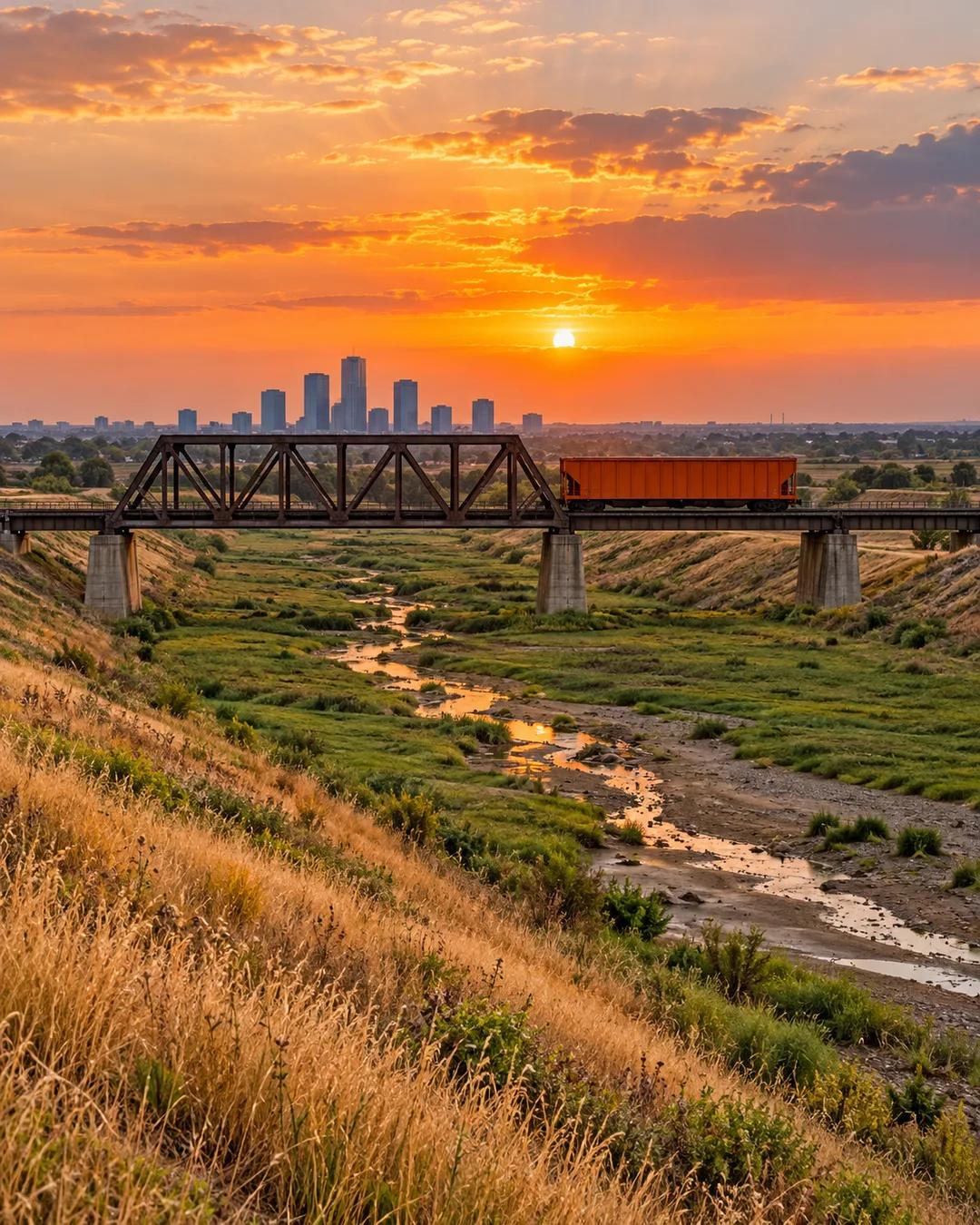
Houston has the navigable Buffalo Bayou and Port Houston to help float its economy. Dallas has only the Trinity River. Early city boosters believed that with a little engineering it could connect North Texas to the Gulf, and for a few decades the Army Corps of Engineers tried, to no avail.
How it grew
Dallas went on to become a rail hub, then a cattle hub, and now the area is a natural gas hub. Will and boosterism from the city's founders put it on the map. From there it brought in big business by building a big airport, keeping operational costs low, and maintaining a large, skilled, comparatively cheap workforce through breakneck home building.
The area now has over 20 Fortune 500 companies, a count only New York City and Chicago top. Texas Instruments, Toyota North America, Charles Schwab, Comerica, AT&T, and Caterpillar make it a hub for everything from tech and finance to heavy machinery.
Why did the Trinity River resist engineers?
The Trinity swings between a thin trickle in dry spells and violent floods after heavy rain, and it carries a great deal of silt. That makes it hard to keep a deep channel open for barges. Navigation plans in the early twentieth century called for locks and dams to reach the Gulf of Mexico, and they never delivered a working shipping lane. Instead, a severe flood in 1908 led Dallas to build levees along the river through the city.
How did railroads turn Dallas into a hub?
The Houston and Texas Central Railroad reached Dallas in 1872, and the Texas and Pacific Railway arrived in 1873. Their lines crossed there, linking cotton and cattle country to markets in the east and along the Gulf. Merchants, banks, and warehouses gathered at the crossing to serve the freight. In 1914 the Federal Reserve placed one of its twelve regional banks in Dallas.
Why does North Texas get so many tornadoes?
Warm, moist air flows north from the Gulf of Mexico, while dry air drifts in from the southwestern deserts and colder air arrives from the north. When these air masses collide beneath fast upper-level winds, the atmosphere can start to rotate and build supercell thunderstorms. North Texas sits at the southern end of the central United States region nicknamed Tornado Alley. The National Weather Service reports that spring brings the most tornadoes to Texas.
How did DFW Airport come to exist?
Dallas and Fort Worth competed for air traffic for decades, and each ran its own airport. In 1964, the federal Civil Aeronautics Board pressed the two cities to agree on a single regional airport. Dallas/Fort Worth International Airport opened in 1974. Its roughly 27 square miles of land make it larger than the island of Manhattan.
More from Wendover Productions