Korva is a scroll of the internet’s best ideas.
Smaller lots keep Houston cheap

The four-home lot
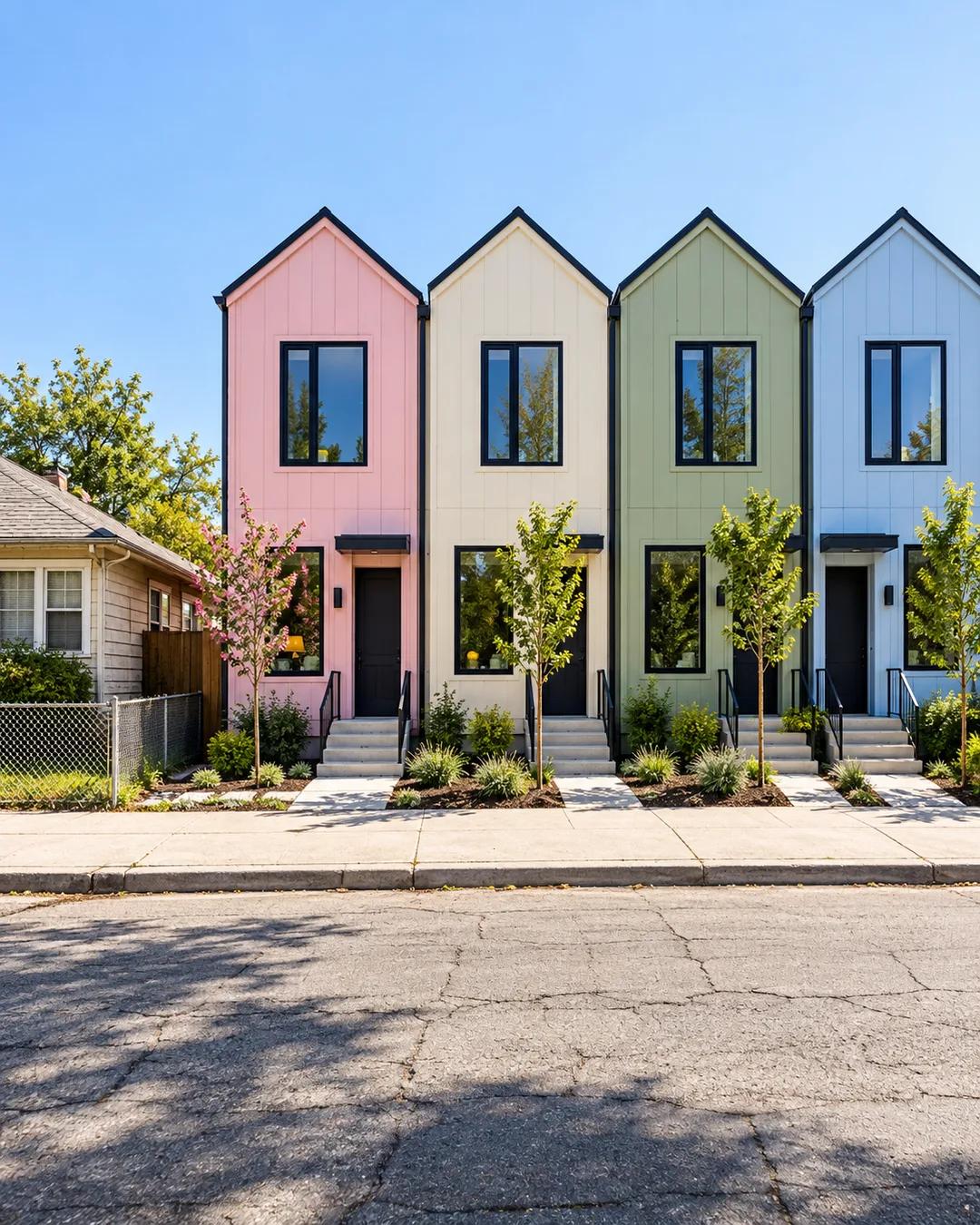
In Acres Homes, a quiet residential neighborhood in Northwest Houston, CGEA Planning, a local design and planning firm, split a lot into four rather than building one single-family home. Where it might sell one larger home for, say, $400,000, it can sell four homes for $150,000 each and make 50% more on sales.
The buyers get comparatively low prices, and the neighborhood gets more people. More neighbors help local business and encourage further business development, and they make the area appealing to more pro-density development, which makes it more walkable, welcoming, and livable. Down the street from that lot it is already happening: the homes sit on small footprints and they are all cheap.
The rule change
The city's rules made it easy. In the 1990s, applications to turn big lots into smaller lots had become so common that city officials stopped handling them case by case. They dropped the minimum lot size from 5,000 square feet to 1,400 and cut the required setback of homes from 25 feet to 5 feet off the street.
Inside the I-610 motorway that rims the core of the city, denser and denser housing has kept about 4,500 people living in each square mile. That is on par with Sacramento, Long Beach, and Atlanta.
Why do smaller lots cut the price?
Land is a large share of what a new home costs, and a lot's price is spread across however many homes sit on it. Splitting one lot into four divides that land cost four ways. Smaller houses also use less lumber, foundation, and finishing than one large house would. Together those two effects lower the price of each home before any builder profit is added.
How does Houston manage growth without zoning?
Houston has no conventional zoning code, but it still regulates how land is used. The city sets rules for minimum lot size, building setbacks, parking, and subdivision design. Many neighborhoods also carry private deed restrictions that developers wrote when the streets were first platted. Those restrictions can bar uses such as a business on a residential street, and they are enforceable in court.
How do setbacks limit small homes?
A setback is the minimum distance a building must sit from the property line or street. Large setbacks eat up space on shallow lots, leaving less room for a house or a second home on the same land. Cutting the requirement from 25 feet to 5 feet puts a front door close to the sidewalk. Many neighborhoods built before the 1920s put front doors within a few feet of the sidewalk.
More from Wendover Productions