Korva is a scroll of the internet’s best ideas.
Design has always been prototyping
Apple's demo culture
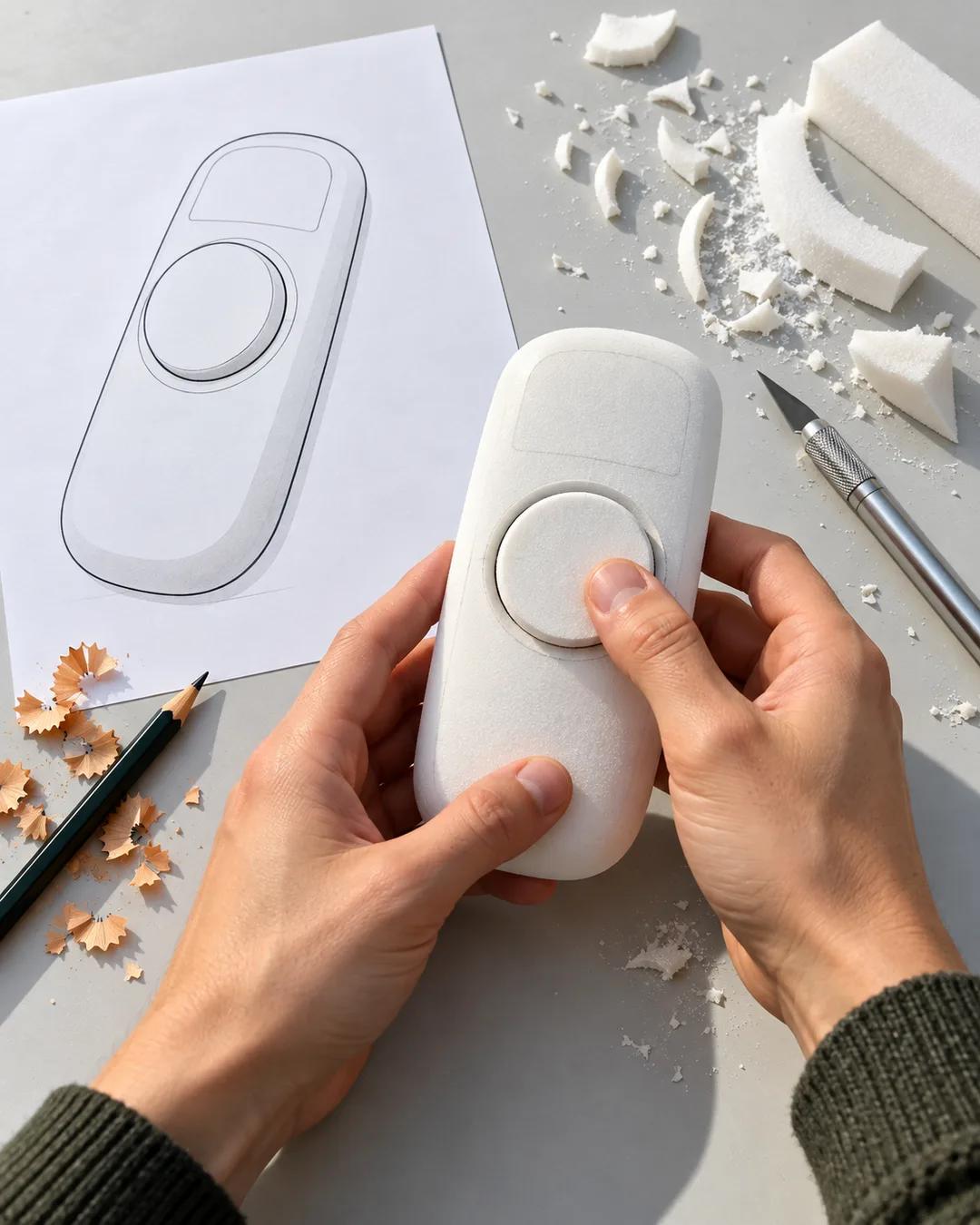
Apple ran on a demo culture. For the original iPod, before any software was written, Jony Ive made a little prototype you could touch, and Steve Jobs showed up every week to feel how it worked. That was Apple's invention engine.
The factory model
Somehow the industry landed on a different arrangement: designers create static images, and programmers try to turn those images into software. That is the factory model, technology cast into the shape of manufacturing and the industrial revolution.
Design and engineering blur
Design and engineering are blurring now. Replit has a group called Design Engineering, made up of people who are good at both, and it adds product management to the mix, so a PM can do all three jobs. When Replit released Agent 4, most of the design work happened inside Replit, where a designer can build something dynamic instead of a static mock.
How was the original iPod built so quickly?
Apple announced the first iPod on October 23, 2001, roughly a year after the project began. It used a small 1.8 inch hard drive made by Toshiba and a reference design from the chip company PortalPlayer, which let the team focus on the interface. The scroll wheel was the feature that set it apart, letting a listener move through a long song list with one thumb. The first model held 5 gigabytes of music.
Where did the factory model of work come from?
Frederick Winslow Taylor's 1911 book The Principles of Scientific Management argued that planning should be separated from doing, with managers designing the work and laborers carrying it out. That idea shaped offices as well as factories through the twentieth century. In software, Winston Royce's 1970 paper described a sequential process of requirements, design, and coding, which later became known as the waterfall model. Royce himself wrote that the simple sequential version was risky.
Why do prototypes communicate better than static mocks?
A static image cannot show timing, motion, or how an interface responds when someone touches it. A working prototype lets people judge those qualities directly. Tom Kelley of the design firm IDEO has said that if a picture is worth a thousand words, a prototype is worth a thousand meetings. Bill Buxton's 2007 book Sketching User Experiences made a related case for testing ideas early with rough working models.
More from Casey Newton