Korva is a scroll of the internet’s best ideas.
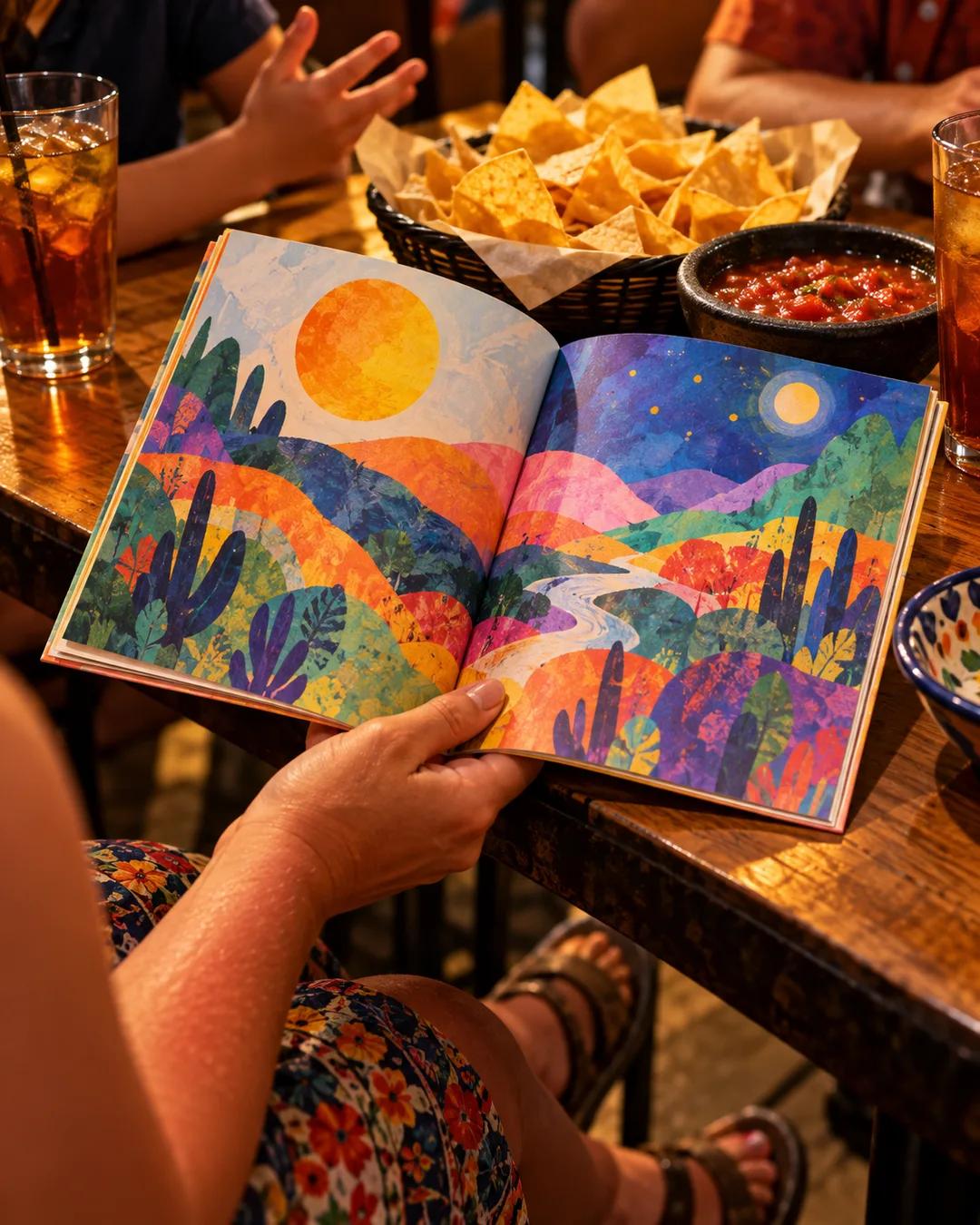
Dramatic readings at the Alamo

Napoleon at the gift shop
Kate Bowler, a Duke professor who writes about joy, is from Canada, and the Alamo was never part of her education. The whole family arrived without any idea why it was important. At Versailles, her husband stood in the palace and wanted to know who Napoleon was, and her urge to make fun of him was strong. She bought a children's book about Napoleon at the gift shop instead, and the family started doing dramatic readings, so that everyone was in on the joke.
The Alamo dinner
At dinner that weekend, they did a dramatic reading of What Is the Alamo. It turned into endless riffing, dumb jokes piled on dumb jokes. Her husband took a picture of her being ridiculous, and in it her son is busting up, looking right at her.
A trip that wasn't perfect
The trip was dusty and hot, with a lot of unorchestrated togetherness she didn't enjoy, and it didn't go perfectly. What Is the Alamo turned out to be a genuine experience of joy anyway, small and dumb and unplanned.
Why did the Alamo become a rallying cry?
The Alamo was a former mission in San Antonio held by Texan rebels during the Texas Revolution. A Mexican army under General Santa Anna besieged it for about thirteen days and took it on March 6, 1836, killing most of its defenders. Six weeks later, Texan forces under Sam Houston attacked Santa Anna's army at San Jacinto, reportedly shouting Remember the Alamo. The battle lasted about eighteen minutes and ended with Santa Anna captured.
Why does shared silliness bond a group?
Robin Dunbar and colleagues reported in a 2012 study that laughing together raises pain tolerance. They suggested the cause is a release of endorphins triggered by the muscular effort of laughing. Their experiments found the effect with real, spontaneous group laughter, such as watching a comedy together. Dunbar has argued that laughter works as a social bonding tool across larger groups than grooming does.
More from Good Inside with Dr. Becky