Korva is a scroll of the internet’s best ideas.
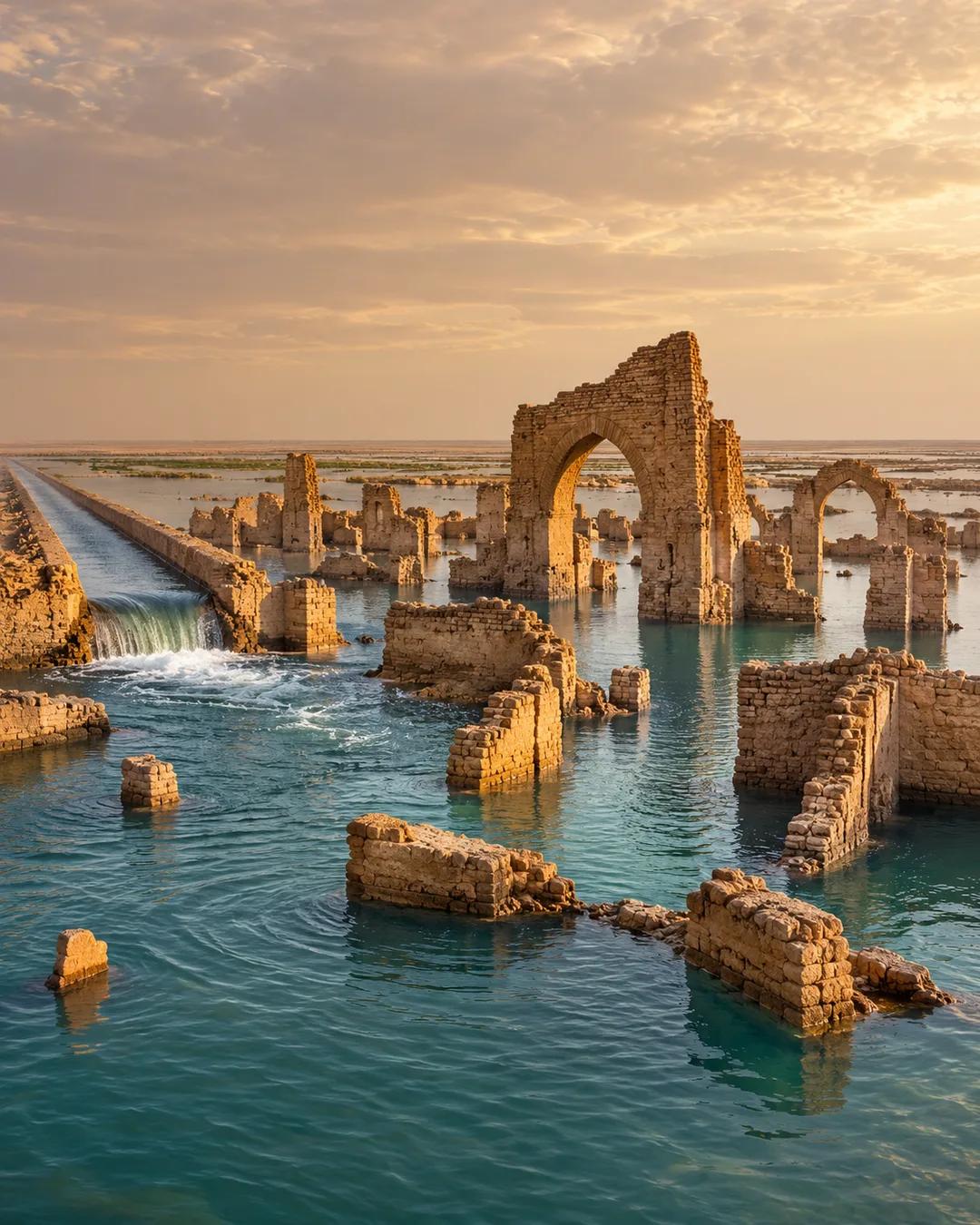
Drowned the ruins of Babylon

A long contest
Babylon had faced raids and invasions since the Hittites in the 16th century BCE. By the 11th century BCE, the Assyrians were continually fighting the Chaldeans and the Arameans over control of the city, while Babylonia tried to keep its independence and sometimes allied with Assyria's enemies.
Sennacherib's murder
Sennacherib was later murdered by one or more of his sons. The details are murky, but the killing is understood as anger over succession, since he had passed over an older son to name Esarhaddon as his heir. A civil war followed, and Esarhaddon defeated his brother's forces and took the throne.
Esarhaddon rebuilds
Even Sennacherib's supporters had feared that destroying Babylon offended Marduk, the city's chief god, who was also a deity in Assyria. The assassination was seen as divine retribution. Esarhaddon rebuilt Babylon and reframed its destruction as another divine punishment. He presented himself as Babylon's governor and worked to win the support of other cities in Babylonia.
Why was destroying Babylon an offense against Marduk?
Marduk was the patron god of Babylon and its most important deity. Babylonian sources record that Sennacherib's attack ended with the statue of Marduk being taken to Assyria. Sennacherib's New Year festival in Assyria was reworked to put the Assyrian god Ashur in Marduk's place. Marduk's statue was returned to Babylon under Ashurbanipal in 668 BCE.
How does a canal drown a city?
Babylon sat on the Euphrates and was laced with irrigation canals. Sennacherib's own inscriptions say he dug channels through the city and let the water in, so that its destruction would be more complete than a flood could manage. Mudbrick dissolves in standing water, so flooding soaked the foundations of walls and temples that fire had already weakened.
Why did Assyria fight over Babylonia for centuries?
Babylonia held fertile irrigated land and controlled trade along the Euphrates. Its cities carried the prestige of the oldest scholarly and religious traditions in Mesopotamia. Assyrian kings from Tiglath-Pileser III on tried to rule it directly. In 729 BCE, Tiglath-Pileser III took the Babylonian throne himself, ruling there under the name Pulu.
More from Stuff You Missed in History Class