Korva is a scroll of the internet’s best ideas.
Drywall costs $1.50 a square foot
Drywall and its rivals
The 2022 Construction Estimator gives that figure, and RSMeans gives similar. Despite its drawbacks, there has long been interest in finding an alternative.
MDF panels run about $1.50 per square foot for the material alone, as much as drywall installed and finished. PVC panels run about $3.50, Fibo is closer to $10, Corian is around $50, and Dekton goes up to $100, though that figure is for countertops and walls might be cheaper. All of that comes before the labor or extra backing materials the panels might require.
Lumber and framing
Structural framing is the largest single line item in a new house, at around 20% of the cost with labor and materials. Dimensional lumber is among the least expensive materials that civilization produces per cubic foot, and its makers don't earn fat margins: Boise Cascade had a gross margin of 16.5% in 2025, and Weyerhaeuser had 14.8%.
Why has drywall stayed so dominant?
Gypsum board replaced hand-troweled plaster over the twentieth century because it needed less skill and no drying time between coats. Its core is gypsum, a cheap and abundant mineral, sandwiched between sheets of paper. Gypsum is about 21 percent water by weight, bound into the crystal. When heated, that water is released as steam, which helps drywall slow the spread of fire.
Why does finishing drywall take so much labor?
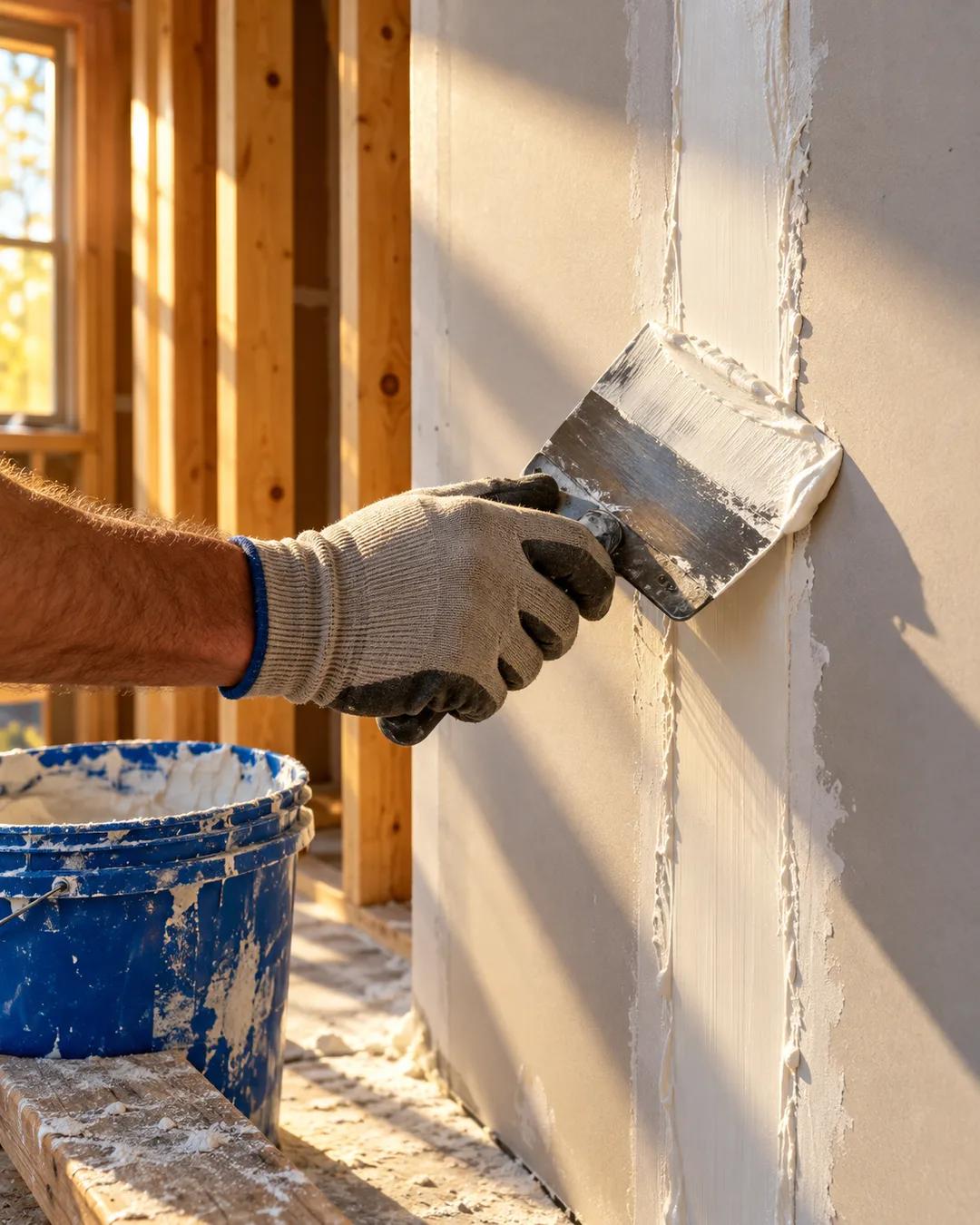
Hanging the sheets is quick, but the seams between them must be covered with tape and joint compound to look invisible. Each coat of compound has to dry before the next, and the surface is sanded between coats. Finishers choose how many coats to apply based on how the wall will be decorated. The Gypsum Association's GA-214 standard defines six finish levels, from 0 to 5.
Why do lumber prices swing so wildly?
Sawmills cannot add capacity quickly, and trees take decades to grow, so supply responds slowly when demand jumps. In May 2021, lumber futures on the Chicago Mercantile Exchange topped $1,600 per thousand board feet after a surge in home building and renovation. Prices fell sharply within months. Lumber is a commodity, so the price moves with every shift in housing starts and mill output.
More from Brian Potter