Korva is a scroll of the internet’s best ideas.

Earliest bets carry the lowest risk
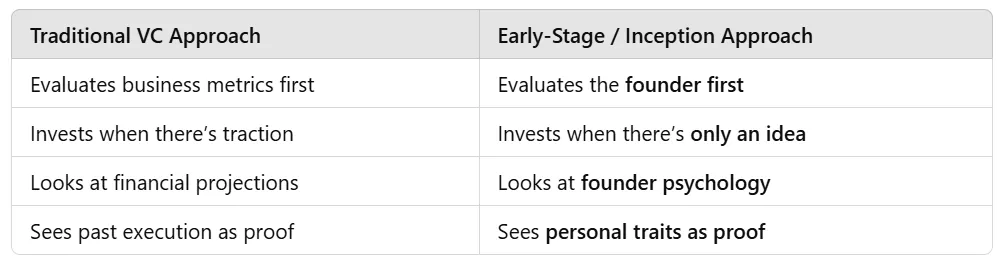
Every once in a while an investor meets a person and it all clicks. They see every ounce of potential: a beautiful mix of insanity and intellect, a magical combination of intuition and intensity.
At that point judgement is not clouded by metrics and misunderstood competition, and the price is not inflated by hype. What is left is the investor, the founder, and the ground truth of who they are as a human being.
Getting there means designing systems and process to deeply understand the human being behind the company. That is when an investor is rewarded for the risk.
Why are the earliest startup investments cheapest?
Each new financing round is priced higher as a company shows more evidence that it works. An investor who comes in first buys a bigger ownership share with the same amount of money. Later rounds shrink that share through dilution, because new shares are issued to new investors. Rounds are commonly named in sequence: pre-seed, seed, Series A, and so on.
How did Peter Thiel's Facebook bet work?
In 2004, Peter Thiel invested $500,000 in Facebook when the site was only months old. In exchange he received about 10 percent of the company. The company had few users compared with later years and no meaningful revenue yet. Facebook went public in 2012.