Korva is a scroll of the internet’s best ideas.
Early animals left almost no fossils

The fossil flood
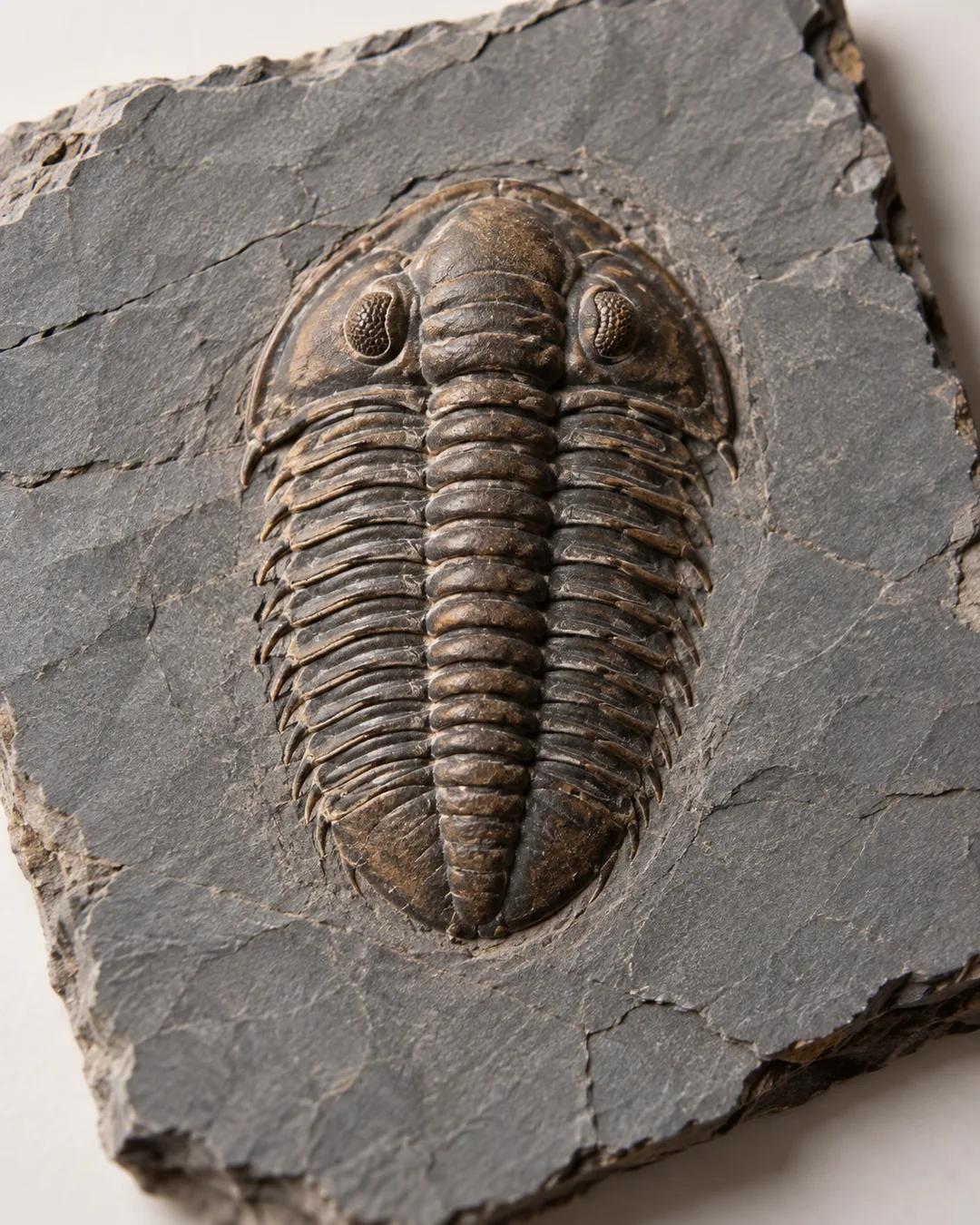
Before the Cambrian, in the world of jellyfish, fossils are pretty rare. Then comes a sudden, enormous diversification: marine animals that grow big, develop hard body parts, and start to hunt. Some grow armor, others sharp claws or teeth, and all those hard parts fossilize really well.
Darwin's problem
To Charles Darwin, this looked like a problem for his theory, since animals seemed to appear from nothing. But animals existed before the Cambrian. They just lacked hard body parts, so they left almost no fossils. The boom is probably tied to oxygen levels in the atmosphere, which had risen far enough for animals to be highly mobile.
Eyes and brains
Predators and prey also drove two major innovations. The eye evolved, because seeing mattered whether you were hunting or hunted. A nervous system with some central processing came along too, a brain able to integrate all that incoming information.
How did Darwin handle the Cambrian problem?
In On the Origin of Species, Darwin admitted that the lack of fossils in older rocks was a serious difficulty for his theory. He argued that the geological record was incomplete and that earlier fossils would be found. Fossils of soft-bodied creatures from before the Cambrian were later identified, including finds by Reg Sprigg in Australia in 1946. Charles Walcott had earlier discovered the Burgess Shale in Canada in 1909.
How quickly could an eye evolve?
In 1994, Dan-Eric Nilsson and Susanne Pelger published a computer model of eye evolution. It started with a flat patch of light-sensitive cells and allowed small steps toward a lens eye like a fish's. Their model reached that stage in about 364,000 generations. For an animal that breeds yearly, that is under half a million years.
Why do hard parts fossilize so well?
Soft tissue decays or gets eaten within days of death. Shells and skeletons made of calcium carbonate or calcium phosphate resist decay and survive burial in sediment. Soft bodies fossilize only in unusual conditions, such as the fine, oxygen-poor mud of the Burgess Shale. Most early animals had no minerals to leave behind.
More from On Humans