Korva is a scroll of the internet’s best ideas.
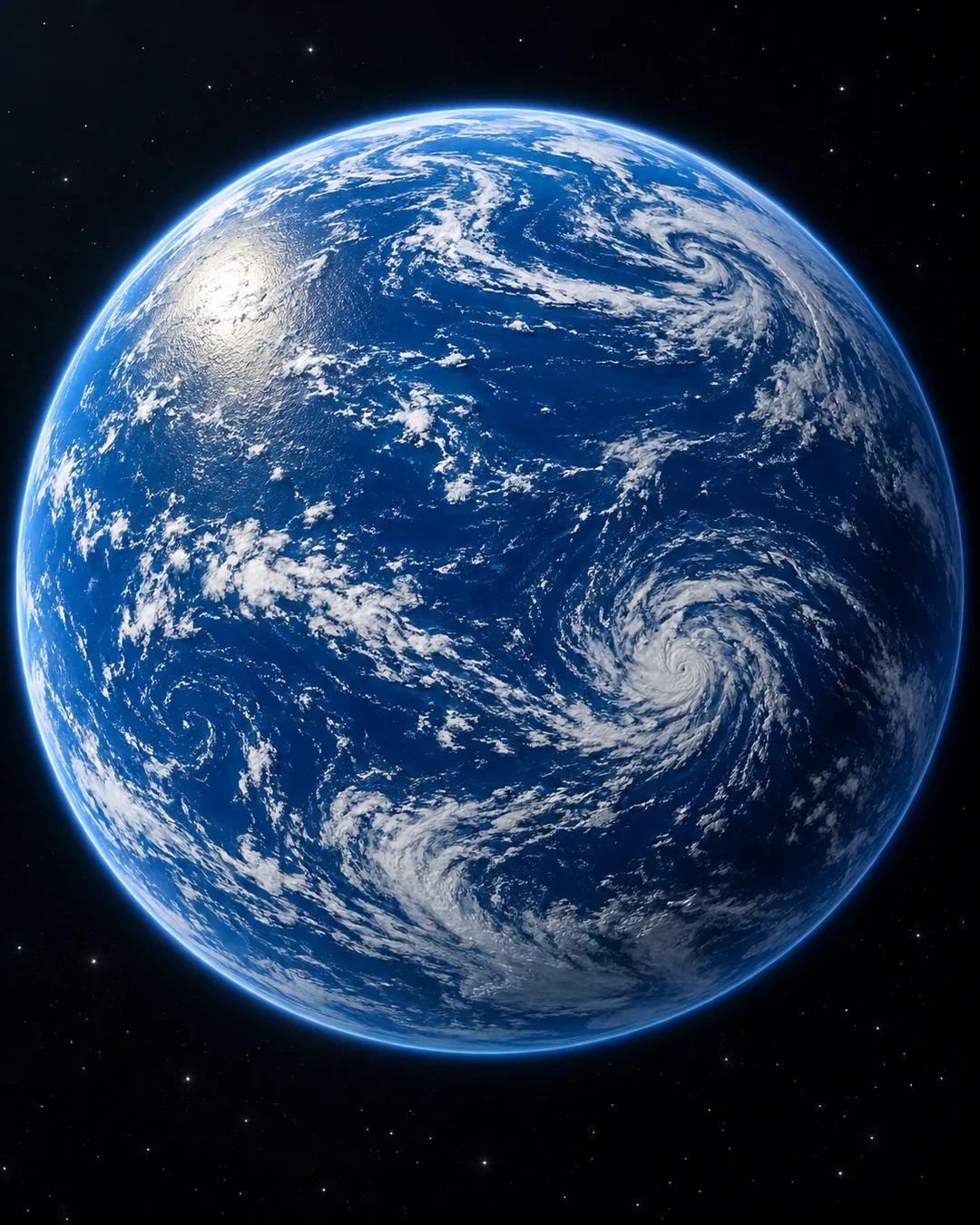
Earth would still be underwater
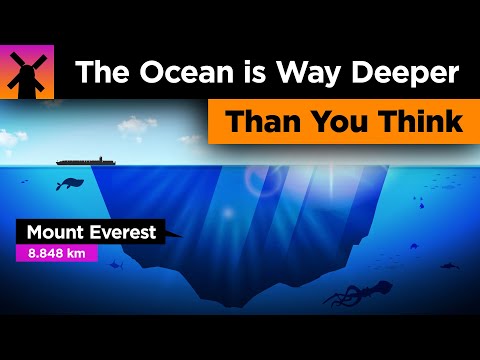
Three fourths of the planet is already underwater, and the water goes far deeper than 2 miles. The average ocean depth is 4,267 meters, and the Titanic rests at 3,800 meters, with the Bismarck at 4,791 meters.
Only about 5% of the ocean floor has been accurately mapped. The other 95% is still a mystery, and deeper parts than the Challenger Deep are almost certainly out there, undiscovered.
The Sirena Deep, at 10,732 meters, wasn't found until 1997, and it is the second deepest known point in the ocean.
Why is so little of the seafloor mapped?
Radio waves and light barely travel through seawater, so satellites and cameras cannot see the bottom the way they map land. Mapping at high detail requires sonar from a ship that sails over each patch of seafloor, and the ocean covers over 70 percent of the planet. Satellites can measure tiny bumps in the sea surface caused by the gravity of underwater mountains, but that gives only a coarse picture. An international project called Seabed 2030 aims to produce a complete map of the ocean floor by the end of this decade.
How could the Sirena Deep stay hidden until 1997?
The Sirena Deep sits in the Mariana Trench, the same long crescent of seafloor as the Challenger Deep, east of the Mariana Islands. Ships find such points by sending sonar pings down and timing the echoes from the bottom. The Mariana Trench stretches about 2,550 kilometers, so a single narrow dip can be missed unless a ship crosses directly over it. The Challenger Deep itself is named after the British survey ship HMS Challenger, whose crew first sounded the trench in the 1870s.
What makes trenches so much deeper than the seafloor?
Trenches form where one tectonic plate bends and slides beneath another, a process called subduction. The sinking plate drags the seafloor downward into a steep, narrow groove. The Mariana Trench is where the old, dense Pacific plate descends under the smaller Mariana plate. Ocean crust gets heavier and sinks lower as it ages and cools, which makes the oldest parts of the Pacific the deepest.