Korva is a scroll of the internet’s best ideas.
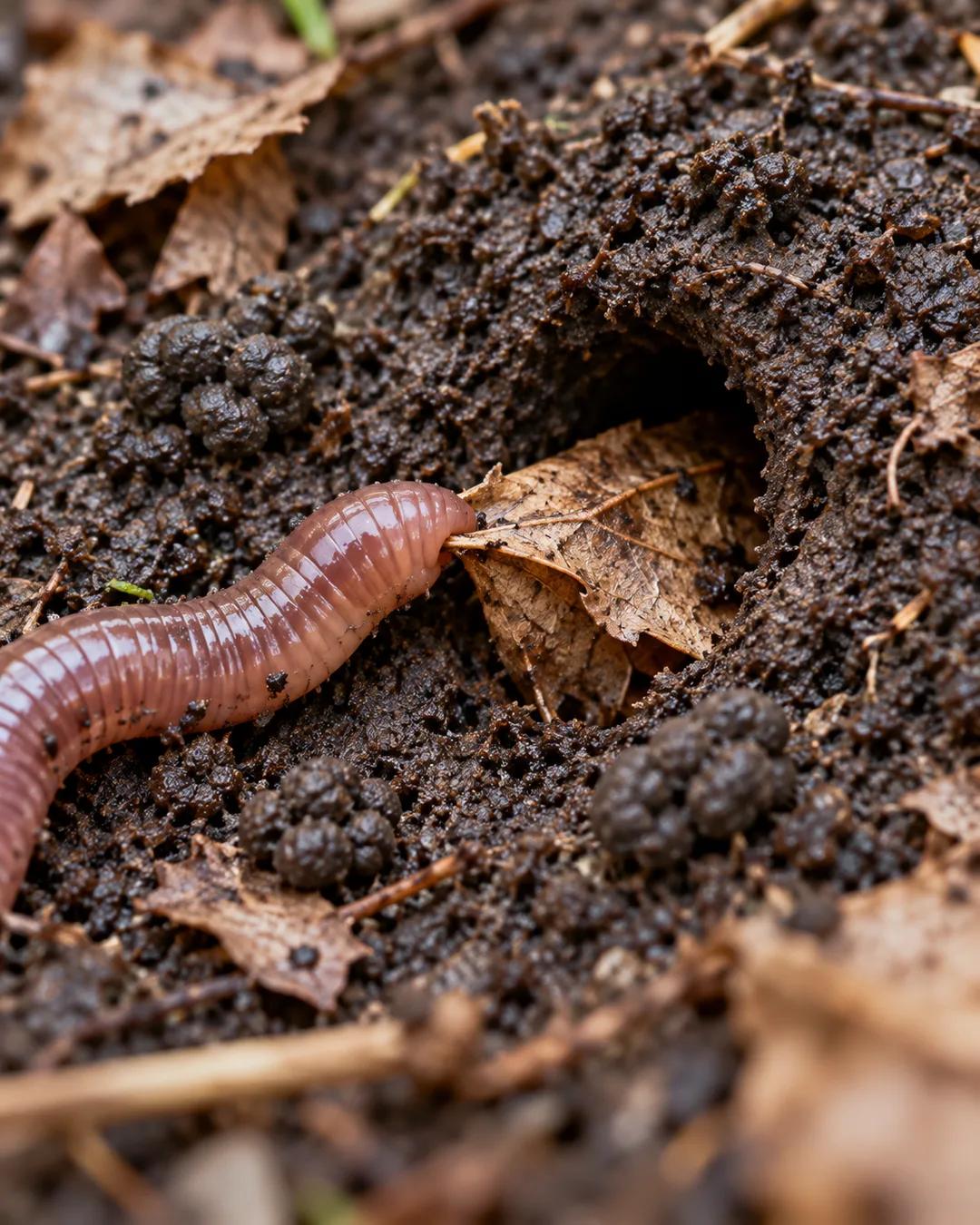
Earthworms have enzymes nothing else does

Tannin is the compound used in tanning leather, found in bark and packed into leaves, dead ones included. It is there by evolutionary design to be a problem for enzymes, which stops caterpillars munching and digesting. Most organisms have trouble digesting it.
Earthworms evolved an enzyme that deals with it, which lets them pull fallen leaves into the ground and eat them. What comes out is earthworm compost, the frass, and from there bacteria, fungi, and the rest of the fauna and microbes take over.
Plants use tannins at high concentrations, a blunt strategy next to the small amounts of targeted alkaloids. Dead leaves stay full of them, so the worms are the first stage in turning fallen leaves into living soil.
Why is tannin so hard to digest?
Tannins bind tightly to proteins, including the digestive enzymes in an animal's gut. The proteins clump into complexes that resist breakdown, which makes the leaf taste dry and bitter and leaves less protein for the animal to absorb. The same binding is what lets tannins turn animal hide into leather. Dead leaves keep much of their tannin, so the protection outlives the leaf.
Why did Darwin study earthworms?
Charles Darwin spent decades studying earthworms and published The Formation of Vegetable Mould through the Action of Worms in 1881, the last book of his life. He watched worms drag fallen leaves into their burrows, often by the narrow tip. He also measured how worms bring soil to the surface as casts, burying objects on a field over the years. The book sold well, and Darwin estimated that worms in some fields move several tons of soil per acre each year.
Why do plants use tannins instead of poisons?
Ecologist Paul Feeny described the two strategies in 1976 as quantitative and qualitative defenses. Tannins are quantitative: they work against nearly any herbivore, but they have to be packed in at high concentrations, which costs the plant a lot of resources. Alkaloids are qualitative: they act at tiny doses but can be beaten by specialist insects that evolve resistance. Tannins are most common in long-lived plants such as trees, whose leaves face many kinds of feeders.
More from The joe gardener Show - Organic Gardening - Vegetable Gardening - Expert Garden Advice From Joe Lamp'l