Korva is a scroll of the internet’s best ideas.
Plant turns moths away after pollination

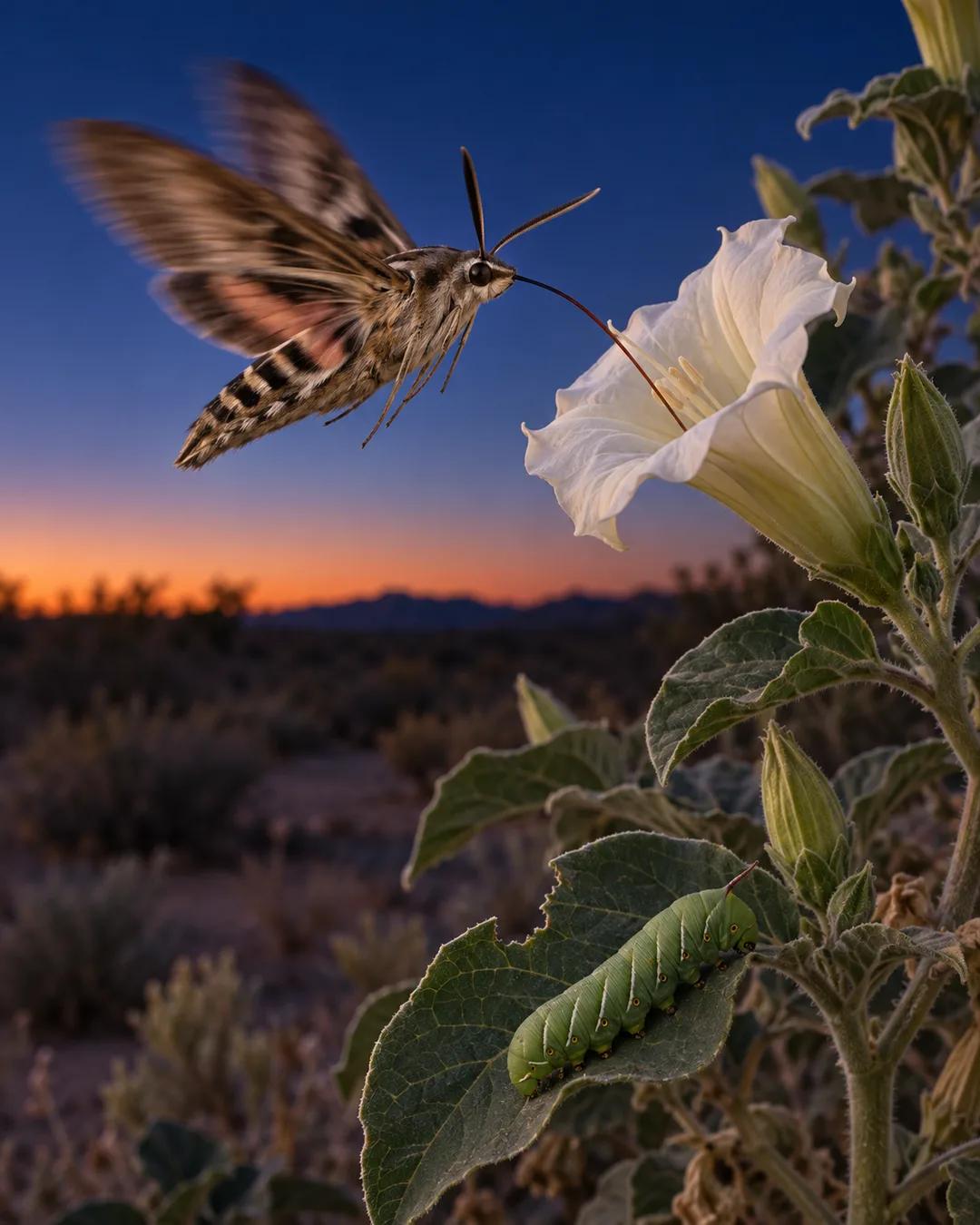
The plant, thought to be a wild species of tobacco, is visited by moths or butterflies, the Lepidoptera. The adults pollinate the flowers and also lay eggs on the plant, and the caterpillars that hatch eat the leaves.
Early on, the plant makes attractants that bring in pollinators. Later it switches on repellents, since the flowers have been pollinated and the caterpillars are no use to it.
The same insect is welcome and unwelcome at different stages of its life: the adult is a pollinator, and the caterpillar is a leaf eater.
How does a plant know it has been pollinated?
Pollen landing on the stigma sets off a chemical signal that spreads through the flower. In petunias, the hormone ethylene released after pollination shuts down the flower's scent production. Petals often wilt or change color soon after, which stops pollinators from wasting visits on flowers that are finished. Many plants redirect their energy toward seed and fruit once this signal arrives.
Which wild tobacco does this?
Researchers led by Ian Baldwin at the Max Planck Institute for Chemical Ecology have studied Nicotiana attenuata, a wild tobacco of the western United States. Its flowers open at night and are visited by hawkmoths. The tobacco hornworm, the caterpillar of one such hawkmoth, eats the plant's leaves. Baldwin's group has run field plantings of this species in the Great Basin Desert of Utah.
How does a caterpillar become a moth?
Inside the pupa, most of the caterpillar's body breaks down into a rich soup of cells. Groups of cells called imaginal discs, which have been set aside since the egg stage, grow into the wings, legs, and eyes of the adult. The chewing mouthparts of the caterpillar are replaced by a coiled proboscis for sipping nectar. A single genome builds both bodies, which is why one plant meets two very different visitors.
More from The joe gardener Show - Organic Gardening - Vegetable Gardening - Expert Garden Advice From Joe Lamp'l