Korva is a scroll of the internet’s best ideas.
Plants can't run, so they do chemistry

Fences before attack
Tannins sit in leaves all the time, like putting up a fence before anyone attacks. Young oak leaves are palatable, so some moths can strip an oak bare when their timing is right, but the tree soon fills its leaves with tannins either way.
Targeted poisons
Other chemicals ramp up after the first nibble. A refined, targeted poison works at small doses, which is how many plant compounds interfere with the chemistry of whatever living thing meets them. Foxglove's digitalin, which became a heart medicine, is one of them.
The caterpillar standoff
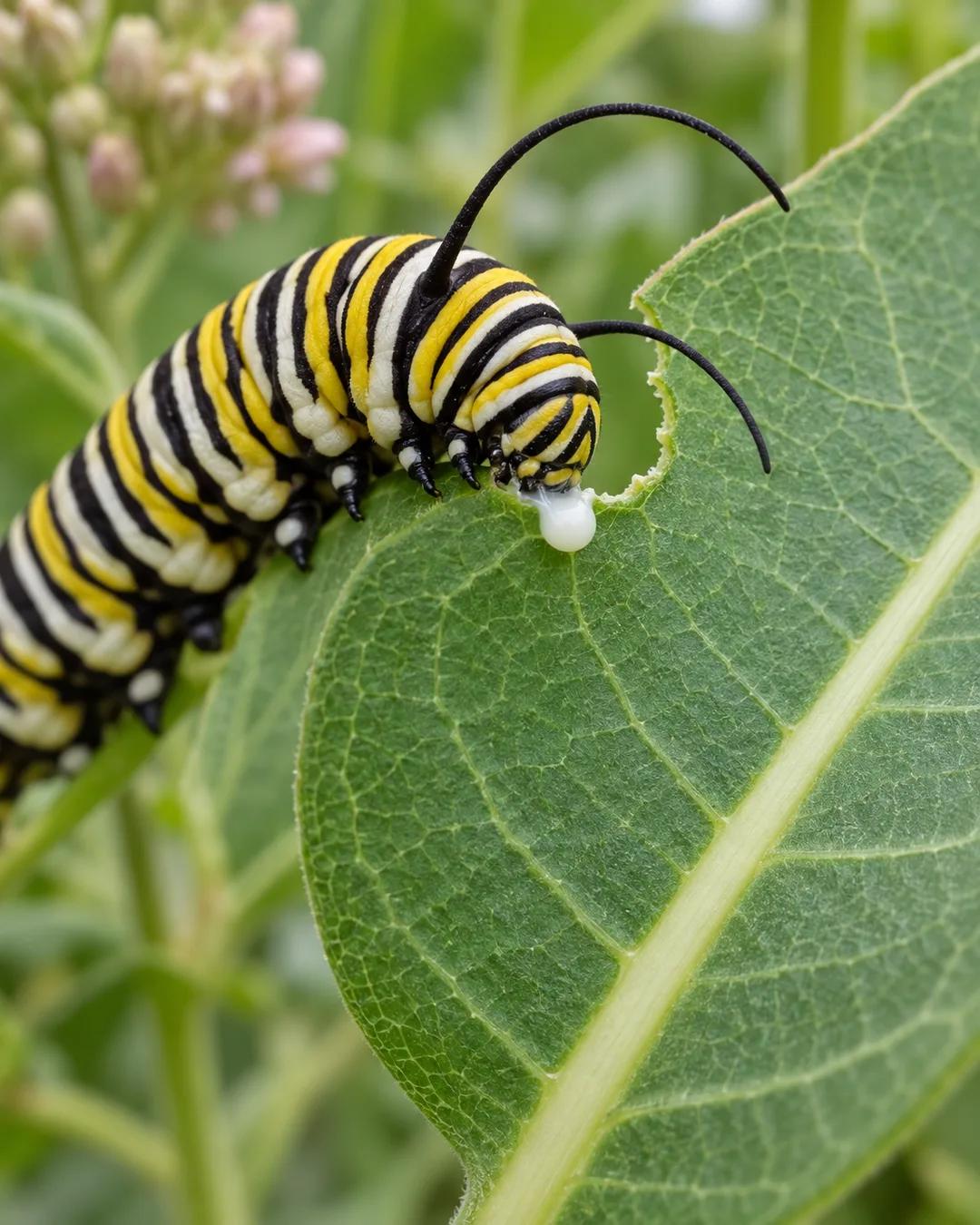
Specialist caterpillars can overcome a plant's defenses, but only up to a point. Monarch caterpillars cope with the cardiac glycosides in milkweed, and generally they do not strip the plant bare, because an evolutionary standoff has settled in.
How does foxglove act on the heart?
Foxglove makes compounds called cardiac glycosides, including digitoxin and digoxin. They block the sodium-potassium pump in heart muscle cells, which raises calcium inside the cells and makes each contraction stronger. The pump is found in animals everywhere, which is why the compounds poison so many grazers. The physician William Withering published An Account of the Foxglove in 1785, after studying its effects on patients with dropsy.
How do monarchs eat milkweed unharmed?
Milkweed's cardiac glycosides block the same sodium-potassium pump in animal cells. Monarch caterpillars carry changes to a few amino acids in that pump, which make it far less sensitive to the poison. A 2012 study in Science of milkweed-feeding insects found that unrelated species arrived at similar changes independently. Monarchs also store the compounds in their bodies, which makes them unpleasant for birds to eat.
Why do plants make some defenses only after an attack?
Making defense chemicals costs energy and materials, so many plants hold some in reserve. When a leaf is chewed, the wound sets off a hormone signal built around jasmonic acid. That signal turns on genes for defense compounds in the damaged leaf and sometimes in neighboring ones. Plants that wait for a threat save resources on the many days when no insect is feeding.
More from The joe gardener Show - Organic Gardening - Vegetable Gardening - Expert Garden Advice From Joe Lamp'l