Korva is a scroll of the internet’s best ideas.
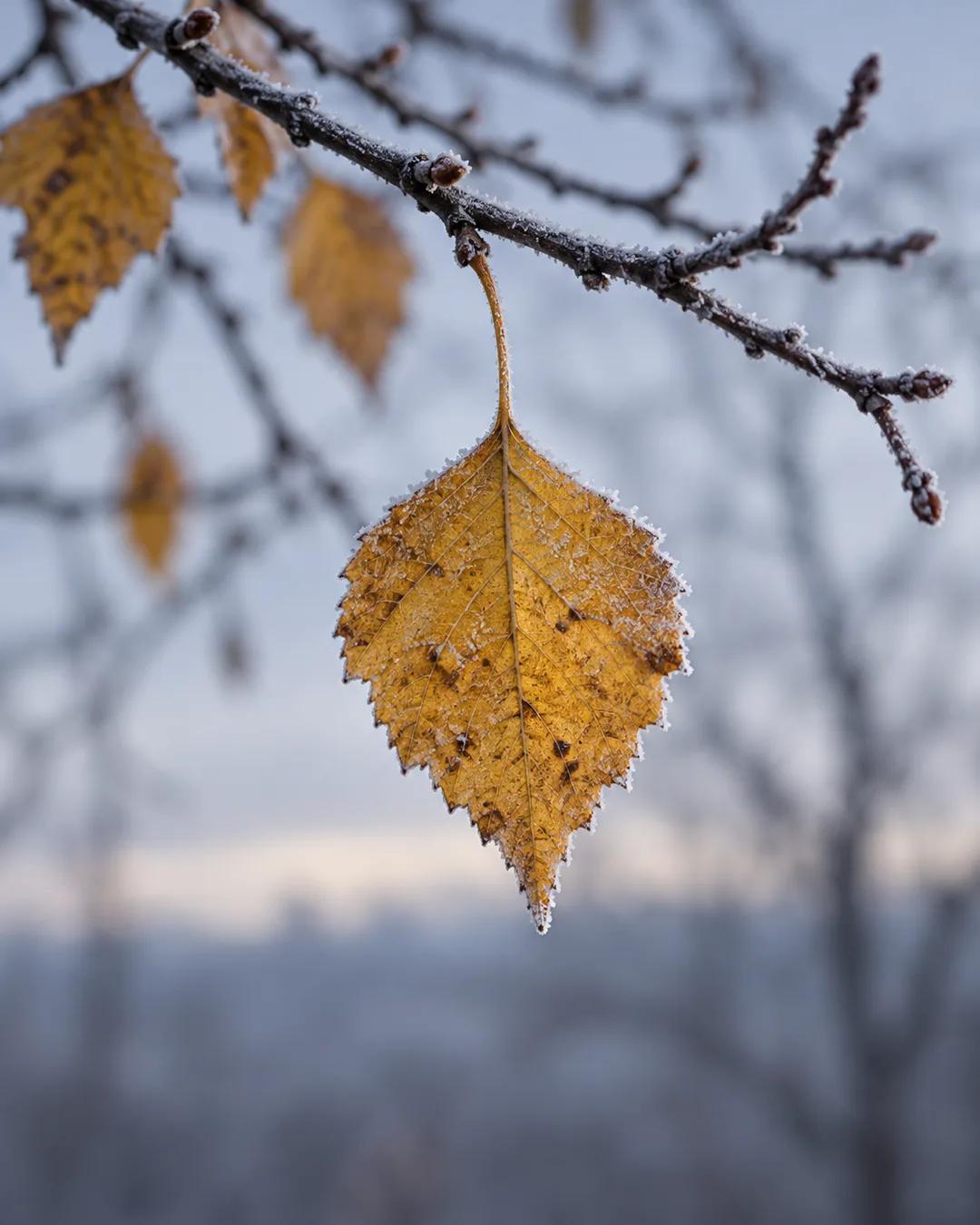

The cost of a leaf
A leaf costs a plant a lot of water through evaporation. Where winters are cold enough for the ground to freeze, water pulled up through the trunk or stem would form air pockets, a problem called cavitation, much like air in household plumbing.
Pines and similar evergreens keep their leaves and limit water loss other ways, such as needle shapes. Plants in the heather family have tiny leaves with few stomata.
How a leaf is let go
In fall the plant pulls materials back out of the leaf, except what cannot be dissolved, like cellulose and fiber. About half the nitrogen goes back into the plant and half stays in the leaf, so dead leaves still hold some nitrogen. Most other minerals are removed too, and the chlorophyll is broken down, which is tied to autumn color.
Then an abscission layer cuts the leaf off, bringing the gate down on the plumbing that joins the leaf's stalk to the stem. The leaf is thrown away and lands on the ground.
Why does freezing break a tree's water column?
Sap holds dissolved air, and when it freezes the ice pushes the air out into bubbles. As the sap thaws, large bubbles can expand and break the continuous water column, a blockage called an embolism. Wide vessels, such as those in oaks and ash, are more vulnerable than narrow ones. John Sperry and John Sullivan reported that pattern in a 1992 study of freeze-thaw cycles in different types of trees.
Why do leaves turn yellow, orange, and red?
Yellow and orange carotenoids are present in the leaf all summer, but green chlorophyll hides them. When the chlorophyll is broken down in fall, the carotenoids show. Red comes from anthocyanins, which many species make fresh in autumn. Some researchers think they act as a sunscreen that protects the leaf while it recovers nutrients.
How does the abscission layer cut a leaf off?
A band of small cells forms across the base of the leaf stalk. As the auxin flowing out of the leaf declines and the hormone ethylene rises, those cells release enzymes that dissolve their cell walls. The leaf hangs by a thread of water-carrying tissue until wind or its own weight breaks it. A layer of corky cells seals the scar beneath, which keeps out pathogens and prevents water loss.
More from The joe gardener Show - Organic Gardening - Vegetable Gardening - Expert Garden Advice From Joe Lamp'l