Korva is a scroll of the internet’s best ideas.
The choice AI offers
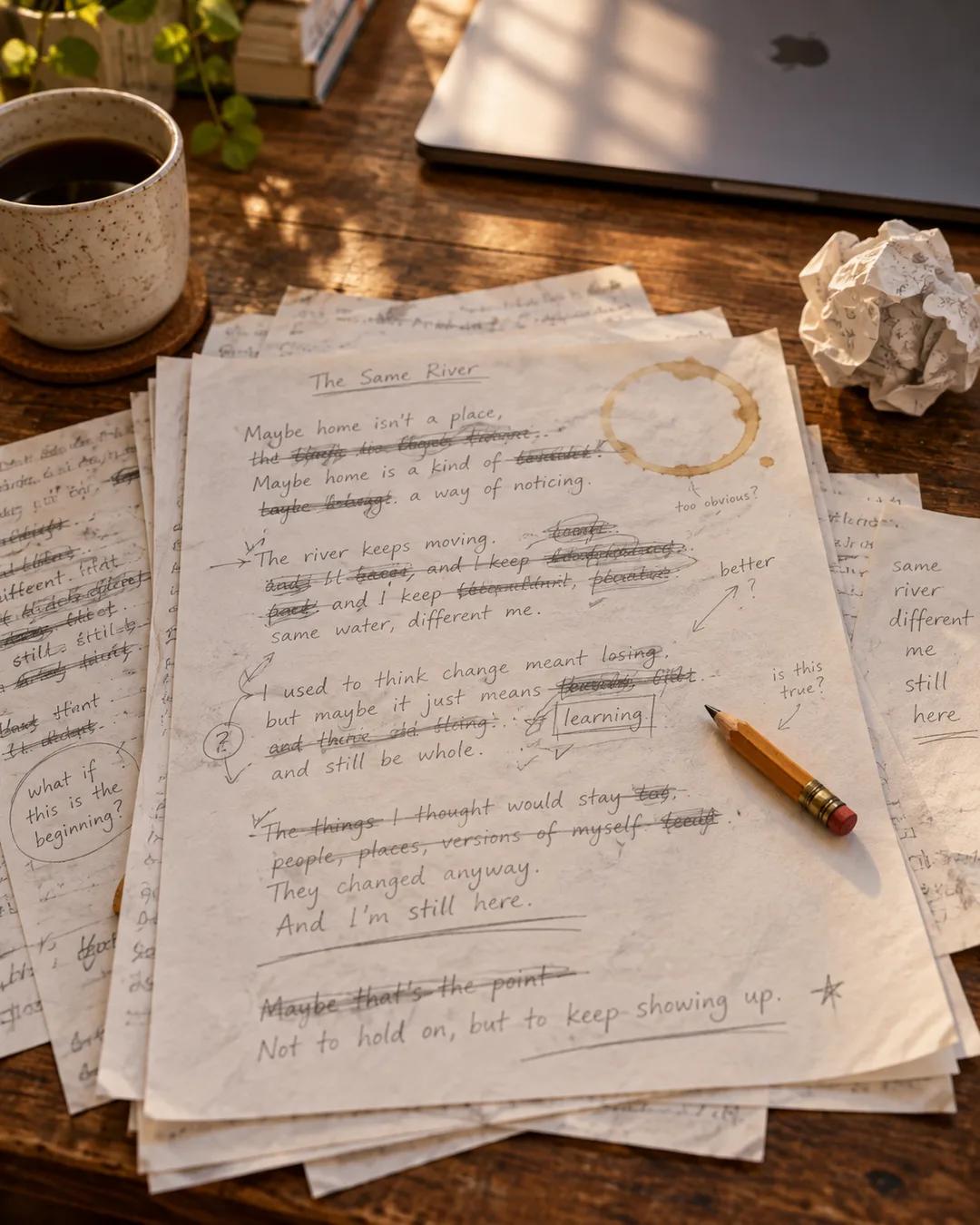
Mark Manson put it this way: do hard things because the win actually means something, since you bled for it, broke for it, and earned it. AI makes that a daily choice. One writer sat down with two thousand words of rough material for a five-hundred-word essay and could have fed it to ChatGPT's deep research, which would have put it into a flow and maybe added a story about Charles Darwin. The essay would have gone out that day, and instead the newsletter went out with something easier.
Why he held back
He held back because the idea would then be set for good in whatever name, story, and examples the tool chose. He would always know that something else put the finishing garnish on the dish after he did all the hard work.
Participation trophies
Participation trophies run on the same logic. Write a bad song and hear that it's bad, fail again and again, and two years later the song that finally lands pays off in a way nothing handed over can. A lifetime of writing with AI has no highs and lows in it.
Why do hard-won results feel more valuable?
In a 1959 experiment, psychologists Elliot Aronson and Judson Mills asked women to join a discussion group, some after a mild initiation and some after an embarrassing one. Those who went through the severe initiation rated the group, which was actually dull, as more interesting than the others did. The researchers explained this as effort justification, the tendency to value what cost more to get. The finding has been repeated in many forms since.
Why do people prize things they built themselves?
In 2012, Michael Norton, Daniel Mochon, and Dan Ariely published studies on what they called the IKEA effect. Participants who assembled simple items such as furniture or origami valued their own work more than comparable pre-built items, and they were willing to pay more for it. The effect appeared mainly when people completed the task, and it shrank when they did not finish. Their paper appeared in the Journal of Consumer Psychology.
Why does writing it yourself help memory?
In 1978, Norman Slamecka and Peter Graf reported what they called the generation effect. People remembered words better when they produced them from a clue than when they simply read the same words. The effort of producing an answer appears to strengthen the memory trace. The effect has been replicated across many materials, including facts, numbers, and concepts.
More from Modern Wisdom