Korva is a scroll of the internet’s best ideas.
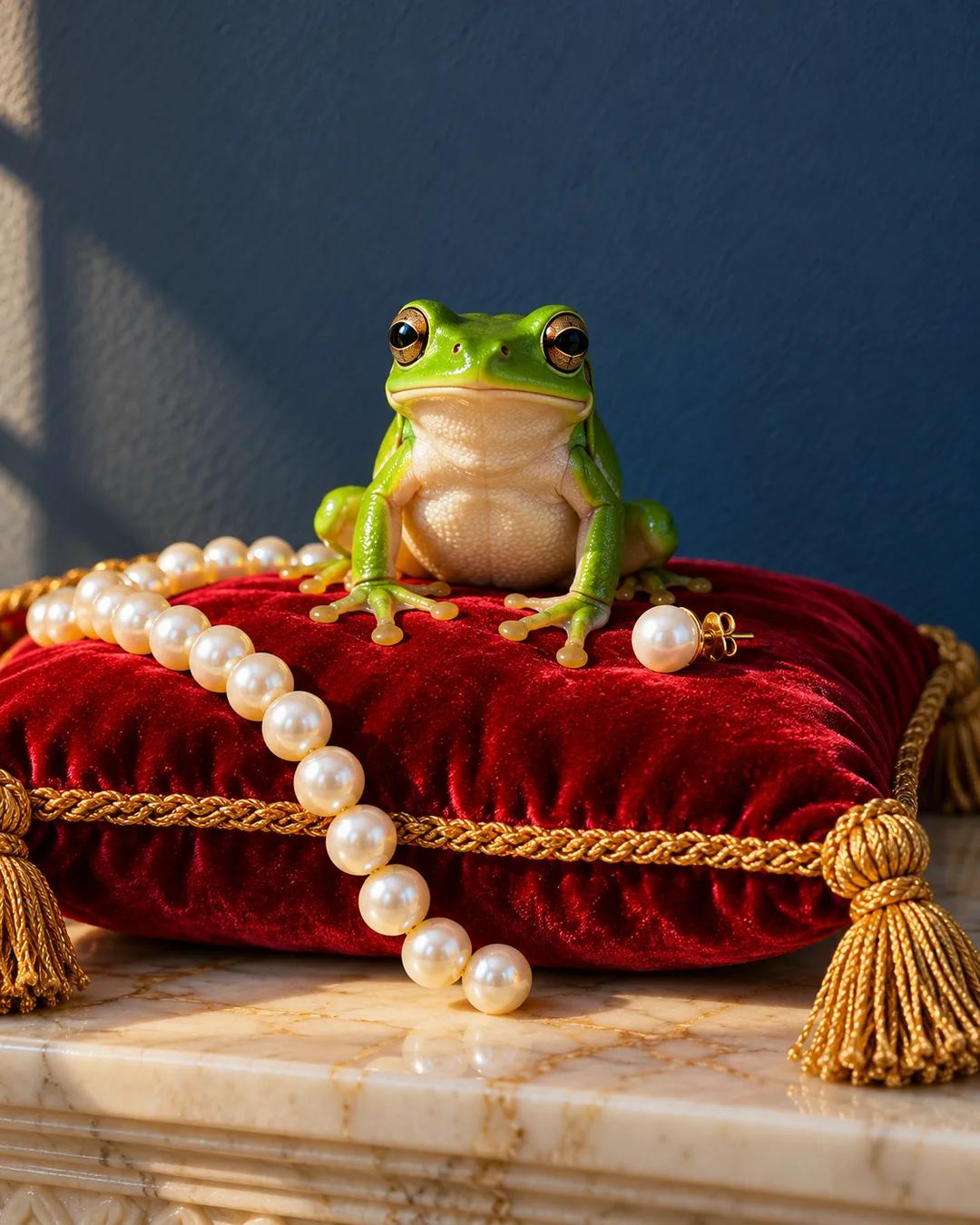
Elizabeth called her suitor her frog

The unlikely suitor
Francis, Duke of Anjou, was the youngest of four brothers and the only one who never became a king. Smallpox at eight left him with a pitted face, bandy legs, and a twisted spine, but he was smart, calculating, and personable. At 23 he began courting Elizabeth, who was 22 years older, and he came to England in person to do it.
In 1579 Dutch rebels asked whether he would become their lord in place of Philip II of Spain, and he jumped at it. By January 1581 he was proclaimed prince and lord of the Netherlands. Elizabeth wanted him there, French Catholic or not: his rule would remove the Duke of Parma and his terrifying Spanish army, restore the wool trade through Antwerp, and secure freedom of worship for Dutch Protestants.
The coup at Antwerp
Holland and Zeeland, the heartlands of the Protestant resistance, refused to accept a Catholic prince from the start. Anjou wanted to be king, and the restrictions the rebels put on him grated. In January 1583 he attacked Antwerp, the richest city in Europe, hoping to seize its wealth. His militia was wiped out in what became known as the French Fury, and by June he had left for France for good.
His mother, Catherine de Medici, told him she wished to God he had died young, because then he would not have caused the deaths of so many brave gentlemen. Elizabeth broke off the engagement. Anjou died of malaria on June 10, 1584, at 29.
Why was Antwerp the richest city in Europe?
Antwerp was the main trading hub of northern Europe in the sixteenth century, with merchants from many countries working there. Its bourse, opened in 1531, was one of the first purpose-built exchange buildings. English cloth flowed through the city to the Continent. The city fell to the Duke of Parma in 1585, and thousands of its merchants and craftsmen moved north to Amsterdam.
Why did Elizabeth give courtiers nicknames?
Elizabeth gave pet names to the men around her, and the names show up in her letters. She called Robert Dudley her Eyes, Sir Christopher Hatton her Lids, and Francis Walsingham her Moor. William Cecil, Lord Burghley, was her Spirit. Anjou's nickname of Frog is one of the best-known of these.
Why was Parma's army so feared?
The Spanish Army of Flanders was among the largest and best-trained armies in Europe. Its core was the tercio, a formation of pikemen and musketeers with a reputation for discipline. Parma, an experienced commander, retook most of the southern Netherlands for Spain in the 1580s. His troops also had a record of brutal sieges, including the sack of Antwerp in 1576, known as the Spanish Fury.
More from The Rest Is History