Korva is a scroll of the internet’s best ideas.
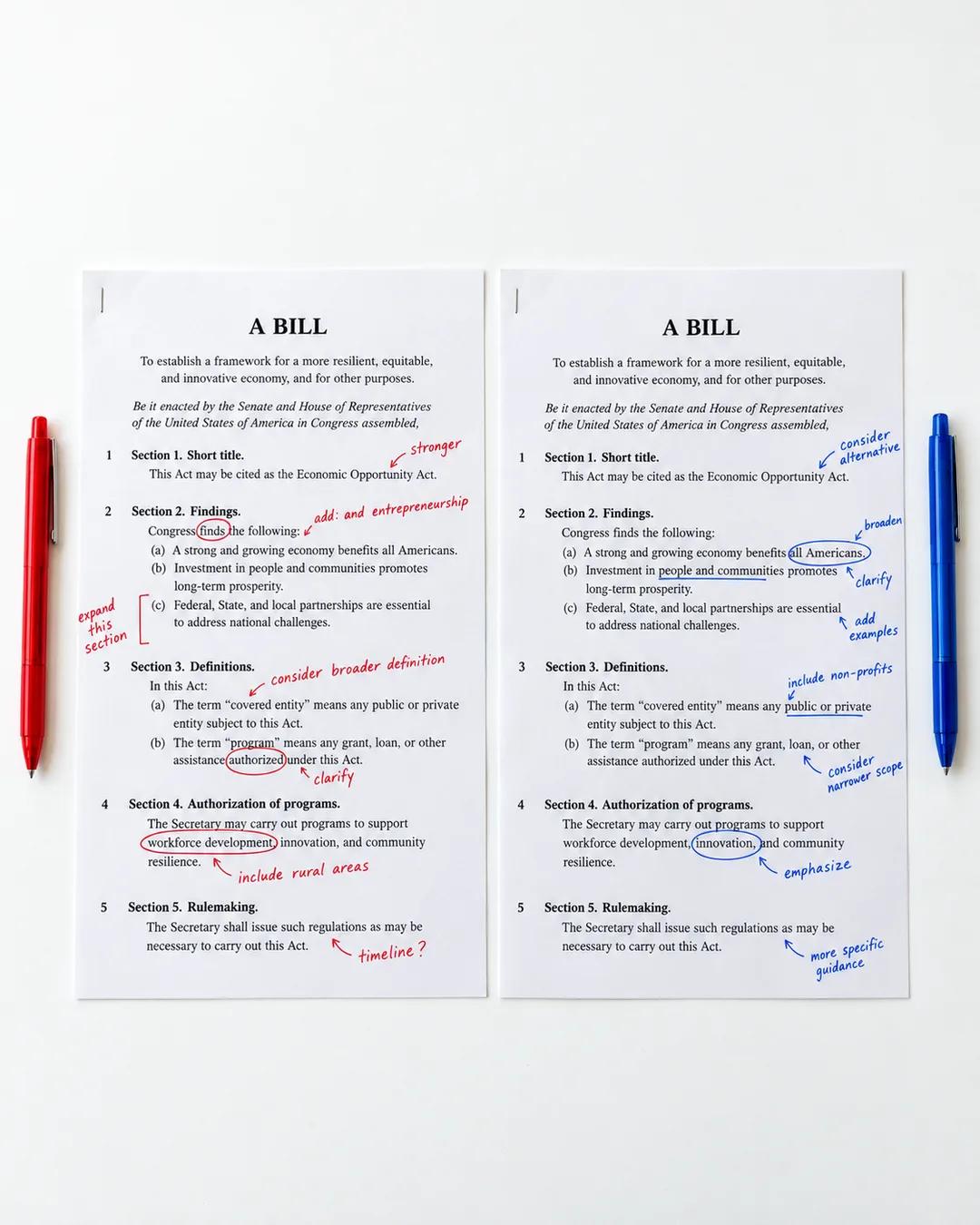
Every bill runs the course twice

Majority decides
In both the House and the Senate, a simple majority wins a vote. The bill can pass, it can fail, or a motion to recommit can send it back to committee for more work.
How members vote
In the Senate, the presiding officer calls the vote, which is sometimes a voice vote, or each senator's name is called and they answer Aye or Nay. In the House, members typically vote electronically with a little card like a credit card, which they stick in a reader before pressing green for yes or red for no.
Reconciling the versions
If the language of a bill is exactly the same in both chambers, it goes straight to the president, but that very rarely happens. Usually the bill goes to a conference committee, where senior members of the House and Senate committees that worked on it meet, talk, argue, and settle on one final version that both houses are happy with.
Why does a conference committee exist?
Article I requires both chambers to pass the same text before a bill goes to the president. When their versions differ, the chambers can pass amendments back and forth, which is sometimes called ping-pong, or they can appoint conferees. Many recent bills have skipped formal conferences in favor of informal negotiations between leaders. Each chamber votes on a conference report as written, with no amendments.
Why does the House vote electronically?
Before 1973, the House clerk called each member's name aloud, and a roll call could take a large part of an hour. The electronic system was first used in January 1973. Members insert a card into voting stations on the floor, and results appear on boards in the chamber. The House keeps a public record of each member's vote.
Why must both chambers pass a bill?
The Great Compromise of 1787 gave states equal representation in the Senate and population-based representation in the House. Because the two chambers represent the public differently, the Framers required both to agree on identical text. The compromise is often credited to Connecticut delegates, including Roger Sherman.
More from Civics 101