Korva is a scroll of the internet’s best ideas.
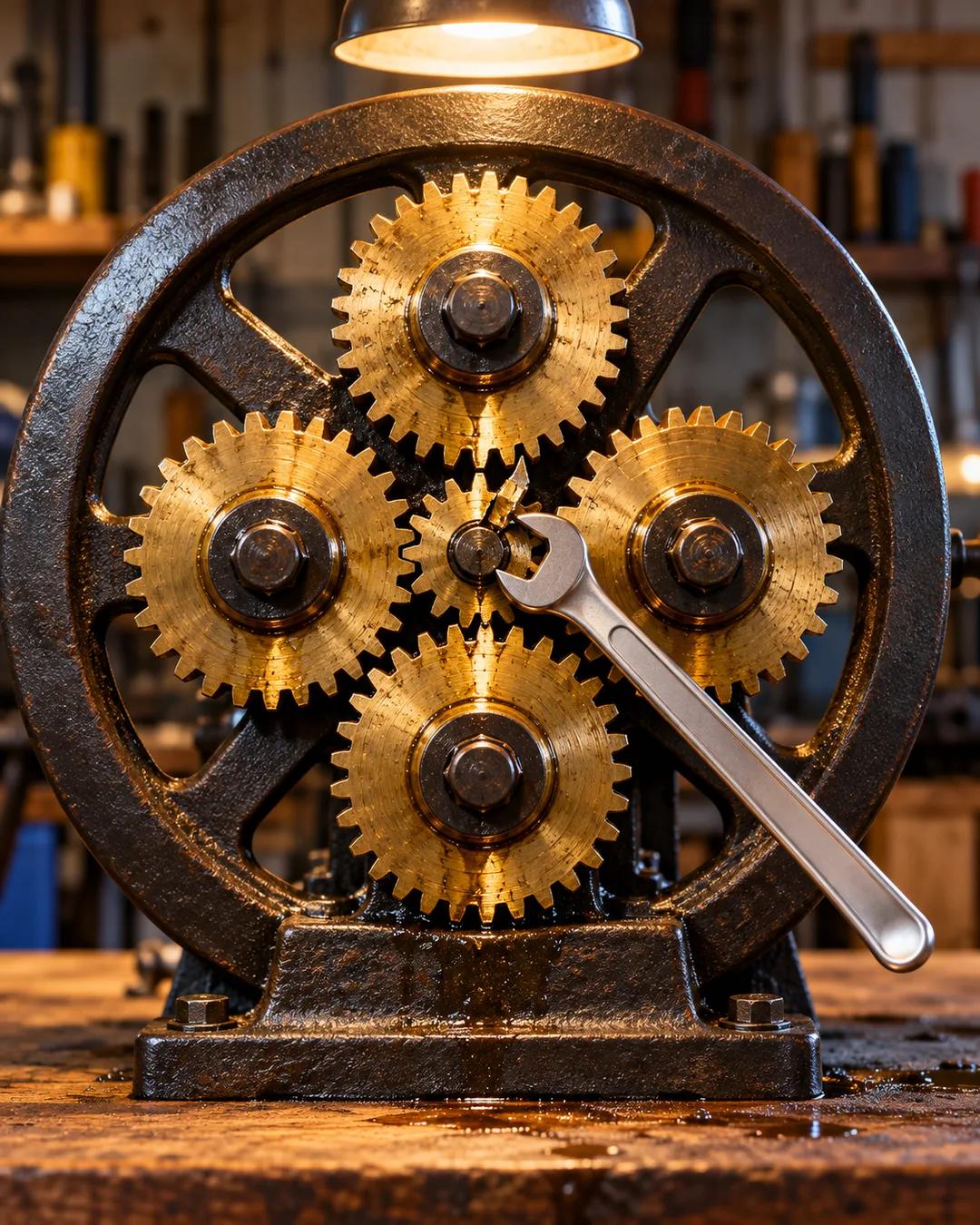
Every link must drive the next

Amazon's flywheel
Amazon's version starts at the top with lower prices on more offerings. Lower prices increase customer visits. More customer visits attract third-party sellers, who expand the store and extend its distribution. That grows revenue against fixed costs, which brings the company back to the top to lower prices again.
Logic between links
Each link carries its own logic. If prices drop on more offerings, it is almost inevitable that customer visits rise, and if visits rise, it is almost inevitable that more third-party sellers show up. A circle of aspirations or action steps does not do that. The logic is what keeps the momentum machine turning in a specific situation.
The weak link problem
Because every piece drives the next, a weak link slows or stops the whole flywheel. Execution scores of nine, eight, nine, ten, three, and nine across the components still leave a flywheel that stops, like multiplying by zero. Amazon built this picture in the fall of 2001, after the dot-com bust, and a really great flywheel can go much further than people expect.
How did Amazon draw its flywheel?
Jeff Bezos has described sketching the loop on a napkin with his senior team in 2001. The sketch linked lower prices, more customers, more sellers, and lower costs into a single circle. Amazon has pointed to that sketch ever since as the logic behind its growth.
Why does one weak link stop a multiplied system?
The management thinker Eliyahu Goldratt argued in his 1984 book The Goal that any system is limited by its single tightest constraint. When parts are multiplied, a zero in any position wipes out the whole product, however high the other numbers are. A chain with one broken link carries no load, whatever the strength of the rest.
How did Amazon survive the dot-com bust?
Amazon's stock fell by more than 90 percent from its 1999 high to its low in 2001. The company cut costs and kept investing in lower prices and its marketplace for outside sellers. It reported its first profitable quarter in the final three months of 2001.
More from The Knowledge Project Podcast