Korva is a scroll of the internet’s best ideas.
Eye surgeon turned ocean scientist
From pre-med to oceans
Peter Girguis went to college at UCLA expecting to become an ophthalmologist. He found the pre-med courses boring because they studied only one animal. He loved history, so he became an Italian history major for a while. Then came an oceanography class, and he was totally hooked.
Star Trek and childhood drawings
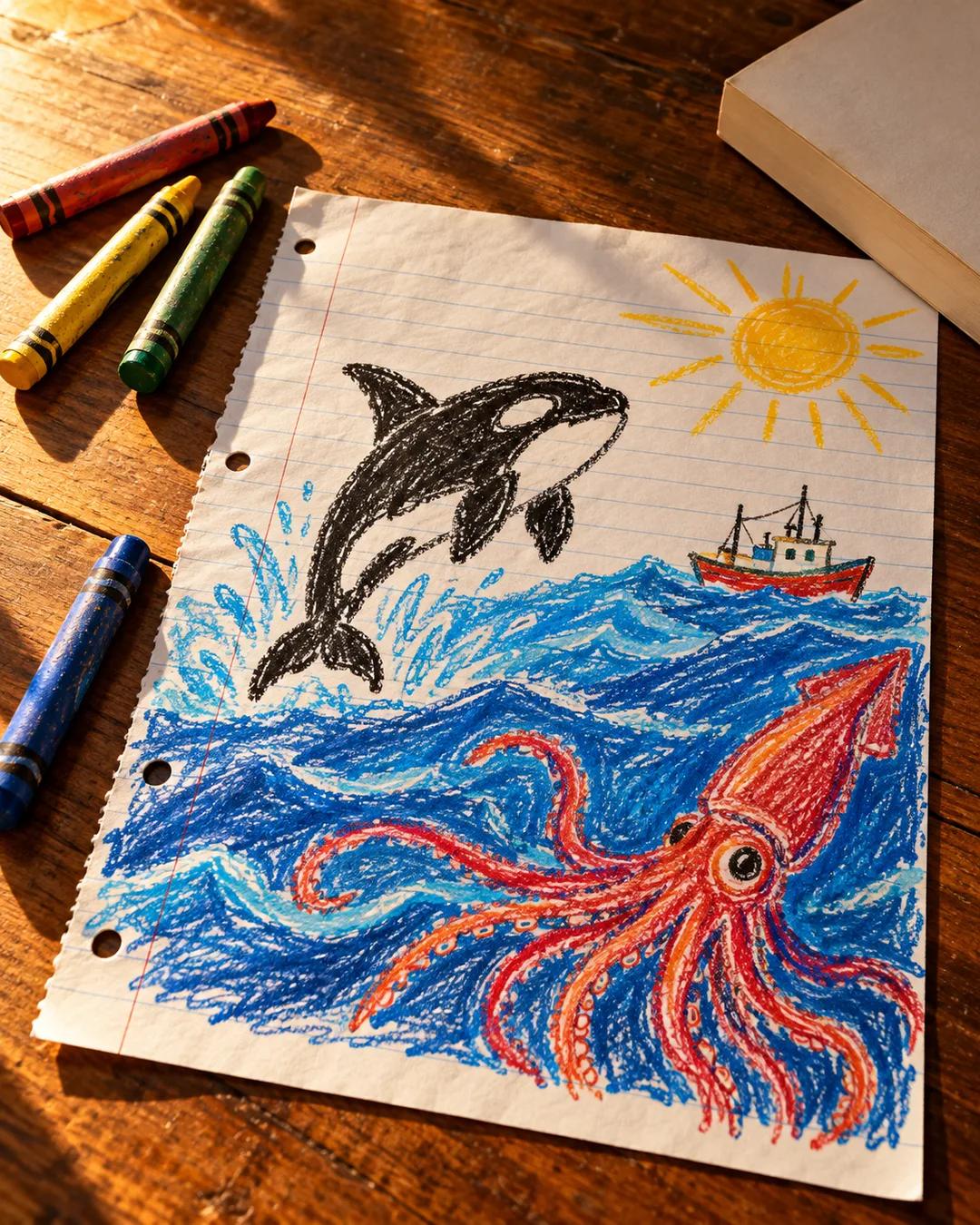
Star Trek: The Next Generation helped, since the idea of exploration rang a bell. When he told his parents he wanted to do ocean science, they laughed, because he had spent his whole childhood drawing killer whales, squids, and boats.
Diving in Alvin
Now he dives in Alvin, which he compares to being on the Enterprise except real. Seeing the animals and the rocks they live on with his own eyes, and running chemical analyses to learn who lives where and why, is a detective story about Earth's past, and so about our own.
How can ocean chemistry reveal Earth's past?
Rocks and sediments record the chemistry of the water they formed in. Banded iron formations, for example, were laid down in ancient oceans as iron met oxygen produced by early microbes. They record the rise of oxygen about 2.4 billion years ago. Isotope ratios in sediments work as a thermometer for ancient seas.
How does chemistry decide who lives where?
At a vent, hot fluid mixes with cold seawater over a few centimeters. That sets steep gradients in temperature, oxygen, and sulfide. Each microbe can use only certain chemicals and tolerate only certain conditions. The chemistry at each spot decides which kinds can live there.
Why do vents hint at how life began?
Some origin-of-life researchers, including Michael Russell and William Martin, have proposed that life began at alkaline hydrothermal vents. Such vents supply hydrogen and a natural chemical gradient across thin mineral walls. That gradient resembles how cells use gradients across their membranes to make energy. Microbes living near vents today still use hydrogen and carbon dioxide as fuel.
More from Ologies with Alie Ward