Korva is a scroll of the internet’s best ideas.
Factory workers trained in 30 days

Software does the hard part
At Hadrian, a defense manufacturer with factories in Los Angeles and Arizona and a 2.25 million square foot site coming in Alabama, the software makes workers between four and ten times more productive, depending on the task. Because it also makes the work easier to pick up, the manufacturing workforce has never set foot inside a factory before.
A labor shortage
A Navy welder can take ten years to get good, and the same goes for an aerospace machinist. The Navy cannot hire a welder at any cost from a legacy workforce, and the Virginia-class and Columbia-class submarine programs are 50 million labor hours in deficit.
Life on the floor
The job itself looks different too. Technicians run six robots at once, and nobody throws a wrench at their head. Training capacity covers about 50 new technicians every month, drawn from high school graduates, bus drivers, nurses, and paralegals who hate their desk jobs, and the company is on track for close to a billion dollars in revenue next year.
Why does welding take years to master?
A weld is made in a pool of molten metal that the welder steers by feel, adjusting heat, speed, and angle as the pool changes. Different alloys, thicknesses, and positions, such as overhead or vertical, each behave differently. Work on critical structures is checked with X-ray or ultrasonic inspection after it is done. The American Welding Society publishes the codes that many qualification tests follow.
How does software take over machine programming?
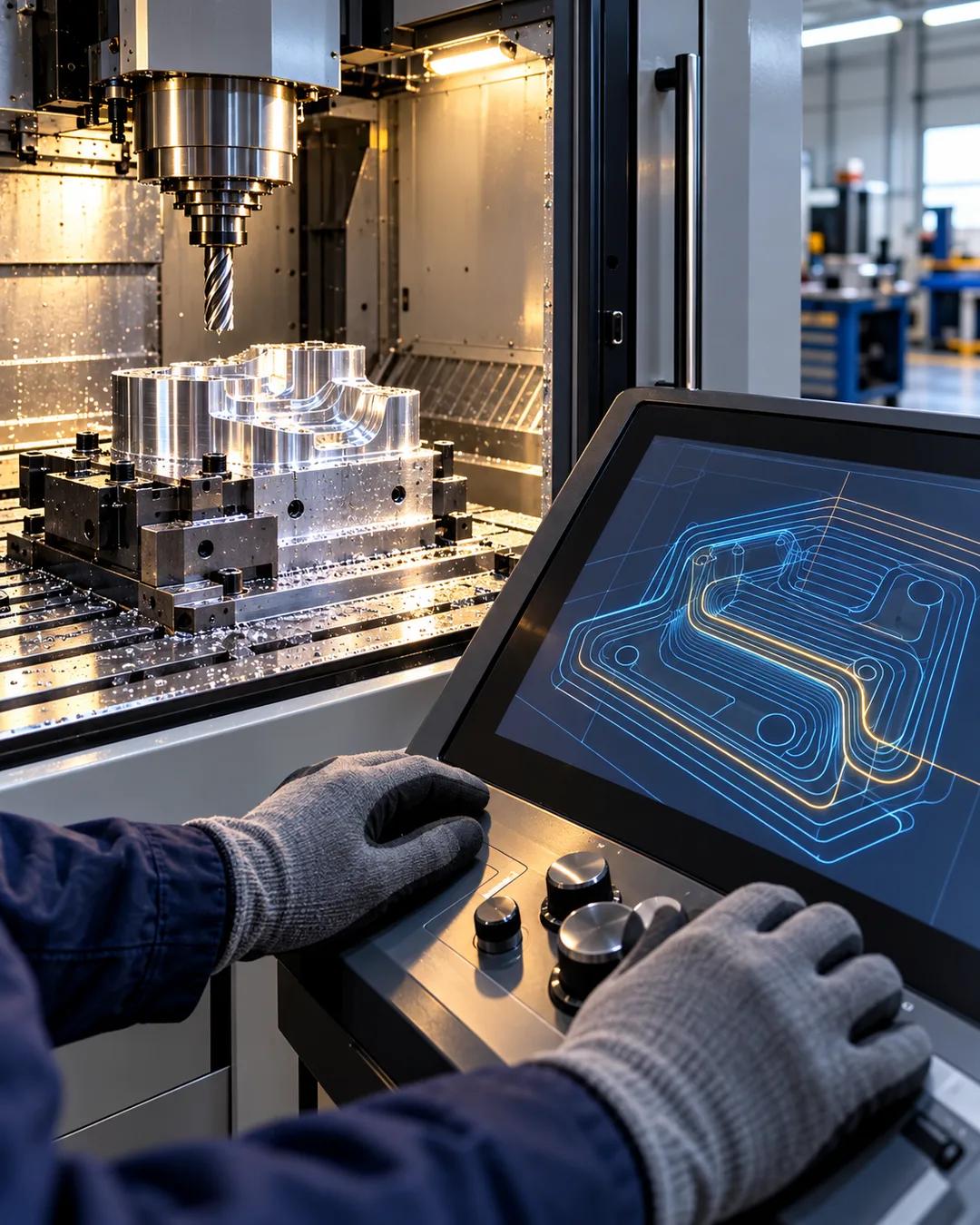
CNC machines follow instructions written in G-code, a language that traces back to numerical control work at MIT in the 1950s. Programmers once wrote or edited those instructions by hand for each part. Computer-aided manufacturing software now generates the toolpaths from a 3D model, choosing cutting speeds and sequences automatically. Moving that step into software shifts the skill from writing code line by line to checking what the software produced.
How does automation change factory work?
Robot cells take over repetitive jobs such as loading parts, so one technician can watch several machines and step in when a tool or part needs attention. Industrial robots date to 1961, when a robotic arm called Unimate began working on a General Motors assembly line in New Jersey. It lifted hot die-cast metal parts that were dangerous for people to handle.
More from The Way I Heard It with Mike Rowe