Korva is a scroll of the internet’s best ideas.
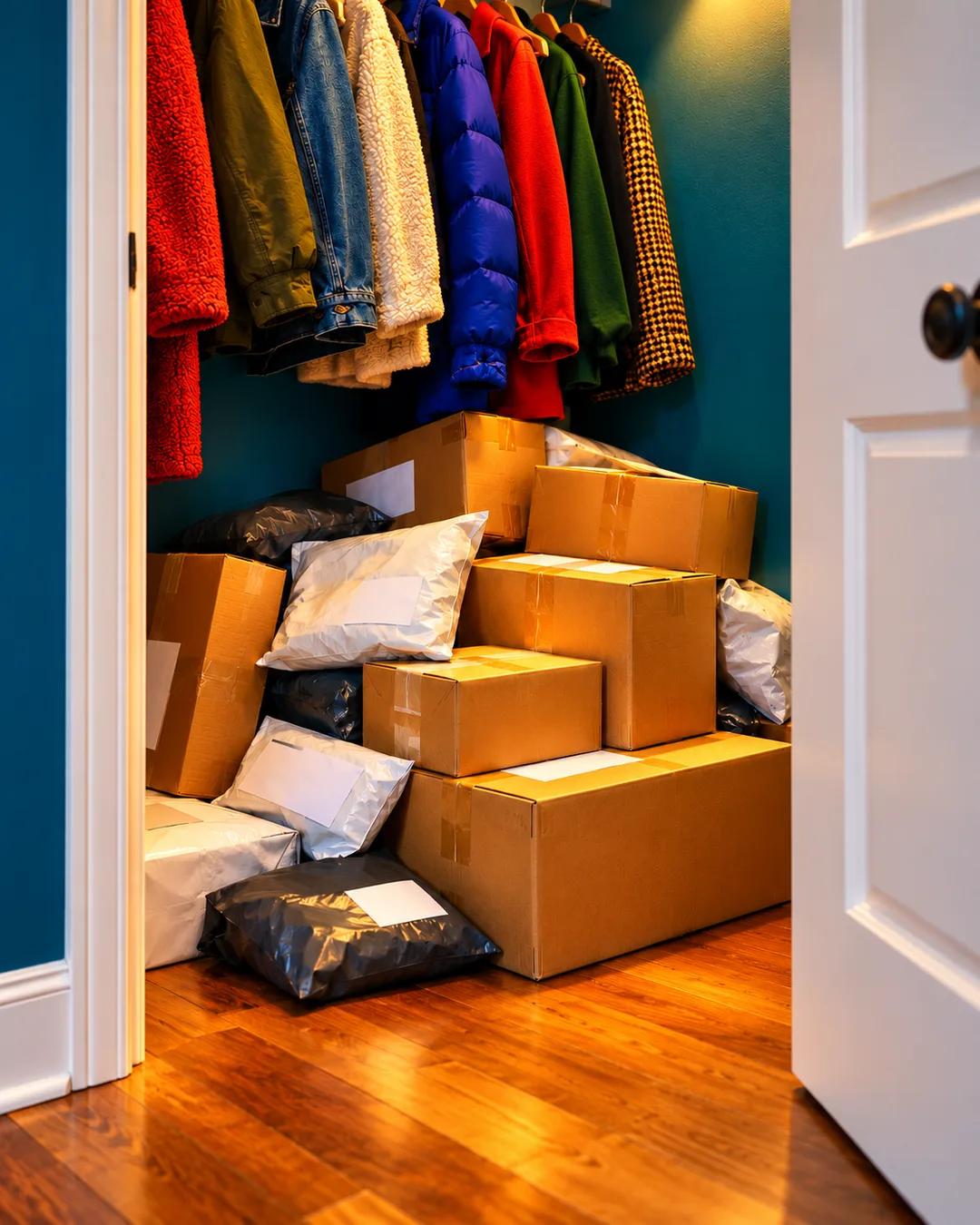
Fast delivery fills closets

Then and now
Years ago, a new product spotted in a television or radio ad meant a drive to the shopping mall, and even ordering took far longer. Now a new product or a new digital experience can be in someone's hands within minutes or even seconds.
Faster decisions
Faster decisions leave less time to think, which makes businesses better at persuading and makes buying something unneeded more likely. A phone offers hundreds of millions of products, along with digital experiences designed to keep people hooked with an infinite feed of newness.
Easy to discard
Easy acquisition makes easy disposal. Something ordered online that was not on the radar the day before, and that arrives tomorrow, took so little effort to get that it is simple to shove aside. Within a few days or weeks it sits in the back of a closet.
How did shopping from home get so fast?
The first general mail-order catalog in the United States came from Montgomery Ward in 1872, and orders then took weeks to arrive. Television shopping channels began in the 1980s, and online retail followed in the 1990s. In 1999, Amazon was granted a patent for one-click ordering, which let a repeat customer buy with a single action. Each step shortened the gap between wanting something and owning it.
Why do cooling-off rules exist for some purchases?
In 1972, the United States Federal Trade Commission adopted a rule giving buyers three days to cancel certain sales made at their homes. The rule recognizes that pressure and speed in the moment can lead to purchases that people regret. Several other countries have similar cooling-off periods for door-to-door sales and certain contracts. The idea is that a short delay lets reflection catch up with the sale.
How do endless feeds keep people scrolling?
Aza Raskin, a designer, created infinite scroll in 2006, removing the need to click to a next page. A page break gives a natural moment to stop, and a feed that never ends takes that moment away. Each new screen may or may not hold something interesting, and unpredictable rewards of this kind are the most habit-forming in studies of behavior going back to B. F. Skinner's work in the 1950s.
More from Something You Should Know