Korva is a scroll of the internet’s best ideas.
Fast-lane money for charity wins approval
The express lane
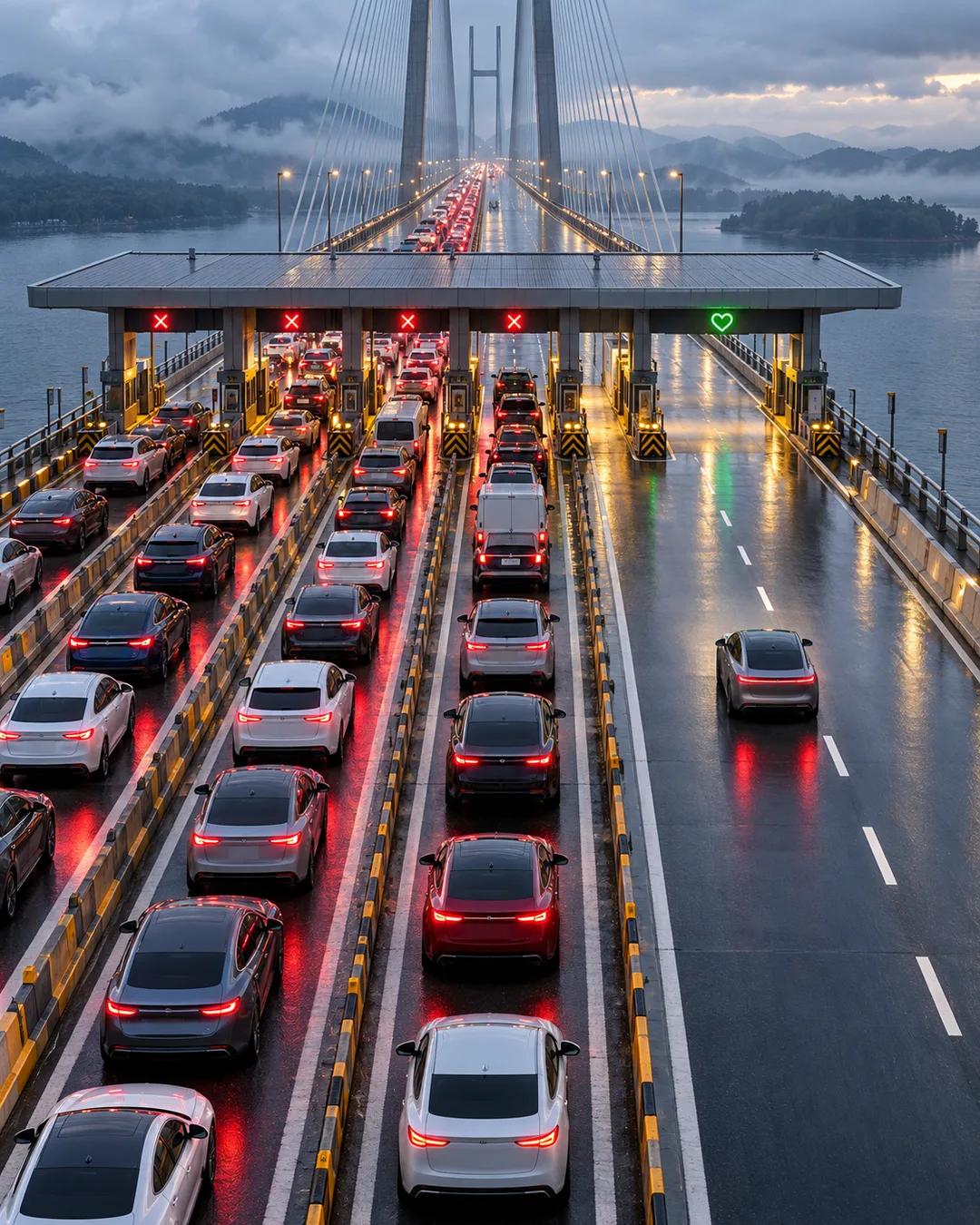
Picture a toll crossing with severe queues and an express lane that costs twice as much. Time means more to some people than others: someone heading to a job interview would patently pay a couple of pounds more, and someone on the way to visit a mother-in-law would probably prefer to stay on the left.
Why drivers resent it
Drivers resent the lane anyway. They think the bridge company is deliberately creating delays to maximize its revenue, and they ask why on earth they should pay to subsidize its incompetence.
The charity frame
Change the frame slightly, so the extra money goes to charity, and the picture changes. This charitable yield management is just as economically efficient, and it meets with public approval and even a small degree of affection. The same principle could apply to the security lanes in airports.
Why do drivers see express lanes as unfair?
In a 1986 paper, Daniel Kahneman, Jack Knetsch, and Richard Thaler found that people judge a price rise unfair when a firm raises prices without any rise in its costs. Their example was a hardware store raising the price of snow shovels after a blizzard, which 82 percent of respondents called unfair. An express lane looks similar from the driver's seat: the same road, a higher price, and no visible cost behind it. The paper appeared in the American Economic Review.
How did airlines pioneer this kind of pricing?
After the US Airline Deregulation Act of 1978, airlines were free to set their own fares. American Airlines built computer systems in the 1980s to control how many seats were sold at each price. The approach became known as yield management. Hotels, car rental companies, and cruise lines adopted it later.
Where have variable-price toll lanes been tried?
State Route 91 in Orange County, California, opened express lanes in 1995 whose tolls changed by time of day, among the first of their kind in the United States. Singapore had introduced road pricing for its central area much earlier, in 1975.
More from TED