Korva is a scroll of the internet’s best ideas.
Uncertainty makes waits feel longer

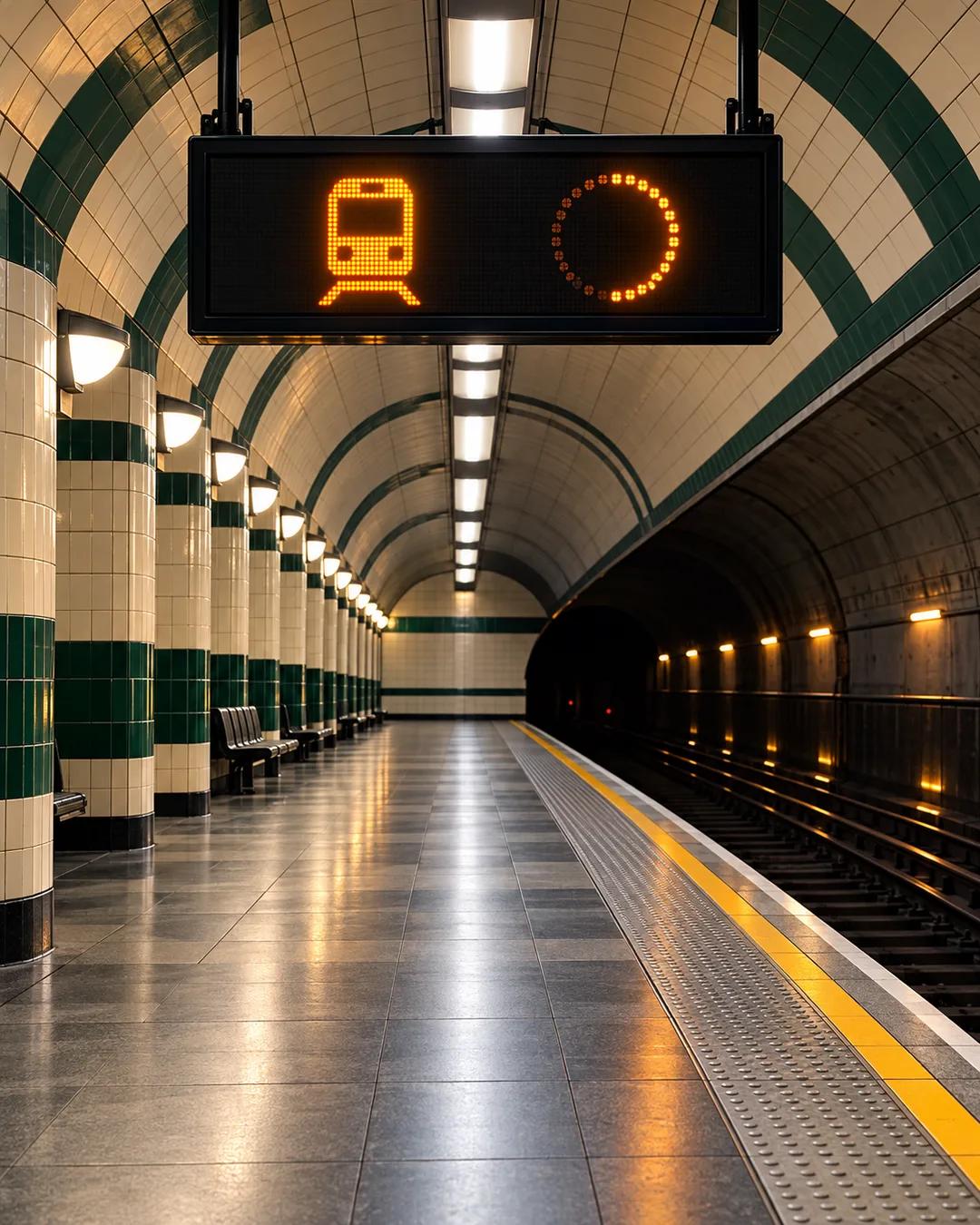
No train was added and no frequency changed. The dot matrix boards counted down to the next train, because a wait depends on more than its duration. It also depends on the level of uncertainty you experience during that wait.
Waiting seven minutes for a train with a countdown clock is less frustrating and irritating than waiting four minutes, knuckle biting, wondering when the train is going to arrive.
Why does uncertainty make waiting worse?
David Maister's 1985 essay The Psychology of Waiting Lines states that uncertain waits feel longer than known, finite ones. A 2016 study led by Archy de Berker at University College London found that people showed the strongest stress responses when the chance of receiving an electric shock was 50 percent, higher than when the shock was more or less likely. The study was published in Nature Communications.
Do real-time arrival displays change how long a wait feels?
A 2011 University of Washington study led by Kari Watkins looked at Seattle bus riders who used a real-time arrival app. Those riders reported shorter perceived waits than riders who had no such information. The study was published in the journal Transportation Research Part A.
More from TED