Korva is a scroll of the internet’s best ideas.
Feeling fine on six hours proves nothing

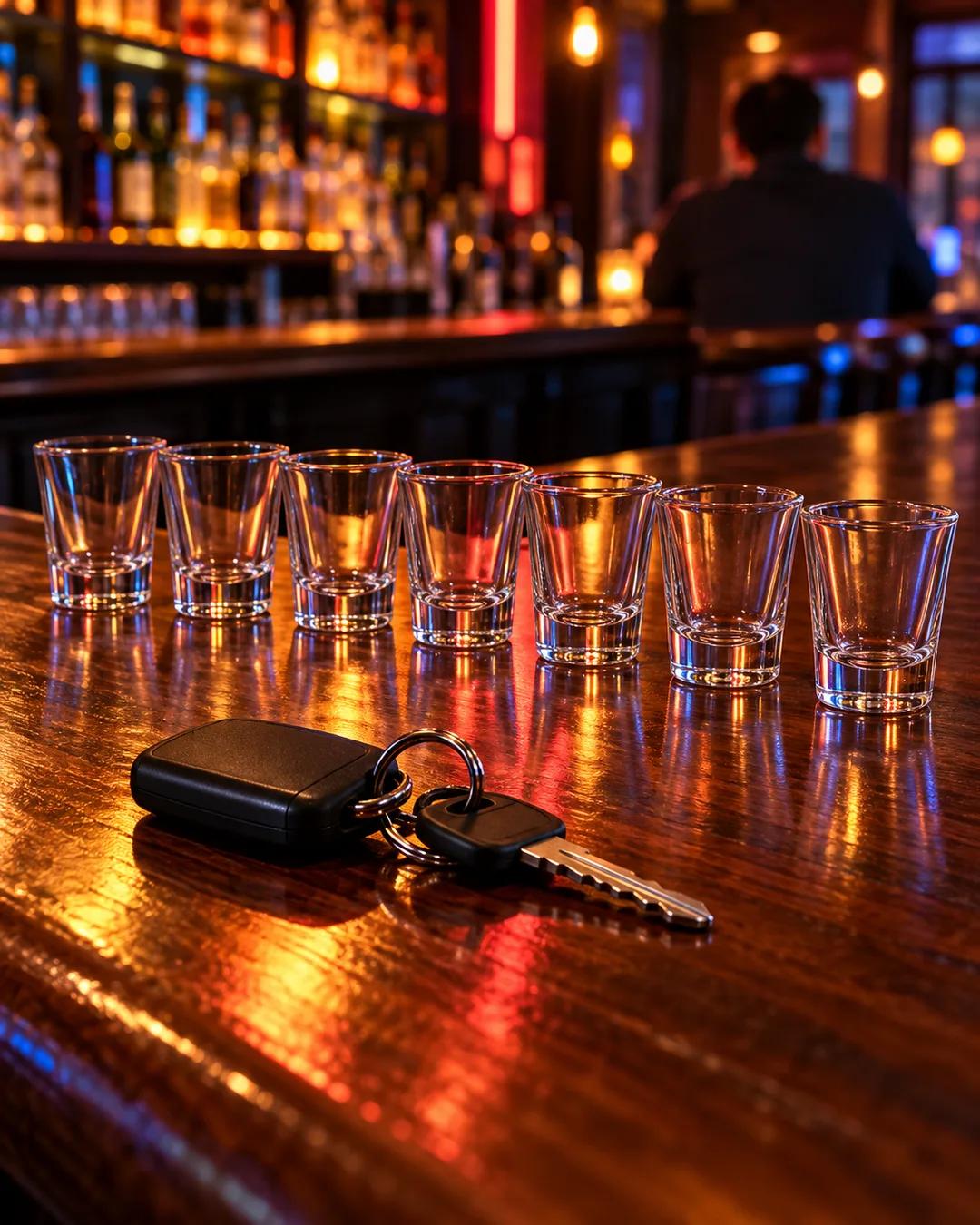
Picture a drunk driver at a bar who has had seven shots, picks up the car keys, and says they are fine to drive. A lack of sleep works the same way: the person thinks they are fine, and objectively they are not.
Once a person gets below seven hours of sleep, objective impairments can be measured. That does not mean impairment begins only there. More sensitive tools might measure it at seven hours and 50 minutes.
For the average adult, the recommendation is eight hours, with a range of seven to nine.
Why can't tired people tell how impaired they are?
In a 2003 study in the journal Sleep, Hans Van Dongen and colleagues at the University of Pennsylvania restricted volunteers to six hours of sleep a night for two weeks. By the end, their attention performance had fallen to the level of people kept awake for two full nights. The volunteers rated themselves as only slightly sleepy. Performance kept dropping while their self-ratings leveled off.
How does staying awake compare to drinking?
Researchers Ann Williamson and Anne-Marie Feyer in Australia compared the two in a 2000 paper in Occupational and Environmental Medicine. After 17 to 19 hours awake, performance on tests of reaction and coordination matched that of a person with a blood alcohol level of 0.05 percent. After 24 hours awake, it matched 0.10 percent. Several countries set legal driving limits near the lower figure.
How was the seven to nine hour range set?
In 2015, a panel of sleep and health experts for the National Sleep Foundation reviewed several hundred studies on sleep and health. The panel recommended seven to nine hours for adults aged 26 to 64. The American Academy of Sleep Medicine and the Sleep Research Society issued a joint statement the same year that said at least seven hours is needed for good health.
More from Talks at Google