Korva is a scroll of the internet’s best ideas.
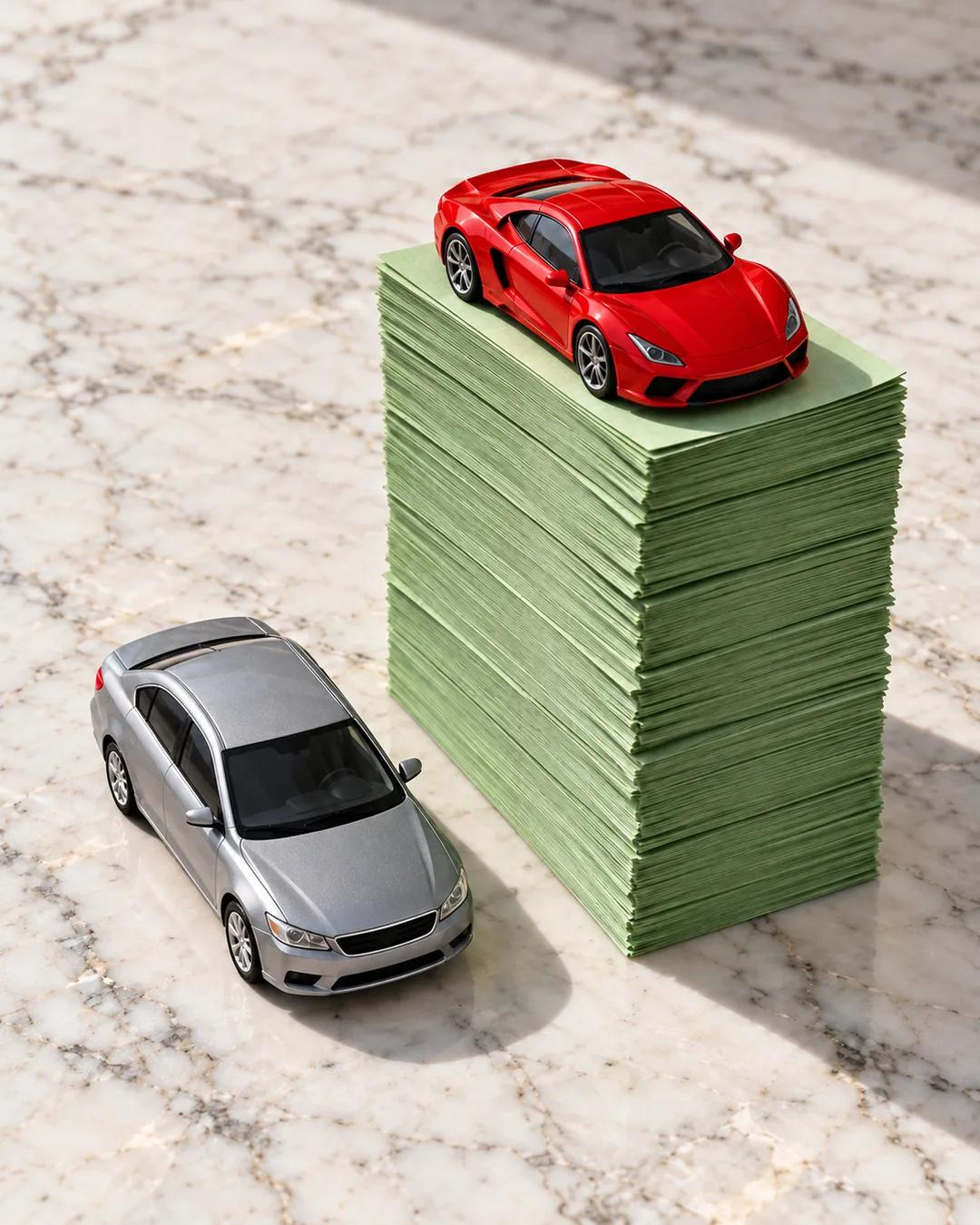
Ferrari makes $170,000 per car

Margins Compared
Ferrari's gross margin is about 50 percent, meaning it sells cars for twice what they cost to make. Ford's is 7 percent, GM's 10, BMW's and Volkswagen's 14, Mercedes-Benz's 16 to 22, Porsche's 15 to 25, and Toyota's 18 to 21. Toyota earns about three times as much gross margin per car as Ford does.
If BMW spends a hundred dollars to make a car, it sells it for $115. Porsche would need to sell six cars to match the gross profit from a single average Ferrari. Luxury goods that need none of the hard engineering do better still, with LVMH at 66 percent and Hermes at 71.
Prices and Revenue
The average selling price of a Ferrari is about $500,000, up from $350,000 in 2022. Models technically start at $280,000 and come with a two-year waitlist, and customization adds anywhere from 20 to 100 percent to a car's price. Ferrari earned $8.2 billion in revenue in 2025 and $3.2 billion in EBITDA, a 38.8 percent margin.
Why do mass-market cars earn thin margins?
Mass-market makers sell in competitive markets where buyers compare prices closely, so profit per car stays small and volume has to make up the difference. Henry Ford's moving assembly line, introduced in 1913, cut the time to assemble a Model T chassis from about 12.5 hours to about 93 minutes. That drive for cheaper production set the pattern for the industry.
Why do cars earn less than handbags?
A car has to meet crash, emissions, and safety rules, which require large engineering and testing budgets before a single car is sold. A handbag faces no comparable regulatory testing, so more of its price can be profit. Euro NCAP, Europe's independent crash-test program, began publishing ratings in 1997.
More from Acquired